
Buckingham County: 1874, Part II
Our “Observer,” who so beautifully described the prosperity of Fluvanna County (the Cocke home, “Bremo”) and Albemarle County (the home of Col. Henry Gantt) continued his essay by reprimanding Buckingham County for its backwardness. One wonders if The Farmville Mercury printed any editorials in response.
Click here to read Buckingham County: 1874, Part I
The letter to the Editor continued:
Buckingham has followed
THE RETROGRADE MOVEMENT
too long already for her own well-being, and unless the people display some energy and put these works through, and that at once, they and their lands will never be mentioned, unless cited to prove the stupidity of not seizing hold of and executing its only work which can save them and their county from utter and absolute ruin.
Albemarle is ready and anxious to help you out with your narrow-gauge railroad; and it was with the feelings of deepest shame, when questioned by some of the prominent men of that county as to how Buckingham would vote on the railroad appropriation, I had to admit that I thought the appropriation was likely to be voted down. You had far better give half of everything you are worth than not to have the railroad, for if you get the road your half will be doubled in value to your property at present, and unless you do, in ten years from to-day, if you own land, you won’t be worth one continental.
Hoping these remarks made be productive of some good, I remain, Mr. Editor, your friend,
AN OBSERVER.
Buckingham County, February 20.
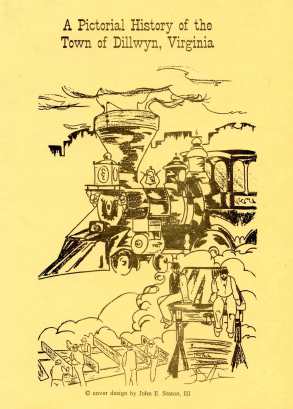
According to “A Pictorial History of the Town of Dillwyn, Virginia,” in 1879, Virginia’s General Assembly passed a bill incorporating the Buckingham Railroad Co. That company failed to build a railroad in the county. In 1883, the General Assembly passed another bill for a Buckingham railroad. Money was raised; however, by 1884, the company was bankrupt. By 1892, the C&O started building a line in Buckingham and, by 1897, it had merged with the Buckingham Branch. Tracks eventually ran from Bremo Bluff on the James River, through Dillwyn, to Willis Mountain. From there was transported mainly timber, quarried rock, and the rare kaolin clay mined at Willis Mountain.
Was Buckingham County really so stuck in its ways? Were its people not forward-thinking? Were they just cautious to invest? Or, perhaps, were politics at play? Who stood to benefit if a narrow-gauge railroad did not connect Buckingham County to Charlottesville and the east-west traffic on the north side of the James River?
All comments and thoughts are welcome.


 slate river ramblings . . . .
Was the original line for the RR laid (as the article seems to allude to) as Narrow Gauge? If so, what gauge? 2 or 3 ft? Interested slate historian here.
Paul,
Thanks for your comment. Unfortunately, I can’t help further. A narrow gauge RR was proposed but may not have been built. Perhaps a Slate River Ramblings reader knows more.
Joanne
Joanne,
Thank you for your prompt response! I have some literary references of a railroad that ran from the quarries to a jetty/wharf onto Lake Bonoseen where the wagons were carried by a horse-pulled ferry to connect with the mainline railroad on the east side of the lake.
Dr. Paul Brooks
Thank you, Kathie! That is certainly something to consider. Appreciate you sharing that.
I’m interested in the subject of the railroad in Buckingham Co. My great-grandfather, William Archer Duncan (1873-1958), was born in Buckingham Co. and worked for the C & O Railroad for many years, moving to Clifton Forge in Alleghany Co. and then Staunton. I’ve often wondered how he got started with the railroad.
Dave, As time goes on, there will be more posts at Slate River Ramblings about the Buckingham Branch. Its history is a bumpy one, that’s for sure. Joanne
Dave,
I have found in my research that men who worked on the canals (example: James River and Kanawha Canal) were often hired for the railroad once the canals started closing. (Most of the old tow paths for the canals ended up being where the railroad laid their tracks). Several of my Phelps ancestors were lock keepers on the canals and switched to the railroad after 1880. Just a thought….
Kathie Phelps Mann
Thank, Kathie!