

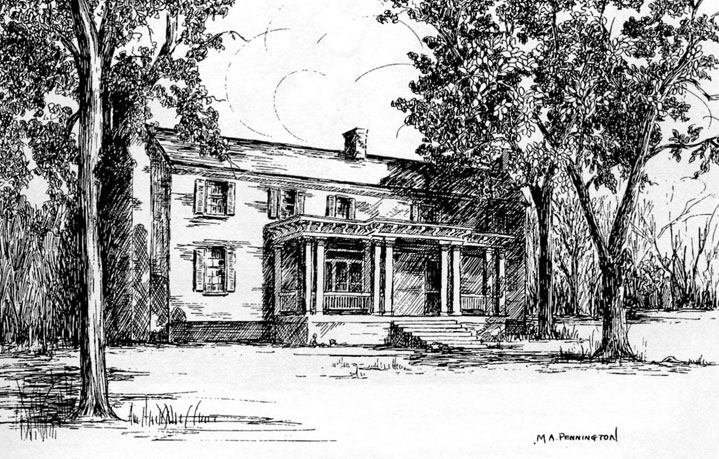
One of the most popular posts at Slate River Ramblings was on May 26, 2013: Buckingham Mystery: 274 Fitzpatrick Road
Since then, the current owner of the Fitzpatrick house, Janice Campbell, has posted details about the house’s history at the blog Old House Dreams:
In 1961, my dad bought the house at a public auction. He had not intended to buy the place, but got caught up in the bidding… Well, he thought he could resell it. But, when my mom saw the house, she was in love. It was her dream house.
The house had belonged to Miss Annie Mae Fitzpatrick, she had lived there her whole life. Had cared for her parents there. She was an old maid school teacher, and in 1961, her nieces and nephews were selling the property to finance her nursing home care. . . . We started calling the house “the Fitzpatrick” after the previous owners and the name has stuck. Also, the Fitz. The road name is The Fitzpatrick after it.
It is known in the county at that old Fitzpatrick place. When I was working on it, I discovered many people who would not enter the house because of the stories of “spirits”. The neighbors can tell you many stories. I have some. One of my favorite is that a slave boy hung himself in the attic because he was in love with a slave girl and she was sold. . . .
As far as other buildings on the property, the main one remaining is the smoke house, which this site has a photo of. There is also a shed with an outdoor potty with a 3-seater. But that shed has slowly folded to the ground. Everything is still in it, but it needs to be taken apart. . . .
There are some pear trees in the back yard, old trees with antique pears, really small. Good for pear preserves but not eating off the tree. . . .
Thank you to all the people out there who appreciate this house. It truly is one of a kind original. A diamond in the rough.
For more photos and information about the house, visit Old House Dreams.
Be sure to scroll down through all the photos to read several comments about the house and its history written by Janice Campbell.
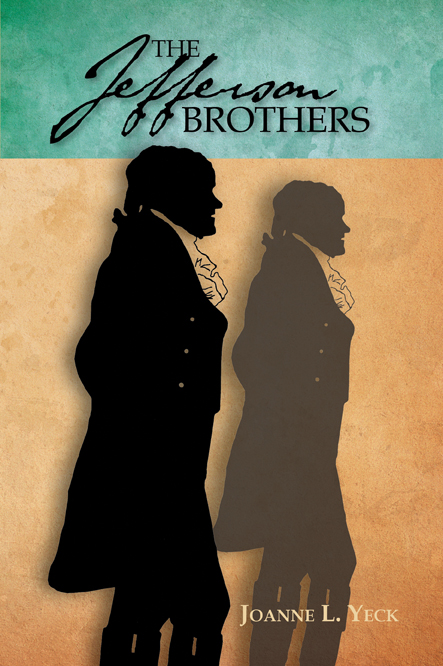
Please mark your calendar and join me for the following book talks and signings:
October 1st: Library of Virginia, Noon, Richmond, Virginia
October 5th: Baine’s Scottsville, 1:00 – 3:00 PM, Scottsville, Virginia
For more about the book and its author, click here: Slate River Press
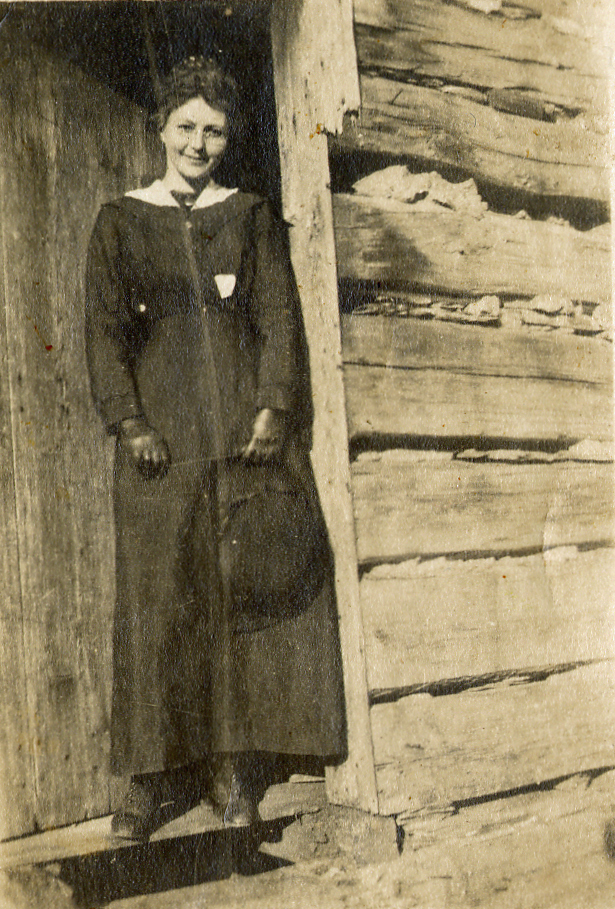
Lettie Morgan of Buckingham County
Courtesy Bob Jeffery
The Welsh community in Arvonia, Buckingham County, has a rich and fascinating history.
Among the Welsh natives living there in the early 20th century was the Morgan family. In 1912, Lettie Morgan, pictured here, was crowned second maid of honor to the Queen of Love and Beauty at the tournament held at New Canton, Buckingham County. Her portrait clearly shows Lettie’s charm. She was twenty years old when she was honored at the tournament.
Bob Jeffrey remembers that, even in the 1950s when he was visiting his relatives in Arvonia, it was “very Welsh.” Bob recalls:
The Morgan family, like most of Arvonia, emigrated to the U.S. after the Civil War and were involved in the slate industry. Lettie’s mother, Lettice Saes Pierce Morgan, ran a boarding house for Welsh slate workers in Arvonia on what is now known as Morgan’s Hill Road. The families that settled Arvonia – Pierce, Williams, Morgan, Jones and Jeffrey – were all from the same tightly knit community in North Wales, also known as Arvon (the mountainous area above Caerarvon where the great slate quarries of Penrhyn and Dinorwic were located).
Lettie P. Morgan (26 Jan 1892–31 May 1928) is buried in the Arvonia Memorial Cemetery.
For more about the 1912 Tournament, click here: Buckingham County: Knights and Ladies
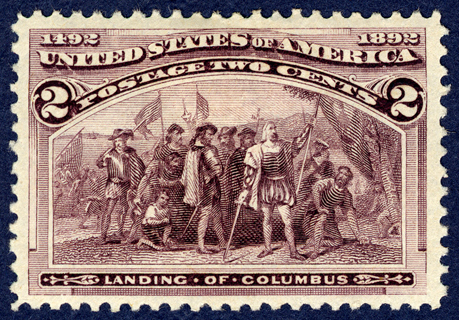
In the late 19th century, carrying the mail in Buckingham County was a coveted, paid position at a time when cash was scare in the rural community. Appointments were news worthy.
On August 3, 1893, the Appomattox and Buckingham Times announced, “Mr. John T. L. Woodson has the contract for carrying the mail from Oslins by Well Water, Centenary and Tucker, to Payne’s.” The mail route from Oslins Mill (formerly Chambers Mill) to Payne’s Mill was Woodson’s home territory and mail carrier was just one of many county positions he held over the years. Shortly thereafter, Woodson moved to Richmond and his neighbor, W.A. Maxey, took over the mail contract, as reported in the Times in May of 1897.
Within a few years, the position of postmaster at Well Water, established by Frank N. Maxey, was soon hotly contested and the competition made the papers. On April 6, 1899, the Appomattox and Buckingham Times announced that in Well Water, “The contest for the post office at this place, which has been raging for six months or more, has at last ended. Mr. R.M. Agee, a Democrat, has been appointed postmaster, with Mrs. Alice S. Maxey assistant. The office will remain at the same old site.” Robert Moseley Agee (b. 1860), was John T. L. Woodson’s younger half-brother.
Though the April notice appeared conclusive, it was followed on May 4th, by this announcement: “A.S. W. Maxey, Well Water, Buckingham county, and J. J. Blanton, Guina Mills, Cumberland county, have been appointed postmasters at the above-named places.”
Turbulent days in Buckingham!
Variety Shade, Courtesy Historic Buckingham
Over the 19th and 20th centuries, Buckingham County had many postmistresses, including Miss Fannie B. Bondurant who was appointed postmistress at Variety Shade on December 3, 1889. She followed her father, Alexander Joseph Bondurant, in the job. The post office at Variety Shade was apparently short-lived. In those days, the position of postmaster was a political appointment and subject to change with any election.
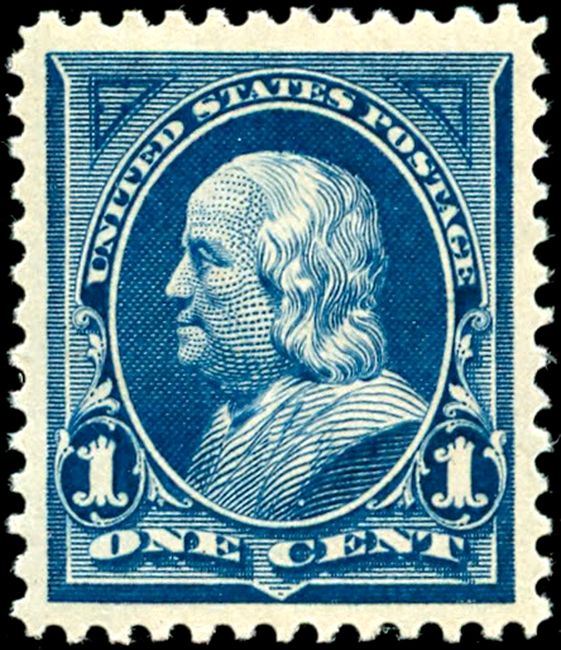
Benjamin Franklin One Cent (1895)
Born on October 17, 1866, Frances Brown Bondurant was the daughter of Alexander Joseph Bondurant of Col Alto in Buckingham County and Emily McFarland Morrison of Rockbridge County. Fannie was named for her maternal grandmother Frances (Brown) Morrison, wife of Rev. James Morrison. When Fannie died in 1949, she was buried in Rockbridge County, with her parents and several siblings.
She stood a stately 5 foot, 8 inches tall, with brown eyes and hair. Typifying a well-educated gentlewoman of the late 19th century, like many refined, Buckingham-born ladies of this era, she is remembered as pleasant and polite.
Thanks to Coz. Mary Carolyn for sharing her memories of Miss Fannie.
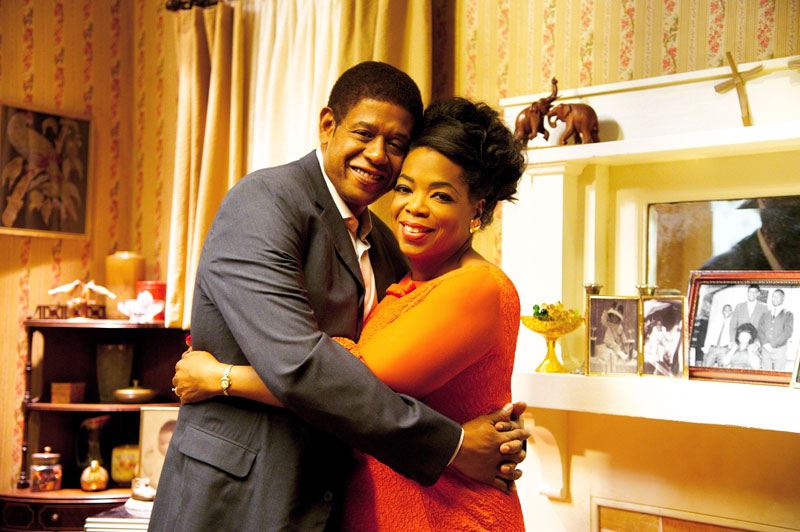 Forest Whitaker and Oprah Winfrey in Lee Daniels’ The Butler
Eugene Allen, the man who inspired the new movie, Lee Daniels’ The Butler, had an extraordinary life that began in the early 20th century in Buckingham County. Later, by way of Scottsville (where he was living in 1930), he made his way to Washington D.C. to become butler to eight American Presidents.
While the film portrays its hero, Cecil Gaines, growing up on a cotton farm, the 1920 census reveals the six-month-old Eugene Allen living in Buckingham’s Slate River District, with his extended family, comprising three households of Allens and Browns.
Journalist Wil Haygood discovered Eugene Allen’s story and wrote, “Mr. Allen was born July 14, 1919, in Scottsville, Va.” Haygood’s profile of Eugene Allen was published in The Washington Post (2 April 2010): “Eugene Allen, White House butler for 8 presidents, dies at 90”
Last month, the star-studded film, Lee Daniel’s The Butler, opened in theaters across the country. Click here to watch the movie’s trailer: The Butler.
For more about Wil Haygood’s journalistic journey and his dedication to Eugene Allen’s story, click here: “The Storyteller”

Courtesy “Call & Answer”
On May 28, 1950, the Richmond Times-Dispatch ran a lengthy feature article titled, “Bremo Bluff’s Muffled Boom,” written by Jane Morris. In it, she wrote about the flurry of growth in Bremo Bluff, Fluvanna County, when the Virginia Electric and Power Company expanded its plant on the James River. The typically quiet village of 300 persons swelled with work for 3,000 individuals, bringing a short-lived burst of prosperity to Bremo.
While the article mentioned Fork Union and Palmyra (Fluvanna County), as well as Charlottesville (Albemarle County), it failed to highlight nearby attractions in Buckingham County. Promptly, Bernard Christian of Dillwyn wrote a letter to the Editor, correcting Morris’ omissions:
The article in your Sunday Magazine Section (May 28) by Jane Morris entitled. “Bremo Bluff’s Muffled Boom,” says the nearest movie is in Charlottesville 37 miles away. It is in Dillwyn, only 16 miles from Bremo Bluff.
Public square dance is not 20 miles, only 16, each Saturday night at Dillwyn Lake and at the Veterans’ Hall.
Jane Morris must have taken the wrong road to have left Dillwyn out of the “Muffled Boom.”
Indeed, just across the James River to the south, there was plenty of fun to be had in Dillwyn!
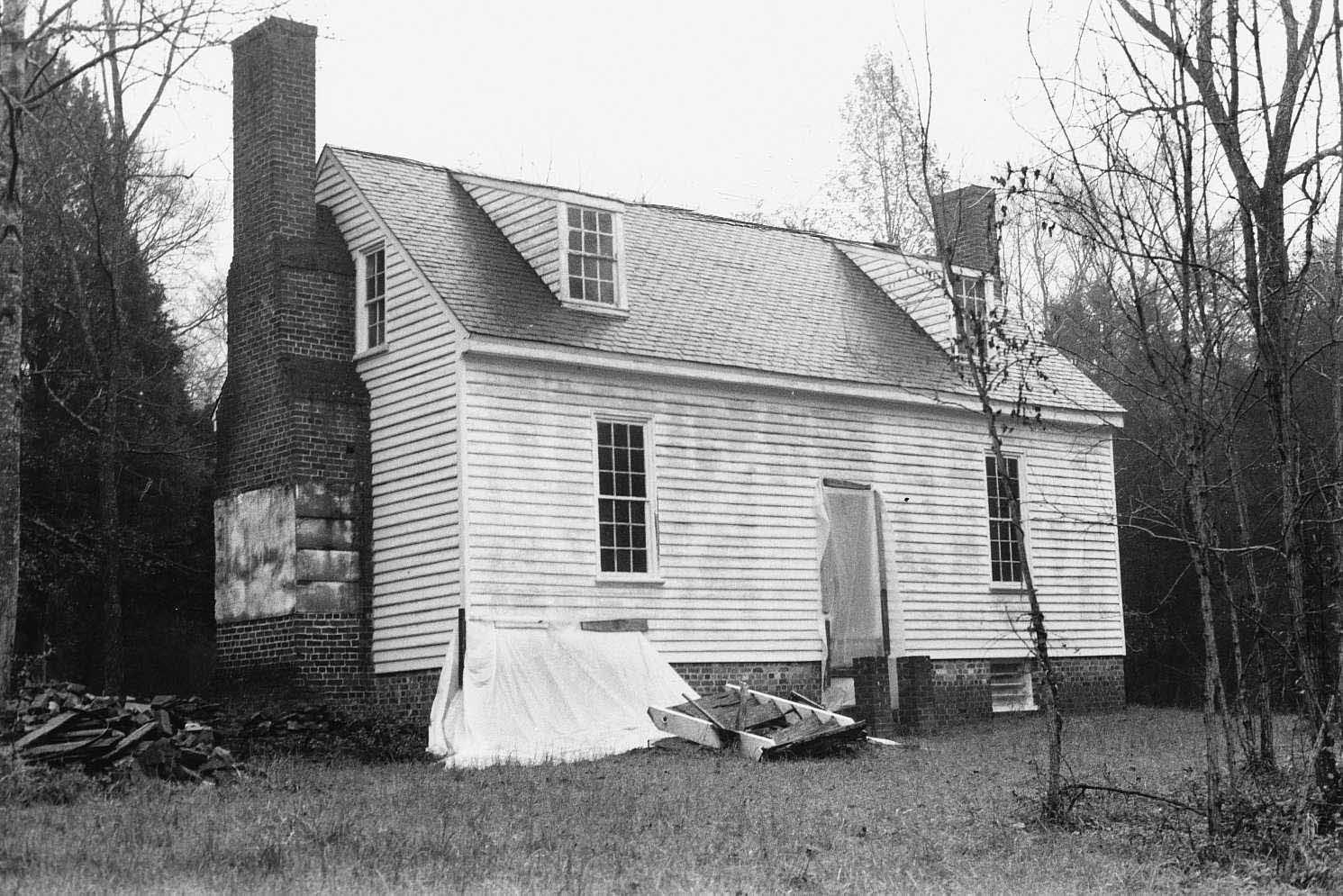
Locust Grove (1997), restoration in process
Courtesy Virginia Department of Historic Resources
Peter Francisco’s Buckingham home, Locust Grove, has been restored and is listed on the National Register of Historic Places. This care and attention to Locust Grove was not inevitable and future generations are fortunate that the house has been preserved.
In 1936, when the house was surveyed by Rosa G. Williams for the Virginia Historical Inventory, it was a sorry sight. Long in disrepair, the heart pine timbers with their wooden pegs barely held together. Aged plaster had fallen from the walls. The wind whistled through the eaves.
In the 1970s, the Society of the Descendants of Peter Francisco embarked on the restoration of their ancestor’s home, intending to turn it into a museum. The museum never materialized, but significant restoration was accomplished with matching government funds. Today, the house is once again in private hands.
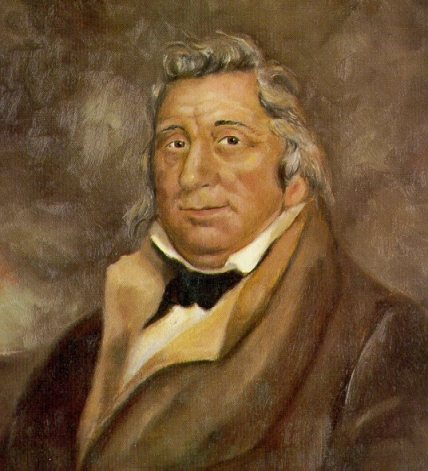
Courtesy Society of the Descendants of Peter Francisco
For those of you who asked for more information about Peter Francisco, please visit: Society of the Descendants of Peter Francisco.
Coming next: Peter Francisco’s home, Locust Grove

Revolutionary War hero Peter Francisco is undoubtedly one of Buckingham County’s most famous sons. A blacksmith by trade, after the war, he settled in the southern part of the county. In 1783, Mr. J. Gannaway of Buckingham paid Peter £1.9.10 ½ for shoeing horses.
In December of 1784, diarist Samuel Shepard observed Francisco’s striking combination of enormous physique and gentle ways:
I watched the blacksmith at his work and never before saw muscles as great and developed in so young a man, or boy, he is still a boy. I usually write about a man’s face. Of this smith I noticed first his great hands, long broad the fingers square, the thumbs heavy and larger in the nail than the usual great toe. His feet are as exceptional for length and thickness as is his whole body. His shoulders like some old statue, like a figure of Michaelangelo’s imagination like his Moses but not like David. His jaw is long, heavy, the nose powerful, the slant forehead partly concealed by uncombed black hair of a shaggy aspect. His voice was light, surprising me as if a bull should bellow in a whisper. His eyes very friendly and kind. He talked of the war, eagerly told me of stealing clothes from under the enemy guns, all with humor. I asked him about his family and he said he was told he was Irish but also that he was Portuguese. Probably Latin from his color, Franciscao, not Francisco. Or he might come from the Irish west coast where I have seen Irish tangled up with Spanish, his stories sounded like Irish romance.
For more about Peter Francisco, consult “At a Place Called Buckingham.”


 slate river ramblings . . . .