
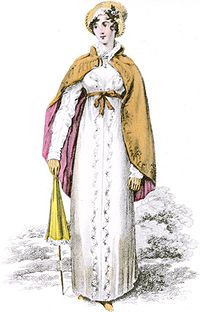
 Many of us are aware of 19th century advertisements for runaway slaves. Sometimes, planters advertised for runaway wives as was the case with Robert Bransford who placed this advertisement in the Virginia Argus in 1813:
NOTICE
This is to inform the public generally, that my wife JANE BRANSFORD, has lately left my bed and board without any just cause whatsoever – I therefore forewarn all persons from harboring or maintaining her, – also from trading or dealing with her on my account, as I am determined to prosecute such as are above mentioned, and as to dealings, &c. I will not be responsible for any debt of her contracting.
ROBERT BRANSFORD.
Buckingham, May 18th
Being a Buckingham Bransford myself, I would very much like to know what happened to Jane and, for that matter, to Robert. If you have any information, please let me know.
(Courtesy Historic Buckingham)
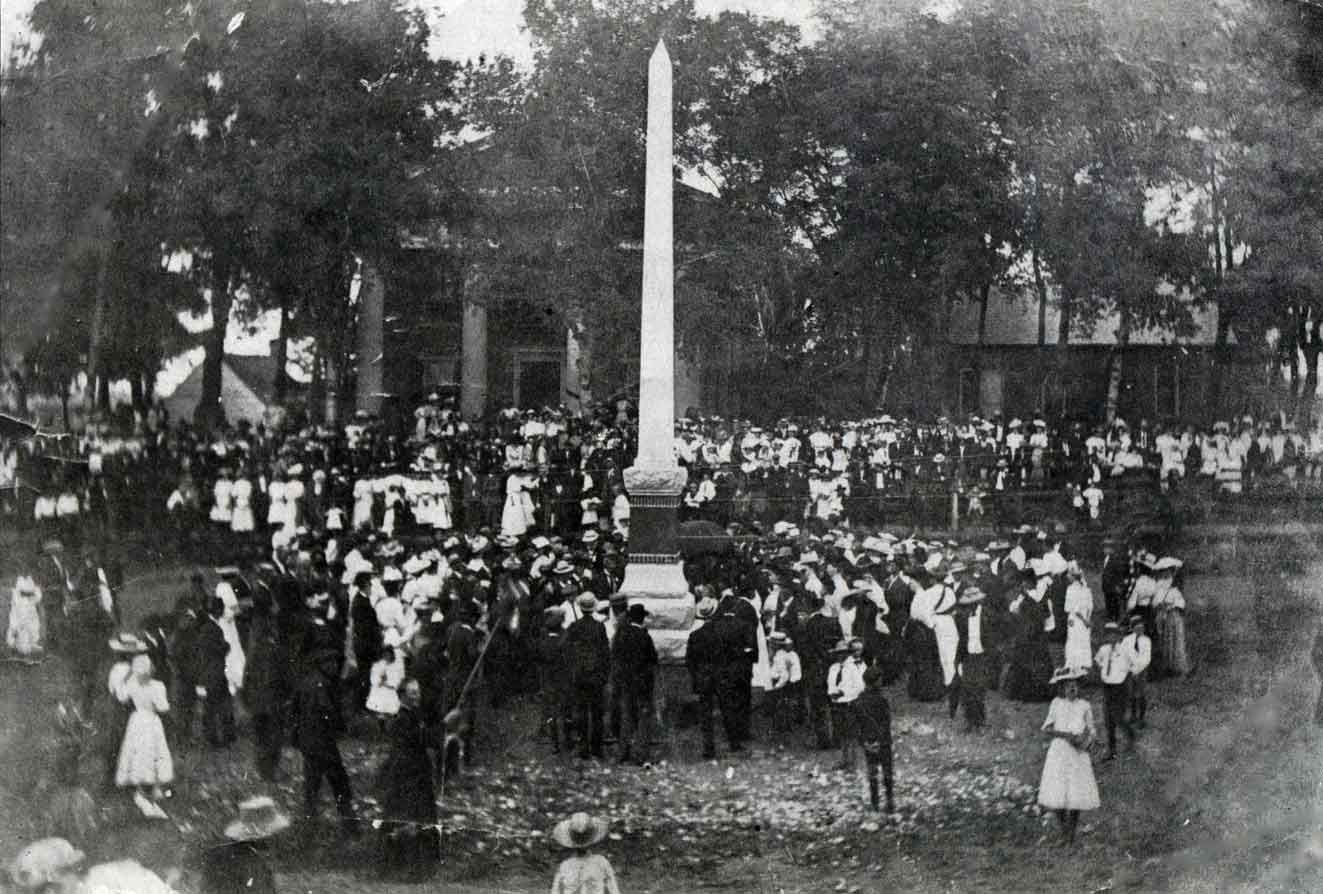
When Charlottesville’s The Daily Progress reported the erection of Buckingham County’s Confederate Monument in 1908, Capt. Irving and the Battle of Rich Mountain were remembered.
Buckingham, VA, July 01—
The Confederate Monument just erected here was unveiled yesterday at the same time the cornerstone was laid. The double ceremony was very impressive, and was attended by a large crowd, including a great number of veterans.
Mr. William H. Megginson, an aged veteran, who has been bedridden for many years, was placed in his wheel chair and rolled to the base of the monument, and he pulled the string that threw aside the veil, and displayed to sight the beautiful monument.
A great cheer went up from the crowd when the veil was removed. The inscription on the monument reads.
“To commemorate the devotion and heroism of the Confederate soldiers of Buckingham county, who valued principle more than life, and fought for a cause they knew to be just.”
Judge Duke’s speech was a gem, and when he referred to Lee as the god-like man he was cheered long and loud. He was introduced by Colonel R. F. Hubard, who also made a neat little speech, in which he mentions the bravery and patriotism of the late Captain Carter Irving, who was captain of the Lee Guard, and who first said he hoped a monument would be erected to the memory of the brave boys of Buckingham, who laid down their lives. One man out of every five of Captain Irving’s company fell at the battle of Rich Mountain.
There was a splendid dinner served on the grounds, which the old soldiers seemed to enjoy. A band of young girls dressed in red, white, and blue sang Dixie and a number of the war songs of long ago. Captain Sam P. Moseley was on hand with his banjo and sang.
When the day was well-high spent in happy reunion and rejoicing there were calls made for a speech from Hon. R. W. Hubard, who responded briefly.
 Interestingly, on Sunday, July 21, 1861, when The Times-Picayune reported “THE BATTLE OF RICH MOUNTAIN,” the Louisiana newspaper erroneously printed that Capt. Carter Harrison Irving had died in battle:
The Buckingham Lee Guard suffered most severely, having thirty men, together with Capt. Irving and Lieut. Boyd killed. Capt. Curry, of the Rockbridge Guard, and Capt. Anderson, of the Lynchburg Artillery, were also among the killed. Four hundred of the enemy found a merited doom in death.
On the contrary, the newspaper was correct in their report that Lt. J. G. S. Boyd, graduate of Randolph-Macon College, Class of 1845 (A.B.) and 1848 (A.M.), had died at the Battle of Rich Mountain on July 11, 1861. John Granville Sharpe Boyd, a teacher in Buckingham County, Virginia, joined Buckingham’s Lee Guard (Co. E of the 20th VA Infantry) on May 20, 1861 as a 2nd Lieutenant. He was buried in Mount Iser Cemetery, Randolph County, West Virginia.
On November 11, 1861, his “tragical and untimely end” coupled with his “dauntless courage and self-sacrificing heroism” was noted in the Buckingham County court records. One year earlier, Boyd, who also may have practiced law, was living at Buckingham Court House. He left a widow, Mary S. Boyd, and at least one child, J.G.S. Boyd, Jr. Seven of Boyd’s pupils died that day at Rich Mountain, including Charles Henry Hickok of Buckingham Court House.
To be continued….
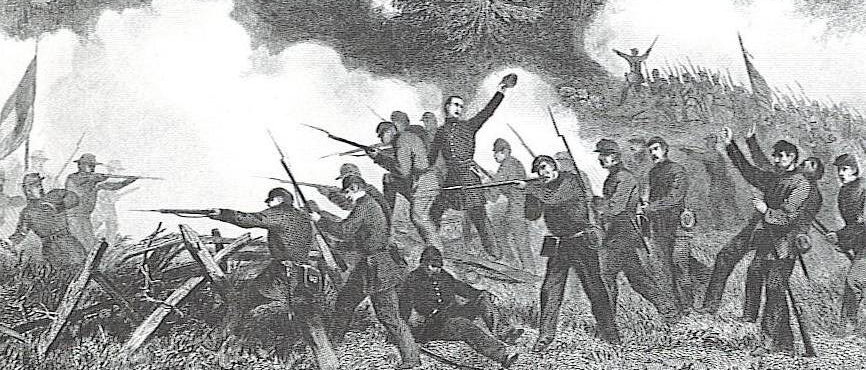
In 1937, when William Shepard shared the following with his audience, ladies of the United Daughters of the Confederacy, many of them were likely “real daughters” of Confederate veterans. During his talk, Shepard quoted at length an undelivered speech written by Capt. Carter Harrison Irving, who had “prepared it for delivery at Buckingham Court House in 1884.” Robert L. Brock of Farmvillle provided Shepard with the manuscript which was originally to be given at a reunion of the Lee Guard.
“This is the only complete history of the several companies organized in Buckingham that I have been able to find,” Shepard announced. “I am repeating the language used by Captain Irving.”
GENTLEMEN OF THE LEE GUARD…
After a separation of twenty three years we meet again. It was in May 1861 that we first assembled in this village. A war [of] gigantic proportions was then impending over the South, and we voluntarily tendered out services to the Governor of Virginia, to assist in repelling the threatened invation (sic) of our state. Our offer was accepted; we went into the field; we encountered the enemy at Rich Mountain the 11th of July, 1861 and were overwhelmed by superior numbers. A force of thirty-five hundred strong, led by General William Rosencrans, one of the ablest generals of the Federal service, and guided by a union mountaineer, moved steathily upon our flank and fell upon our Confederate force of three hundred men, which had been placed two miles in the rear of the main body of our army. We lost the day on that occasion, but we lost not our honor. . .
We went into the fight with about sixty-five men, the rest of the company having been detailed for other purposes. Our loss in killed was thirteen men. I dare say it will afford you a melancholy pleasure to recall on this occasion the death roll of your fallen comrade. Their names are as follows: Third Lieutenant, (J.G.S.) Boyd; First Sergeant, William H. Allen; Second Corporal, Charles H. Hickhock (sic); Privates, T.F. Guthrie. W.A. Guthrie, L.E. Murphy, T.H. McFadden, Adam Hocker, T.H. Pendleton, William F. Smith, T.L. Stinson, Jordan Taylor and Jim Wood.
To be continued….
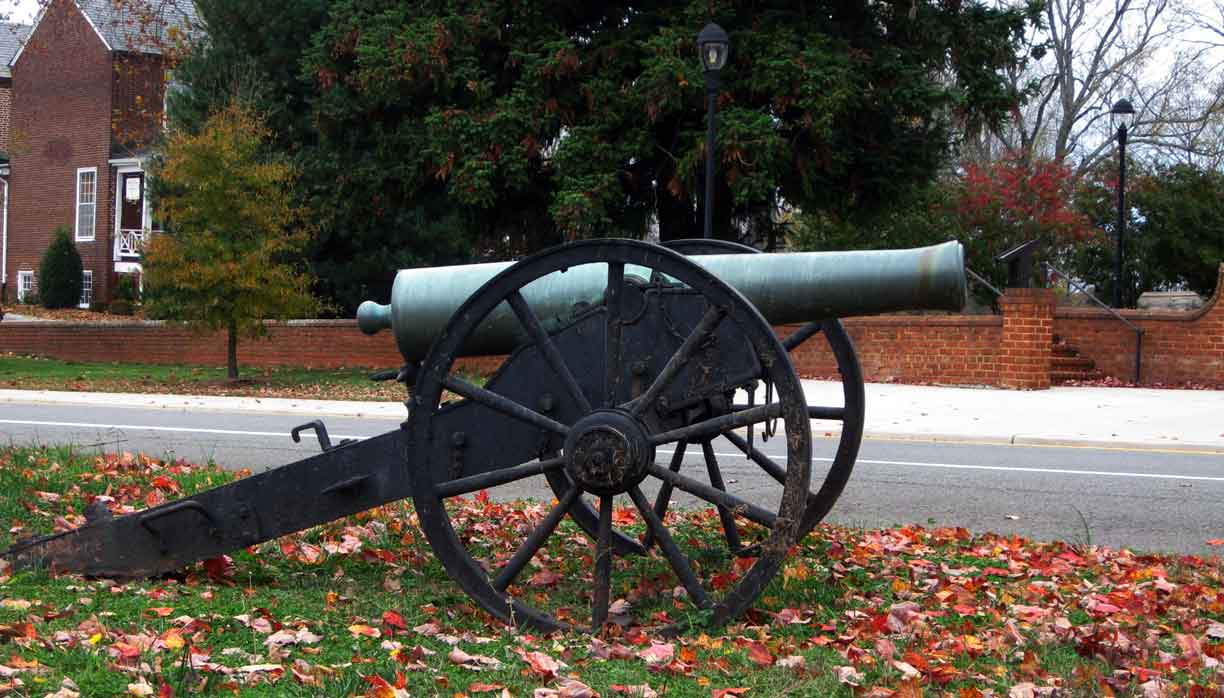
Among the Buckingham County-related manuscripts held at the Library of Virginia is a speech given in 1937 entitled “The Contribution of Buckingham [County] to the Confederacy.” Delivered before the United Daughters of the Confederacy, the manuscript is unsigned and attributed to William Shepard.
According to Shepard, during the War Between the States, “Buckingham contributed one troop of cavalry, and five companies of infantry to the Confederate Army. That is some 30 commissioned, 50 non-commissioned officers, and approximately 750 private soldiers. While the records are not accurate my research leads me to believe that 125 men were killed in battle, another 125 wounded, and 150 captured and held prisoners of war. Roughly one-half were killed, died from exposure and disease, wounded or captured.”
He went on to say, “so far as I have been able to ascertain, no one has traced the history or made a written record of the deeds of these companies. To name each battle of the War Between the States in which these men participated, would be to enumerate nearly every principal battle fought in the area between Fort Donelson and Gettysburg. “
In 1937, doubtless there was nothing remotely comparable to a complete history written of Buckingham County’s contribution during the war. Still, as Shepard continued his speech, he shared a wealth of anecdotal material of great interest. By 2013, even more has been collected and written about the men of Buckingham who fought in the War Between the States. In the coming months, some of those names and some of their deeds will appear in posts at Slate River Ramblings.

(Courtesy Historic Buckingham)
Readers of Slate River Ramblings have been admiring the lovely sketches of Buckingham buildings penned by Dr. Margaret Allen Pennington. These sketches accompany text written by Lorna Scott in a two volume set entitled, The Courthouse Burned—.
Dr. Pennington’s obituary appeared in the Richmond Times Dispatch on January 7, 1989.
Dr. Margaret Pennington, 79, a retired physician, died Jan. 5, 1989, at St. Mary’s Hospital after a lengthy illness. Born in Ashland, KY, she moved to Buckingham Co., VA, in 1946. She attended the Univ. of Richmond and the College of William and Mary before graduating from the Medical College of VA in 1937, one of only two women in her class.
Dr. Pennington was a co-founder, board of director’s member, and first treasurer of the Historic Buckingham Society. She traveled throughout Virginia with her husband, Dr. William Pennington, photographing county courthouses. From the photographs, she illustrated her 1987 book, County Courthouses in Virginia. With her husband, she practiced medicine until she retired in 1984. In addition to her husband, she is survived by three daughters and a son. A memorial service was held at her home, Col Alto Farm, in Buckingham.

Both volumes of The Courthouse Burned—, written by Lorna Scott and illustrated by Margaret Pennington, are available online from Historic Buckingham:
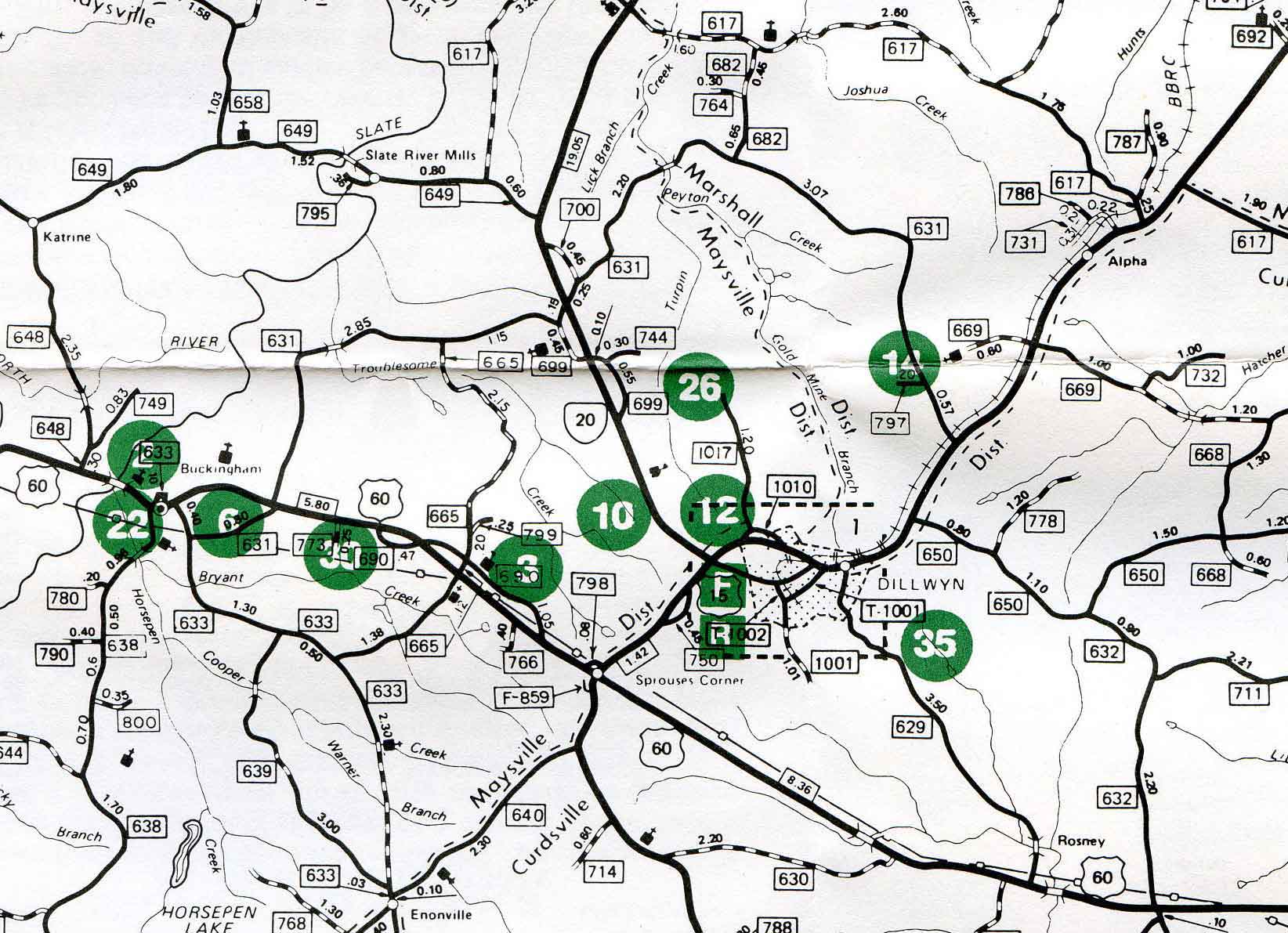
Here’s the next in a series of detailed maps of Buckingham County, focusing on the area nearest Buckingham County Courthouse. Not far to the east is the town of Dillwyn.
Key for the “Points of Interest” in green, roughly from west to east:
2. Buckingham County Courthouse
22. Housewright House (Historic Buckingham Museum)
6. Buckingham Community Arts Building
30. Robert E. Lee Wayside
3. Buckingham County High School and Board of Education
10. Rt. 20 Village
12. Dillwyn Gold Mines (Historic Location)
35. Buckingham County Library
26. Buckingham Correctional Facility
14. Gene Dixon, Sr. Memorial Park
If you click on the map, a separate image will open and you can enlarge any area you are interested in.
Note: This map was created c. 1989 and, therefore, is not completely current; however, change comes slowly to Buckingham so it remains useful.
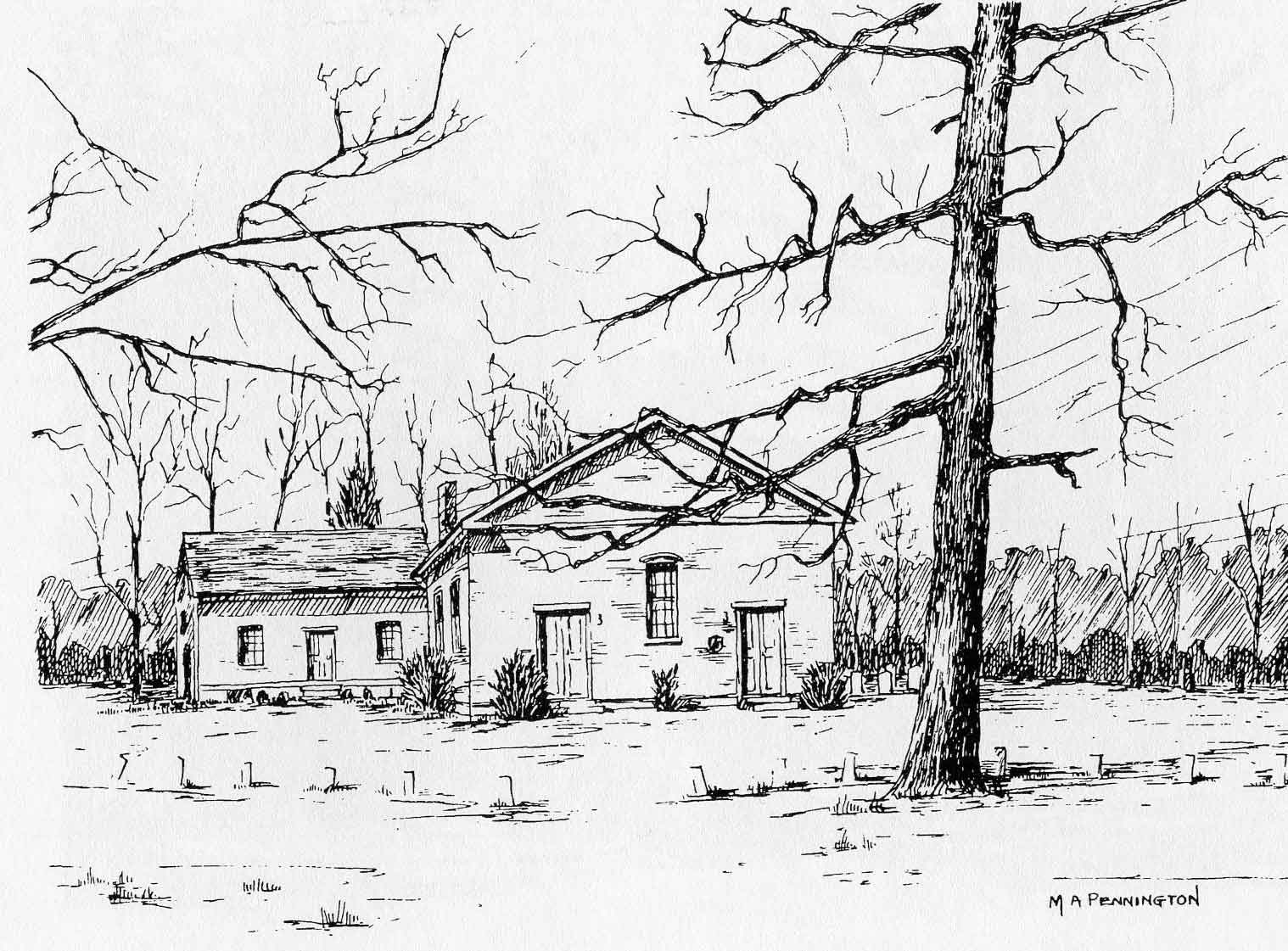
Bethel Methodist Church (Courtesy Historic Buckingham)
In 1854, when Thomas Baldwin’s Gazetteer of the United States counted nineteen churches in Buckingham County, Bethel Methodist Church was among them.
According to Elizabeth McCraw’s historical survey written in 1937, a church was established on the site as early as 1821. By 1833, a log structure was built on land donated by Moses Flood. When it burned, a new church (pictured above) was built across the road on land donated by Capt. James M. Anderson. In 1933, the congregation celebrated Bethel Methodist Church’s 100th anniversary.
Located 1.6 miles west of Andersonville on Route 640, Elizabeth McCraw described the building as a “conventional type, one-room rural church, and has three windows on each side and four in the back end. There is a two-aisle entrance with double doors at each entrance. The building is ceiled inside, though the original structure was plastered. The church extends back of the pulpit in a circular form. There are two windows in this part.”
Over the decades it has served many families in the southern part of the county, including these well-known Buckingham surnames: Anderson, Morgan, McCraw, Coleman, Cole, Jones, Eppes, Davidson, Gilliam, Gary, Flood, Steger, Farrow, Glover, Forbes, Christian, Duty, Rush, Hooper, and Seay.

This coming July marks the 80th anniversary of the establishment of Buckingham County’s Civilian Conservation Corps (CCC) Camp P-56 at the foot of Willis Mountain.
In 1997, the many accomplishments of the men at the camp were acknowledged with an historic marker which reads:
On this site in July 1933, CCC Camp P-56 Company 1367, opened with an enrollment of 192 Virginia men. The camp, which was organized as one of President Franklin Delano Roosevelt’s New Deal employment programs, consisted of 52 small barracks, a large dining hall, two garages, and many other buildings. While at this camp, the men constructed 275 miles of forest roads, several bridges, three lookout towers, and numerous recreation buildings. The CCC also provided opportunities for the young men to further their education. In December 1937 “the camp” closed and all the buildings soon were demolished.
I’m preparing an article for the Buckingham Beacon commemorating the men of Camp P-56 and am in the process of collecting stories and images.
Did your father, uncle, or friend work for at Buckingham’s Camp P-56?
If so, let me hear from you. Please contact me at jlyeck@gmail.com.

Buckingham Springs (Courtesy Historic Buckingham)
In the 19th century, “going to the springs” was an integral part of the life of Virginia planters. Virginians went to socialize. They went to heal what ailed them. Many of them journeyed west, to the mountains, escaping the summer heat. Images of lavish resorts in Bath County or Greenbrier County’s White Sulphur Springs come to mind. There was a time, however, when Buckingham County had a White Sulphur Springs of its own and the local gentry visited regularly, seeking the same rest, repair, and society of the larger resorts.
For the rest of the story . . . pick up this month’s issue of the Buckingham Beacon to read my current article: “Going to the Springs in Buckingham County.”
If that’s not convenient, you can access a PDF of the article here:


 slate river ramblings . . . .