
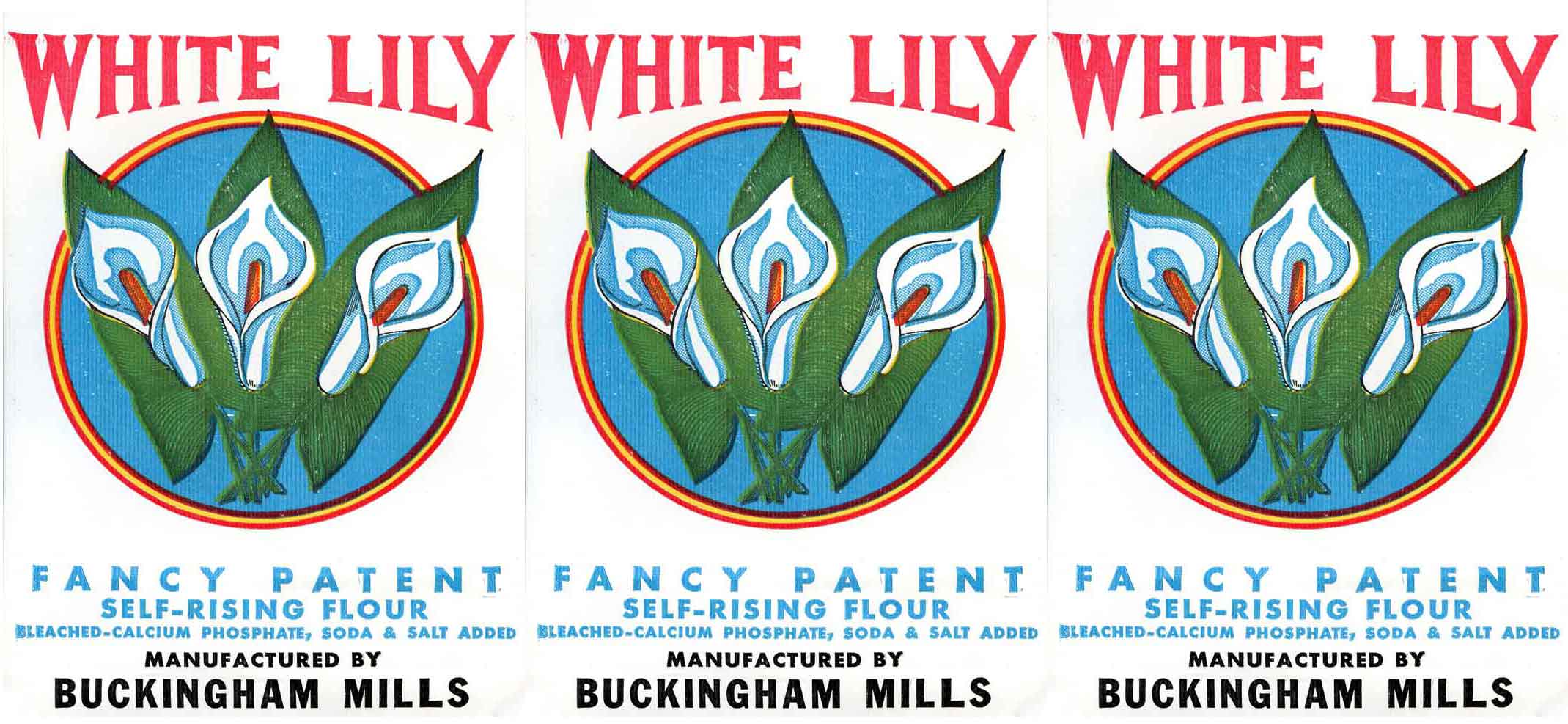
Flour Bags, Buckingham Mills, Buckingham Court House
A mill, in the vicinity of what became Curdsville, was one of the oldest in the county. In her 1937 survey for the Virginia Historical Inventory, Elizabeth McCraw noted the imported French Burrs, used for grinding corn, remained at Curdsville Mill located close to the Willis River, below the deserted village of Curdsville. It was a mammoth structure, four stories high with a basement. Her recounting of the history of the mill is particularly rich and detailed:
It is said that John Gannaway about 1765 operated a store and a saw mill on Gannaway Mill Creek – and a mill on Willis River for grinding corn and wheat. This mill being the ancestor of the Curdsville Mill of today. The present mill is thought to have been built by Richard Woodson Gannaway sometime before the Civil War, about 1840.
A land grant from King George II , dated September 10, 1755 and signed by Gov. Dinwiddie, gives a tract of land containing seven hundred and twenty-five acres of land described as follows: “In Albemarle County on the branches of Willis Creek” bordered on the north side by Bairds Road, John Hodnell’s and Alexander Stinson’s corner. It is further described as bounded by Joel Walker’s and Henry Perkins’ land, and as crossing Gannaway’s Mill Creek.
All this would indicate that as early as 1755 – before Buckingham was cut off from Albemarle, a mill was in operation on the present site of the Curdsville Mill.
It has often been said that a million bricks went into the building of this mill, but one familiar with such work figured that 250,000 brick were required because there is so much rock in the foundation. The mill was originally five stories high, each floor having a pitch of eleven feet. A cyclone some years ago demolished the top story and when the building was repaired it was lowered and a hip roof replaced the old gable roof which was put on the layers of brick. It now has a metal room and several dormer windows for light and ventilation. The bricks used in the building are said to have been made on the place by slave labor.
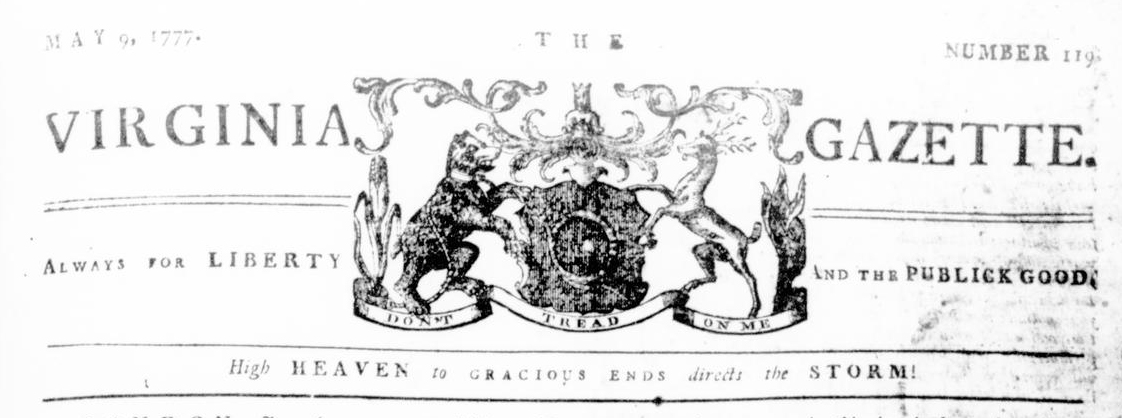
To be LET at Buckingham courthouse….
It is likely that Buckingham County’s first courthouse was a wooden structure. In 1777, sixteen years after the founding of the county, Buckingham took a step forward when it elected to build a brick courthouse. Trustees John Bernard and John Cox sought a builder, announcing the county’s plan on May 9, 1777 in Williamsburg’s Virginia Gazette.
To be LET at Buckingham courthouse, the second Monday in June next, being court day, The Building of a brick courthouse, 50 feet in length, and 32 feet from the front to the back of the building, the court room to be 20 feet by 15 the wall to the water table to be three bricks thick and 3 feet high, and from the water table to the top two bricks thick and 12 feet high, a chimney with a fireplace to each of the small rooms, the roof to be hipt, and covered with plank and shingles of heart pine, a medallion cornice to the eaves, the inner walls to be plastered and whitewashed, the bench, bar, and other inside work, to be finished in a genteel manner, the particulars of which will be agreed on at the time of letting the work. One third of the money to be paid when the sufficient number of bricks for the building are made and barat [?], one other third when the walls shall be raised, and the remainder when the whole shall be completely finished; for the performance of when, by the last day of October 1778, bond and security will be required of the undertaker, by
JOHN BERNARD
JOHN COX, trustees
John Bernard (1736-1799) was, at one time, Sheriff of Buckingham County and a Church Warden of Tillotson Parish. John Cox was among the earliest tavern keepers at Buckingham’s courthouse. During the American Revolution, Cox’s tavern was used to hold prisoners of war.
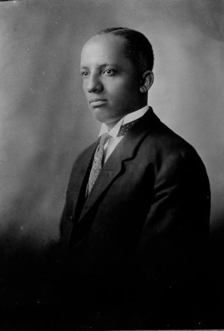
Portrait of Dr. Carter Woodson by the Scurlock Studio in Washington, D.C.
Archives Center, National Museum of American History
Yesterday, Buckingham-born Dr. Carter G. Woodson was featured on the blog maintained by the National Museum of American History. The post, entitled “From the low point of American race relations: Dr. Carter Woodson’s Negro History Week,” it begins:
When there were no academic journals to counter racist scholarship, Dr. Carter G. Woodson created one. When no professional presses that would accept materials about African Americans, he founded one. Fellow Kimberly D. Brown explores Woodson and the origins of Black History Month….
For the full story see: “Dr. Carter Woodson’s Negro History Week”

Centenary Methodist (2007)
Photo by Joanne Yeck
When Thomas Baldwin’s Gazetteer of the United States (1854) counted nineteen churches in Buckingham County, Lebanon Methodist was likely one of them.
In 1853, surviving records for Methodist meeting houses in Buckingham County included Lebanon where my ancestor Martha Robertson (Bransford) Agee worshiped, along with some of her extended family. The Agee family land was located about thirteen miles north of Buckingham Courthouse near what is today Highway 20. A few years later, in 1857, Martha’s daughter, Mary Elizabeth, married her first cousin, Thomas Meredith Agee. The ceremony was performed in Buckingham by Rev. Joseph Spriggs, a Methodist minister.
The next surviving Methodist Class lists are dated 1869-1870, and Lebanon is no longer included. Individuals earlier affiliated with Lebanon are now listed in the Centenary Class. The Church Roll names 92 members, including Thomas M. and (Mary) Elizabeth Agee and her son, the twenty-five-year-old John T. L. Woodson. His “life condition” was married and he was serving the church as a Steward.
When did the transition from Lebanon to Centenary happen? Centenary was founded before 1863. The congregation originally met in a log cabin. Was it the one-time home of Lebanon? Today, Centenary United Methodist Church (built c. 1884) is located in the same locale on Highway 20.
Visit Scottsville Museum online for a list of burials at Centenary United Methodist Church:

Gilliamsville (2011), Photo by Joanne Yeck
One Buckingham family tradition holds that there once was a haunting near Gilliamsville at a place called Coles Gate. Gilliamsville, now a ghost town itself, was situated near the Buckingham-Cumberland County line on the road to Cartersville. Coles Creek runs through this area.
As the story goes, a man started to build a house on this land. He had completed the foundation when he was told the area was haunted. He left the house unfinished and the foundation was called “Haunt’s Hotel.”
Has anyone heard of Coles Gate or “Haunt’s Hotel?”
Also, if you have any stories or information about Gilliamsville, please let me know.
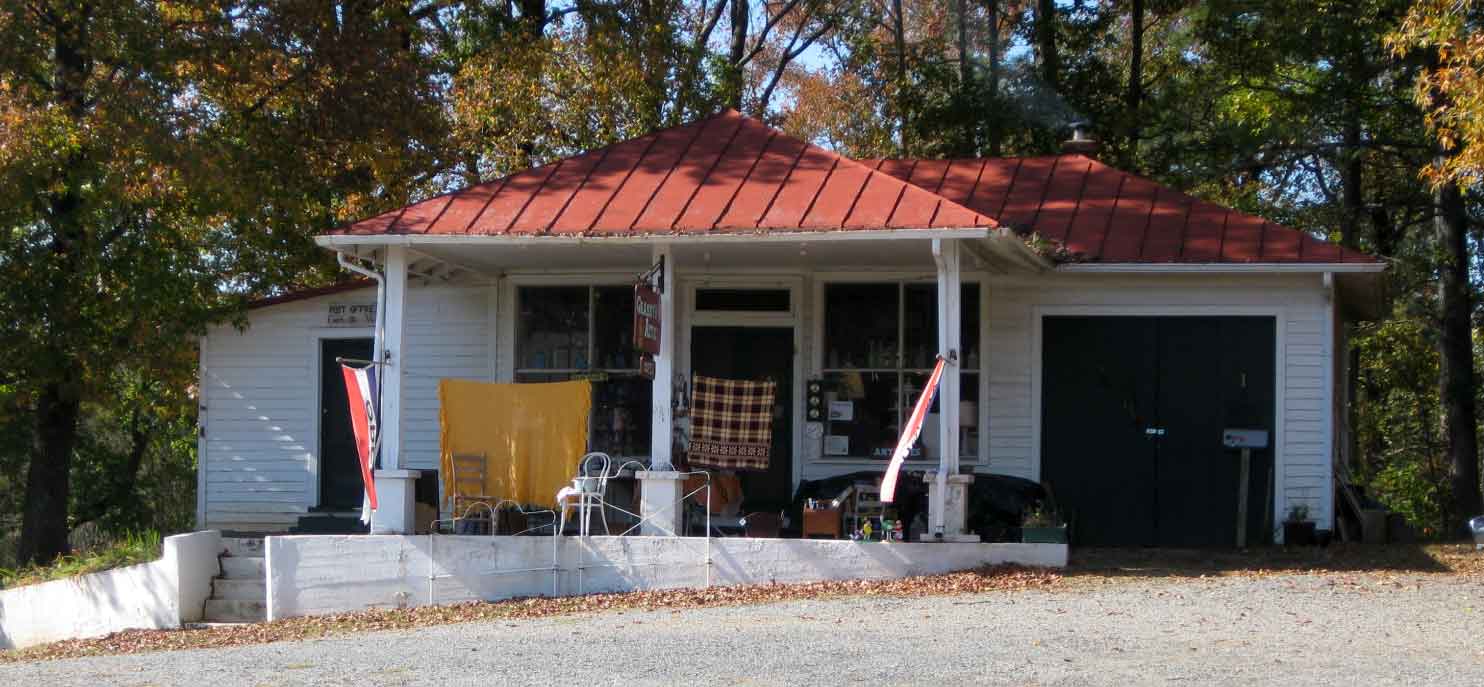
Curdsville Post Office (2011)
Photo by Joanne Yeck
In 1856, there were fifteen post offices in Buckingham County. The postmasters included my ancestor, Charles S. Saunders. Note all the post offices were operated by postmasters; this will not be the case as the century progresses and, eventually, Buckingham will have their share of able postmistresses. That year, however, this was the list:
Austin: Charles R. Shepherd
Buckingham Court House: Robert Shaw
Buckingham Mine: William E. Saunders
Chambers’ Mill: Charles S. Saunders
Curdsville: Albert Baldwin
Diana Mills: John J. Newton
Gary’s Store: Richard S. Grey
Glenmore: John C. Fitz
Gold Hill: William C. Word
Gravel Hill: Beverly A. Brown
Mount Vinco: Samuel M. Spencer
New Canton: Jefferson S. Robertson
New Store: Charles D. McKinney
Staunton’s Precinct: John R. Spencer
Virginia Mills: John S. Nicholas
Does anyone know of a family connection between Charles S. Saunders and William E. Saunders?
Charles D. McKinney, postmaster at New Store, was the brother of the future Governor of Virginia, Philip Watkins McKinney (1832-1899)?

What does Patrick Henry have to do with Buckingham County?
His connection to the Diuguid family is an excellent answer. Henry and William Diuguid, Jr., founder of Diuguidsville, were first cousins.William Diuguid and Jean Henry, of Aberdeen Scotland, were the parents of Buckingham’s William Diuguid (1717-1764). Jean was a sister of Col. John Henry of Virginia, aunt to Patrick Henry, Patriot, Attorney, and Governor of Virginia. In 1790, William’s half sister, Margaret Donald of Aberdeen, wrote to Patrick Henry giving an account of the connections between the Henry and Diuguid families.
Today, the letter is housed at the Library of Congress in the Personal Correspondence of Patrick Henry. A transcription is included in William Diuguid of Buckingham County, Virginia by Eleanor Harris MacRae.
Karen Lucas, a descendant of William Diuguid, Jr. has written a thorough analysis of the letter. For more about the Henry-Diuguid connection, please visit her site: http://freepages.history.rootsweb.ancestry.com/~klaw/Henry/margtitle.html

Photo by Craig Swain
Old Buckingham, established in 1761, was somewhat larger than today’s county. In 1845, the southwest corner was cut out, contributing to the newly formed Appomattox County. This included the prosperous area around Bent Creek and the James River town of Diuguidsville. The historic marker for this once thriving place reads as follows:
The town of Diuguidsville established in 1792 by the Virginia General Assembly was named for William Diuguid 1717-1764 immigrant to Buckingham County in 1745 from Aberdeen, Scotland. He was a first cousin of Patrick Henry and father of Capt. William Diuguid, Revolutionary War soldier and one of the first trustees of the town. In March 1865 the townspeople of Diuguidsville burned the covered bridge here to prevent Gen. Philip Sheridan and troops from crossing the swollen river on their way to meet Gen. Grant. Diuguidsville was a flourishing town until the Civil War when it ceased to exist because of the decline of river transportation.
During the American Revolution, Capt. William Diuguid, along with other men of Buckingham County, commanded troops, guarding British prisoners of war at The Barracks, just outside Charlottesville in Albemarle County.
For more about the Diuguidsville marker and locale, visit:

St. Peter’s Episcopal Church (Courtesy Historic Buckingham)
Yet another of the nineteen Buckingham County churches accounted for in Thomas Baldwin’s Gazetteer of the United States (1854) was St. Peter’s Episcopal Church founded in 1832.
Over one hundred years later, in 1937, Elizabeth McCraw wrote at length about St. Peter’s Episcopal Church for the Virginia Historical Inventory. Located less than a mile north of Curdsville, she described the church as follows:
This church “by the side of the road” is entered by double doors and a vestibule. Above the vestibule and facing the pulpit, is a balcony or gallery where the colored carriage drivers and other slaves worshiped before 1865. . . . Several years ago the steeple was struck by lightning which so damaged it that it had to be taken down. The old bell, which for many years called the membership to divine worship, was sold and is now used in Johns Memorial Church, Farmville, Va. This church served a large and wealthy congregation in its early days. On its roll were to be found the names of Epps, Cox, Crute, Osborn, Henry, Stinson, Grigg, Evans, Sheppard, Hubard, Bolling and others. For thirty years the Rev. Thomas Hugo Lacy was the beloved rector of this church.
Rosa G. Williams, fieldworker for the Virginia Historical Society, took a photo of the church’s façade. It can be viewed online along with Elizabeth McCraw’s survey: http://image.lva.virginia.gov/VHI/html/04/0386.html
Note: See the 1/31/2013 post for a map of the area around Curdsville.
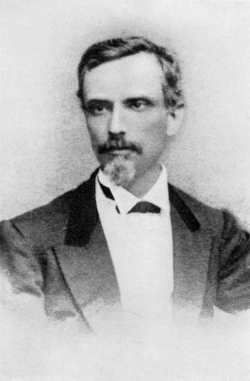
In the 2/12/2103 post about Dr. George W. Bagby, there was an error in the link provided. If you are interested in reading my article, “Dr. George W. Bagby: Buckingham County’s Mark Twain,” featured in the February issue of the Buckingham Beacon, please try the link below:
https://docs.google.com/file/d/0B3nuAYafKo4_R2E0SDgwanZ2TFE/edit


 slate river ramblings . . . .