

The Richmond Whig, Courtesy Virginia Memory, Library of Virginia
After the Buckingham County courthouse burned in February of 1869, many citizens in the county rerecorded deeds and wills, protecting what was rightfully theirs. Chancery cases that were in progress were thrown into chaos. Depositions had to be taken to reestablish suits in progress.
In June of 1869, a notice appeared in The Richmond Whig concerning documents in the case of Scruggs versus Pankey:
The petition of Jane Scruggs this day filed before me represents that, at the September term, 1868, of the Circuit Court of Buckingham county, she recovered a judgment against James E. Pankey and William T. Pankey for $500, with lawful interest from January 14, 1862. . . . .
Some of the monies due Jane Scruggs had been paid to her; however, there was a “residue” which remained unpaid. All evidence of this judgment was destroyed by fire with the clerk’s office of the county and Jane Scruggs requested that the time and place be made for “taking proof to reestablish the contents of the said records are destroyed.”
Robert T. Hubard, Jr., then a Special Commissioner for Buckingham County, announced the following:
It appearing by affidavit that James E Pankey is a nonresident of the State of Virginia, the said James E Pankey is hereby notified that I have appointed TUESDAY, 13 July, 1869, between the hours of 10 A.M. and 3 P.M., at my office, at Buckingham Courthouse, as the time and place for taking proof to re-establish the said record; and said James Pankey is required to appear at the time and place aforesaid, and do what is necessary to protect his interest in these proceedings.
Did James E Pankey appear before Mr. Hubard? Did Jane Scruggs get the monies owed her?
Surely many cases like these went unresolved due to the burning of the courthouse.
Coming next: Robert T. Hubard, Jr.’s request concerning Woodfin vs. Brown

General George Stoneman, Courtesy Library of Congress
On March 2, 1869, the Editor of Richmond’s Whig printed a lengthy and strongly opinionated letter, signed under the pseudonym Lucius, in which the author bemoaned postwar politics and longed for the “free and unterrified constituency” of old. Lucius expressed his concerns about the power of Northerners, particularly New Yorker Charles E. Zincke who “lit among us in the palmy days of the F. B. [Freedman’s Bureau (?)], but having feasted upon the rotten and reeking carcass of the sweet scented institution until it is now no more, he has turned his foul beak upon the helpless tax-payers of this county.” According to Lucius, Zincke applied to General Stoneman, head of the First Military District (June 2, 1868, to March 31, 1869), for the office of Buckingham County Clerk and aspired to represent Buckingham in the coming Legislature.
Lucius went on to praise Brigadier General George Stoneman, while expressing his deep concerns about rising Radicalism:
Your correspondent has had occasion as a private citizen to approve and commend the kind and conciliatory manner in which General Stoneman has tempered military rule to the shorn and oppressed people of a once free and prosperous State, by which conduct he has won the respect of our people generally, but he is not an applicant for office for himself or for anyone else, and asks no favors at the hands of our military rulers.
If the carpet-bagger alluded to dare deny any of the above statements attributed to him, they can be fully proven upon him by several gentlemen who listen to his harangue. Your correspondent feels a deep interest in the welfare of the community in which he lives, and whilst General Stoneman may be able to hold his nose in certain office seeking skunks creep around his office, he certainly hopes that their infliction “en permanence” may be spared us, as some of our own people are already becoming weak kneed and weak backed, under Radical pressure, and the stomachs of the rest are fast approaching nausea. Give us a little more dirt to eat, but spare us the skunks.
LUCIUS.
To learn more about Brigadier General George Stoneman and the post-war occupation of Virginia, consult Encyclopedia Virginia: “First Military District”
To read more of Lucius’ lengthy letter to the Editor of the Whig, click here:
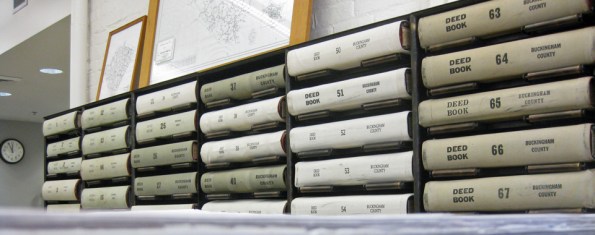
Buckingham County’s Deed Room (2010), Photo by Joanne L. Yeck
On March 2, 1869, a letter was sent from Buckingham County to the Editor of Richmond’s Whig. Signed under the pseudonym Lucius, the correspondent from Buckingham County had strong opinions about the burning of the courthouse and the politics of postwar Buckingham:
LETTER FROM BUCKINGHAM.
Burning of the Courthouse – Destruction of the Records – our Carpet Baggers, etc.
[Correspondence of the Whig.]
BUCKINGHAM COURTHOUSE, March 2, 1869.
You have no doubt ere this learned of the recent fire at this place, by which the courthouse building, together with the accumulated records of more than a century, were destroyed in less time than required to pen these lines. The venerable building now rears only its ragged and dismantled walls, a fitting reflex of the ruin and desolation which the baleful spirit of Radicalism has in its wrath showered upon the old Commonwealth. It was the pride of the village in the county, and its walls had oft re-echoed the shrill voice of John Randolph, the classic eloquence of Rives, and resounded with the plaudits of a free and unterrified constituency. Within its sacred precincts and able and independent judiciary have been wont to dispense that equal and exact justice between citizens of every station and degree, which it is to be feared will not flow in unpolluted streams, should our seats of justice be usurped by seedy and rapacious adventurers, as has been done in some other counties.
Reconstruction is needed here, and we shall probably have it soon; but it may be said of the old building as of the old Commonwealth, “We never shall see its likes again.”
The records, too – and those mute yet speaking monuments of the voiceless past, disdaining the polluting touch and scrutiny of carpet-bag vandals – have sought the silent shades of that oblivion which kindly shields from insult the heads that created and the hands that tend them. May winter’s chilly winds and summer’s gusts sing sweet requiems, as they beat and bluster through the old ruins, to the ashes of both creator and creature – the sad relics of a mighty past.
Lucius went on to inform the readers of the Whig that “everyone” believed that the fire which took down Buckingham County’s courthouse was the work of an incendiary. Yet, he wrote, no one person had been identified as the arsonist. He recalled the night of the catastrophe:
Silently and stealthily the act was perpetrated, while the peaceful inhabitants of the village were wrapped in midnight slumbers, and the barking of watch dogs, coupled with the awful roaring and crackling of the flames, gave them the first intimation of the presence of the dread fire fiend in their midst, when suddenly they awoke to find the red glare of the burning building cast all athwart “the night’s plutonian shore” and penetrating the gloom of their silent chambers.
Not a whole book of paper was saved from the clerk’s office, that being located in the main building, which was wrapped in flames before any one reached it. The next morning, as the citizens were gathered around the still smoldering ruins, some fragments of very old deed books were rescued from the fire, and many persons expressed their purpose to preserve them as mementos of the olden time.
Very few of our landholders can now boast of a title . . . for we all hold our lands, as it were, in common for the present, at least so far as metes and bounds are concerned.
These were, to be sure, tumultuous times, when a man would rather have his records destroyed than be touched by carpetbaggers!
To be continued. . .
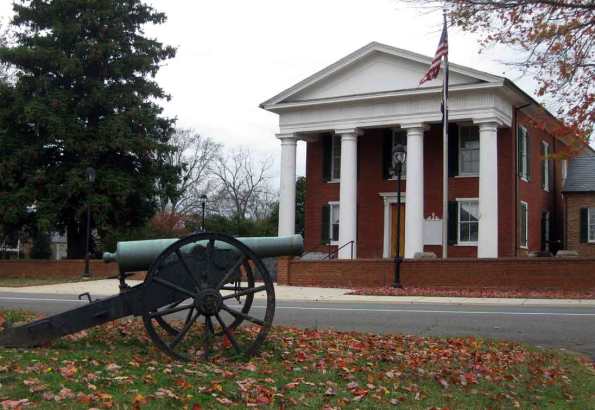
Buckingham County Courthouse, Photo by Joanne Yeck
Many of us interested in the history and genealogy of Buckingham County have struggled with the absence of records due to the burning of Buckingham’s courthouse in early 1869. Fewer of us, however, have thought about the immediate consequences of the “disaster.”
Newspapers reporting state-wide news announced:
The county of Buckingham has no courthouse, no clerk’s office, no records, no judge, nobody to administer the law and no one who is qualified under the reconstruction acts to administer it.
We do know that meetings were held at the nearby Brick Tavern to deal with the calamity. An executive proclamation by the Governor of Virginia declared this a suitable place for holding court in the absence of a courthouse. Gentlemen Justices Robert B. Shaw, Jr., John Spencer, Charles S. Saunders, Henry St. George Harris, and Moses A. Smith presided over that troubled first court after the destruction of the courthouse.
Not being conversant with The Reconstruction Acts (1867-1868), can a Slate River Ramblings reader expand on this disturbing state of affairs in Buckingham County? Was Buckingham County left in a dangerous sort of suspended animation?
For much more about the burning of Buckingham’s courthouse, see: “Incalculable Loss: The Burning of Buckingham Courthouse” in “At a Place Called Buckingham”.
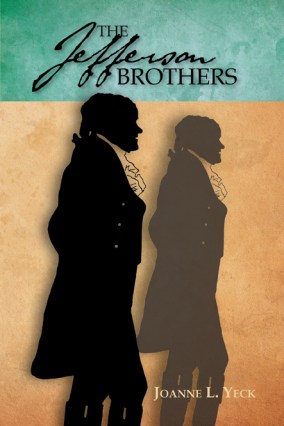
Thomas Jefferson’s younger brother, Randolph Jefferson, served the American Revolution in several ways, including a brief time spent in uniform riding with Nelson’s Corps of Light Dragoons. Robert Bolling’s pension application (#S6689) gave the following account of the brief existence of the Corps. It reads, in part:
“Early in the spring of 1778 I enlisted as a private Soldier to the best of my recollection for a Term of twelve months, in a volunteer Corps of Calvary under the command of General Thomas Nelson as Captain, George Nicholas as first Lieutenant and Hugh Nelson as Second Lieutenant all of the State of Virginia. the said Corps of Cavalry amounting to one hundred men was embodied organized and trained at a small Town in the County of Caroline Va. called Port Royal, this corps was raised by Captain Thomas Nelson of York Town Va in pursuance of the recommendation of Congress of the 2nd March 1778, after remaining at Port Royal about 4 months we about the first of August 1778 marched to Philadelphia where we remained several days, & where on the 8th of August 1778 we were discharged after receiving the thanks of Congress, which was then and there sitting.
C. Leon Harris, who transcribed the application, added:
“Thomas Nelson, Jr. (1739-1789) was briefly a Colonel of the 2nd Virginia Regiment in 1775, signed of the Declaration of Independence, and in Aug 1777 was appointed Brigadier General and commander of state forces. He raised the Corps of Light Dragoons at his own expense and took the command at the rank of Captain. After the corps was disbanded he was active in organizing the Virginia militia. On 12 June 1781 he succeeded Thomas Jefferson as Governor. At the Siege of Yorktown it was said that he directed that his own house be used as a target to aim the cannons.”
Harris’ transcription includes a roster of the men who rode to Baltimore with Thomas Nelson. Among them are Randolph Jefferson and his friend, Green Clay.
Click here for C. Leon Harris’ complete transcription: Nelson’s Corps of Light Dragoons
Eager to learn more about Randolph Jefferson? Consult The Jefferson Brothers.

Roaring Slate River (2011), Photo Joanne Yeck
1901 brought damaging rains and death to Buckingham County, first in June and again in August. Property on Slate River was particularly affected where the river swelled to new recorded heights. On June 1, 1901, Richmond’s The Times reported from “Allen’s Level” in Buckingham County:
Owing to the great freshet I have received no paper for nearly a week. Slate River at Dowdy’s mill was six feet higher than it was ever known before. The farmers along that river and along its tributaries have plowed up their land and planted as a general thing, and have been damaged thousands of dollars.
Mill dams and county bridges have been washed away on many of the streams. The county will probably sustain a loss of from five to ten thousand dollars by the bridges that have been swept away. The bridge at Dowdy’s Mill, which was built in 1852 is gone. Only two bridges are left in the county.
On June 6th, The Richmond Dispatch reported from Scottsville that a hail storm followed the rain, “beating down wheat, grass, and young corn terribly.” Additionally, many farmers’ fowl were killed by the hail.
~
Again in August of 1901, rain soaked central Virginia. In Salem, near Roanoke, heavy rain flooded a block on Salem Avenue with two feet of water coming down in an hour. Richmond’s The Times reported that “two blocks of the city is converted into a lake. The damage will be considerable.”
On August 12th, a report came from Farmville that a farmer named “Hardaman” drowned while trying to cross the Slate River. He was on his way to county court in Buckingham. The Times stated that “one of the heaviest rains of the season had just fallen, which caused a very rapid rise in the creek.”
On August 14th, the Alexandria Gazette and Virginia Advertiser noted, “Two citizens of Buckingham county, named Stauffer and Taylor, respectively, while returning from court Monday were drowned in Slate river by being washed down the stream by high water.”
Does a Slate River Ramblings reader know more about the men who died? If so, please comment.
Special thanks to Mary Carolyn Mitton for finding and sharing the story of the 1901 floods.

Quarrymen at “The Big Quarry,” beside Hunts Creek and next to the old railroad station.
Courtesy Robert Jeffery
In 1913, Richmond’s The Times-Dispatch reported that Buckingham County had been trembling for over a century. A correspondent at Arvonia wrote the following:
That the slate belt of Buckingham County is an earthquake centre and has many times within the past century experienced severe earthquake shocks is the subject of an interesting pamphlet which recently has been published by Dr. Stephen Taber, of the University of South Carolina, under the title, “Earthquakes in Buckingham County, Virginia.”
This pamphlet was written by Dr. Taber after a thorough study of the geology of Buckingham County. He first came to the county to study the gold mines, but later turned his attention to the slate field and its remarkable connection with the earthquakes. The results of Dr. Tabor’s studies were published in Volume III of “The Bulletin of the Seismological Society of America.”
The article went on to say that the earliest quake recorded in the northeastern part of Buckingham was on August 22, 1802. Tremors were felt as far away as Richmond. The severest earthquake in Virginia during the 19th century occurred in 1833; its “axis” was in Buckingham County near the slate belts. During this quake, fences were shaken down and “gas was liberated from subterranean caverns in Bath County, near the present Hot Springs.”
A third earthquake was recorded in September of 1852; its epicenter was also apparently in Buckingham County.
During 1875, there were several earthquakes, all originating in Buckingham’s slate belt. The quake on December 22, at 1875 was particularly intense. Shocks were felt over an area covering about 50,000 square miles, including Farmville, Richmond, Norfolk, and Fort Monroe; Baltimore, MD; and Greensboro, NC.
The article goes on to mention quakes in 1879, 1907, 1910, and 1912. From Arvonia, Rev. Plummer F. Jones, an official weather observer, commented on the August 7, 1912 earthquake. The intensity was about IV on the Rossi-Forel scale and was quite severe at New Canton and at Bremo Bluff, in Fluvanna County.
The newspaper article continued:
Dr. Taber states that these earthquake shocks are the result of faults in the Ordovician slate belt, which runs through northeastern Buckingham County into Fluvanna as far north as Palmyra. Displacements are caused by strains and settlements, as a result of slow crustal movements. The strength of the slates, being less than that of the older rocks of the area, are also a factor in the location of the displacements.
Dr. Tabor states that earthquakes may be expected of this region in the future from time to time, though most of the shocks will likely be of feeble intensity.
It is not thought that the working of many quarries of the slate belt of Buckingham and Fluvanna has anything to do with the earthquakes in any way, the origin of the slips and fractures being far beneath the surface of the earth.
Click here for more about the Earthquake of 1852.

Old Buckingham High School. Courtesy Historic Buckingham.
The frame building served the community from about 1897 – 1916, when a new brick high school (grades 1 – 11) was constructed.
The two buildings stood for many years, side-by-side, on Hwy 60. The older frame building was demolished sometime during 1940s–50s. Today the brick building remains and is the home of Buckingham County’s Arts Center.
Special thanks to Margaret Thomas for helping sort out the two high schools at Buckingham Court House.
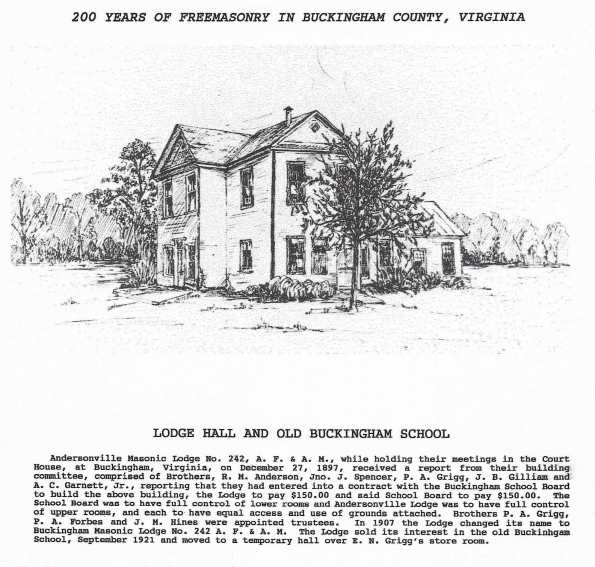
In his book, 200 Years of Freemasonry in Buckingham County, Virginia, Carl Coleman Rosen, Sr. related that, in 1897, the Andersonville Masonic Lodge No. 242, A. F. & A. M. joined forces with the Buckingham School Board to build the building that served as the Buckingham High School (grades 1 – 11) until 1916.
This was the school which proudly held its commencement in Buckingham Courthouse in 1905.
See: 1905: Buckingham High School Commencement
Coming Next: A new high school at Buckingham Court House
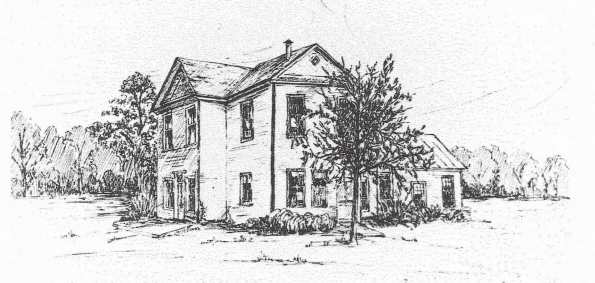
Buckingham High School, built c. 1897.
Courtesy Carl Coleman Rosen, Sr. & Historic Buckingham
In 1905, few individuals in rural Virginia graduated from high school. Commencement was indeed “A GRAND OCCASION.” On Friday, June 2, 1905, Richmond’s The Times-Dispatch detailed the high school commencement in Buckingham County.
Buckingham People Show Their Pride in Their High School
BUCKINGHAM VA. June 1 – Not for many a year, with the possible exception of the first Wooldridge and Forbes trial, has there been such an immense gathering of people at Buckingham Courthouse as assembled here Tuesday night to attend the High School commencement exercises.
Long before the time for opening the exercises a mass of humanity surged around the front door of the courthouse in which the programme was to be rendered. Early in the night every one of three hundred seats that had been prepared for the occasion was occupied, and the vestibule and stairways of the building were filled with those who could not secure seats.
A splendid programme, with varying features, was rendered. The opening address was made by Thomas Hall. The fan drill and fancy march, by twelve boys and twelve girls, was also highly attractive. There were a number of recitations, tableaux and singing.
The Home Band, under the direction of Mr. A. C. Spencer, ably assisted by Miss Nannie Moseley and Mrs. T. B. Bondurant, pianists, interspersed the exercises with delightful music. All in attendance seemed thoroughly to enjoy the evening and many were the congratulations showered upon Principal E. P. Dahl and his assistant, Mrs. Bondurant, for the successful accomplishment of their efforts.
Did you miss the “Wooldridge and Forbes trial” which filled Buckingham County’s courthouse?
Click here to read the serialized story at Slate River Ramblings: The Famous Forbes Case


 slate river ramblings . . . .