
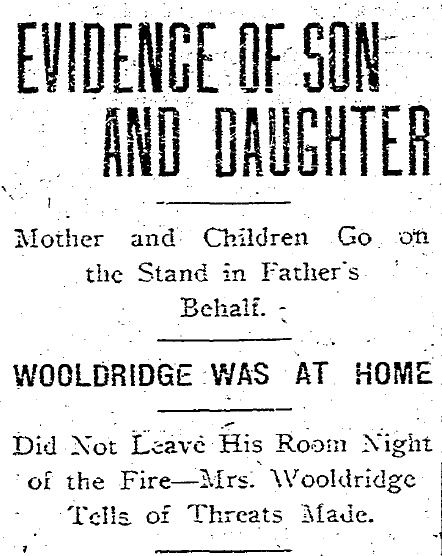
In Defense of Husband and Father
On Monday, January 9, 1905, the prisoner, Cliff Wooldridge, appeared rested after his day off from the exhausting tensions of court. Mrs. Wooldridge had spent the Sabbath with her husband at the Farmville jail. The front page of The Times-Dispatch carried the next installment in the story, noting that Wooldridge said that “it was the pleasantest day he has had in the four months of his confinement.”
The testimony presented on January 9th was a mass of contradictions to previous testimonies given in the case of the Commonwealth vs Wooldridge. The witnesses were already familiar to Judge Hundley and to many in the crowd in the courtroom.
Officer Leslie Fogus contradicted Edloe Spencer’s testimony about Wooldridge’s actions at the time of his arrest. Mrs. J. H. Forbes, on the other hand, supported her husband’s negative testimony about Wooldridge, specifically that he laughed and joked at the burial of John S. Forbes. Janie Forbes broke down on the stand, weeping when reminded of her father’s death. Dan Wooldridge testified about the tracts at the site of the crime. On this occasion, “an iron heel shoe” was mentioned. Dan went on to deny previous testimony against him.
The testimony of Mrs. Wooldridge, who had been unable to appear in the first trial held in Buckingham County due to illness, must have been eagerly anticipated. She maintained that Cliff Wooldridge was home the night of the burning of John S. Forbes’ property. Cliff Wooldridge retired before she did. Her description of Edloe Spencer’s appearance at her home two days after her husband’s arrest was shocking. According to the January 10th issue of The Times-Dispatch:
Edloe Spencer came back to her house with a warrant to search the house for certain papers, the prisoner had told him (Spencer) could be found there. At the time of Spencer’s coming to her house, she was alone with her two girls, her twelve-year-old son and some smaller children. Spencer took all the papers from her husband’s desk and finding among them an old election ticket, shook it in the witness’ face and said:
“I’ll use this against him (referring to Wooldridge), if nothing else.”
Spencer took away enough papers to half fill a pillow case, which Mrs. Wooldridge loaned him to put them in.
Spencer told the witness that her husband had confessed to the burning and so had Charlie Forbes, and that she (witness) had had a hand in the crime, and had just as well own up.
At this accusation, witness’s daughter, Myrtis, exclaimed: “You are a liar.”
Spencer replied: “Look out, little Miss, I have your father and brother behind bars, and if you don’t mind, I’ll have you there.”
With this remark, Edloe Spencer must have become a highly suspect witness. What papers did he take that day? Why had none of them been presented in the trials? Why did Spencer wield so much power when he was not an officer of the law? His motives were at least, in part, political. Was he intent on exposing Wooldridge’s power behind elections? Or, perhaps, what he thought was election fraud? Whatever his motives, Edloe Spencer certainly seemed to have a personal vendetta against the Wooldridge family.
Mrs. Wooldridge continued her testimony concerning the days that followed her husband’s arrest. She admitted that she asked Jim Forbes to provide her with protection, having heard that some twenty-five or thirty persons were headed for her home with malicious intent.
Miss Maud Wooldridge followed her mother on the witness stand and denied a conversation with Mrs. R. D. Forbes concerning hearing the fires from the Wooldridge house. She supported her mother’s testimony, stating that her father was at home the night of the fires. She was also a witness to Edloe Spencer’s intimidation of her mother, giving weight to the testimony concerning Spencer’s aggressive behavior. Maud added that Spencer would not let her look at his “warrant.”
Coming Next: “Wooldridge Trial Near End”
Need to catch up? Click here for The Famous Forbes Case of Buckingham County: Part I
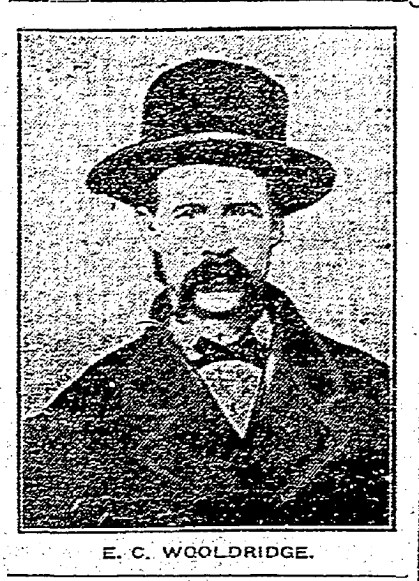
Cliff Wooldridge Takes the Stand
On January 8th, The Times-Dispatch reported that Cliff Wooldridge had taken the witness stand the day before in his own defense. He was questioned for nearly four hours. His testimony reinforced and repeated the facts as he had given them during the July trial in the Buckingham County Court. Approximately 100 ladies were present, a testament to the case’s broad appeal. The correspondent wrote:
Though at first nervous, he made a good witness. The prisoner is in bad physical condition and appears haggard and worn from his long confinement and the nervous strain incident to his tedious trial….
He explained in a plausible manner many of the statements he had made both before and since his arrest, and which are now being used against him.
Wooldridge denied having said or stated that the shoes he wore at the time of his arrest made the tracks at the fire. He denied much of Edloe Spencer’s testimony, and also that he ever attempted to break jail.
In explanation of his conduct in regard to his objections to the giving of the medicine to John S. Forbes, prisoner said he advised that they had better not give the medicine. He did not recall moving the bottles of medicine – possibly might have touched them.
The first time the prisoner had seen Charlie J. Forbes, who is jointly indicted with the prisoner, since the fire was in the Farmville jail. Prisoner had not seen him since Wednesday before the fire….
The prisoner said he did use violent language to James H. Forbes and [this was] because he had been accused by the Forbes of doing the burning.
“When a man makes a grave and serious charge like that, I suppose it would raise an angel in heaven much less a man.”
After a recess of five minutes the direct examination of the prisoner was resumed by Mr. Flood. Prisoner said to Edloe Spencer, who made the arrest:
“I suppose you have a warrant?”
Spencer’s reply was: I know you too well to come without a warrant.
(As a matter of fact prisoner was arrested without a warrant.)
~
In the course of Wooldridge’s testimony, he clarified his comment about a premeditated fire; it was based on seeing Elkin Agee and Tom Ferguson in the neighborhood. They were the men sent to the penitentiary for robbery and arson committed at John Forbes home some years before. Wooldridge also denied having told Jim Forbes that he held the whole matter in the hollow of his hand and that he was in a “bad fix” about the fire.
In short, Cliff Wooldridge denied most of the testimony against him. Edmund Hubard’s cross examination was strenuous, but resulted in no damaging admissions by Wooldridge.
Witnesses for the defense also included Walter Forbes, a nephew of John S. Forbes. Unsurprisingly, this witness contradicted several others who had been brought to the stand by the prosecution. G. W. Scott, a detective connected with the National Detective Agency of Richmond and one of the men who investigated the Forbes site, was also called to the stand. Again, he stated that Cliff Wooldridge was “zealous” in assisting him in the investigation.
Coming next: In Defense of Husband and Father
Need to catch up? Click here for The Famous Forbes Case of Buckingham County: Part I

Contradictory Evidence
The following day was inclement in Farmville. The rain and sleet, however, did not diminish the crowd, including many local ladies, who filled the courtroom. On January 7, 1905, The Times-Dispatch updated its readers.
Judge Hundley announced that he had carefully considered the question of discharging the jury and had decided to overrule the prosecution’s request. The jury would remain, including E. W. Venable, for the remainder of the trial.
Counsel for the defense called Floyd and Thomas Forbes as witnesses, both of them sons of John S. Forbes. Their testimony contradicted evidence previously given by their cousins, James H. and R. D. Forbes.
Floyd Forbes, of Lynchburg, made the startling statement that “the relations between Wooldridge and his father’s family were very friendly; that Wooldridge was possibly closer to his father than any one else in the neighborhood. That there had never been any interruption of these cordial and intimate relations.” This undermined numerous statements by others who said that Wooldridge wished the entire Forbes clan dead.
Tom Forbes proved to be a star witness. He insisted that, on the night of the fires, the ground was frozen and tracks could not have been made around the buildings. He told how James H. Forbes repeated rumors that Janie Forbes had seen Cliff Wooldridge, Dan Wooldridge, and Charlie Forbes on the night of the fire. According to Tom, Jim Forbes suggested that if Janie would come forward, Dr. Nowlin would testify that Charlie was insane, absolving him of responsibility for the crimes. Jim Forbes also indicated to Tom that, if Janie spoke up, it would “save the family great expense.”
What did James H. Forbes think Janie was hiding? Was she silent about “dangerous” aspects of Charlie’s personally or was James Forbes attempting to direct the investigation for his own purposes?
Additionally, J. H. O’Bryan was called to the stand and questioned concerning the tracts. Great attention was paid to the patch on the sole of Wooldridge’s shoe. There was no track with a patch mark. Drama ensued when O’Bryan was asked if he was courting Mr. Wooldridge’s daughter. According to The Times-Dispatch, Cliff Wooldridge “completely lost his temper and trembling with excitement and passion” shouted, “Judge, I object to that.” Wooldridge was, according to the article, “almost a paroxysm of passion.”
Mrs. Rosa S. Carson, a teacher in the Buckingham County public schools, who was present at the home of James H. Forbes when Wooldridge allegedly made statements that were now being used against him, testified that she was in the Forbes parlor and did not hear Wooldridge say “that he held the whole thing in the hollow of his hand.” Mrs. Carson added that Wooldridge did mention that a “young man wearing a brown overcoat and having a light mustache had something to do with the burning.” Did Rosa Carson introduce a new and significant clue?
Prior to January 5, 1905, the Wooldridge family had been excluded from the Prince Edward courtroom. Now, Mrs. Wooldridge and her daughters, Maud and Mazie, were permitted to attend the proceedings. Indeed, the final witness to take the stand on that afternoon was Miss Mazie Wooldridge, the daughter living in Appomattox County. She was remarkably pretty with golden hair, bright blue eyes, and a rosy complexion.
Beyond reporting the evidence brought to light that rainy day, the Farmville correspondent to The Times-Dispatch took time to add a wistful observation:
There are many sad features to this case. Homes have been destroyed, families divided, happy hearts broken, and proud heads made to bow in shame and grief by this mysterious and wanton crime, committed in the quiet old county of Buckingham.
Coming Next: Cliff Wooldridge Takes the Stand
Need to catch up? Click here for The Famous Forbes Case of Buckingham County: Part I
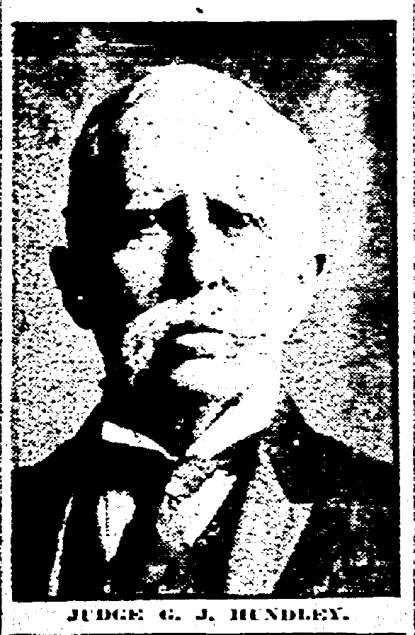
A Juror Challenged
On January 4, 1905, Edmund Hubard raised an issue concerning the legitimacy of one of the jurors. Witness George H. Morris, a traveling salesman and a resident of Farmville, testified that Juror E.W. Venable stated that he would not hang a man on circumstantial evidence. Then, he added that he had heard that Venable said the same to Congressman Flood.
Flood took exception to this hearsay, asked to be sworn in, and denied under oath that any such conversation had taken place with Mr. Venable. The attorneys proceeded to argue the question of discharging the jury. The judge concluded that the trial would proceed with the present jury: however, he would instruct the jury as to circumstantial evidence. Judge Hundley stated, “according to the law of this Commonwealth circumstantial evidence is good evidence, and I want to say that any member of the jury who might entertain the idea I have referred to that that disqualifies him from sitting upon this case; and if any juror entertains that idea, I want to know it now.”
~
The following day, counsel for the defense opened with a series of witnesses discussing a telegram sent on May 22nd which involved the arrest of Charlie Forbes. Based on the coverage in The Times-Dispatch, it is unclear where this line of questioning was headed. Suddenly, Edmund Hubard interrupted Congressman Flood’s examination of Elkin Agee, one of the men who had previously broken into John S. Forbes’s home, asking the court to send the jury out, and hear the evidence of J. H. Morgan, concerning the incompetency of Juror E. W. Venable. Morgan was a nephew of John S. Forbes and, as such, may not have had a completely neutral relationship with the case.
Sometime in early December, Morgan stated that he heard Juror E. W. Venable say that he did not believe in hanging a man on circumstantial evidence. In fact, he did not believe in circumstantial evidence.
Following Morgan’s testimony, Judge Hundley asked the jury to return. Morgan repeated his statement in front of the jury and was followed by George Morris, who stated that Venable made a similar comment about circumstantial evidence in his home. Then, Venable was given a chance to speak and stated that, in December when he spoke to Morgan, he was referring to the McCue case (not the Wooldridge case) though he had often said he wouldn’t hang a man on circumstantial evidence unless the case was made very clear.
When Lonsford Butcher, another juror, was put on the stand, he indicated that Venable had doubts about serving on the Wooldridge jury. Butcher quoted Venable as saying, “Butcher, old boy, I am afraid I ought not to be on this jury.”
Juror Venable, a man of high standing in the county, requested permission to address the court, asking the court the lawyers and the people of Farmville to remember that he took an oath to try the case fairly.
Once again, the jury left the courtroom and Mr. Hubard requested that Juror Venable be withdrawn and replaced. According to The Times-Dispatch, “This motion was eloquently and forcibly opposed by the attorneys for the defense.” It was followed by an equally eloquent and forcible speech offered by the prosecution.
At the conclusion of the argument, Judge Hundley decided to carefully consider the motion.
Coming next: Contradictory Evidence
Need to catch up? Click here for The Famous Forbes Case of Buckingham County: Part I

It is no secret that I’m a big fan of the Virginia Newspaper Project.
Want to learn more about why it is important to save old newspapers, digitize them, and make the available to the public? Follow this link to the latest post at the Library of Virginia’s blog “Fit To Print”:
THE VIRGINIA NEWSPAPER PROJECT ON TV, LIVE, AND IN PRINT
While you are there, try searching Buckingham County and other Virginia topics of interest. Enjoy the results!
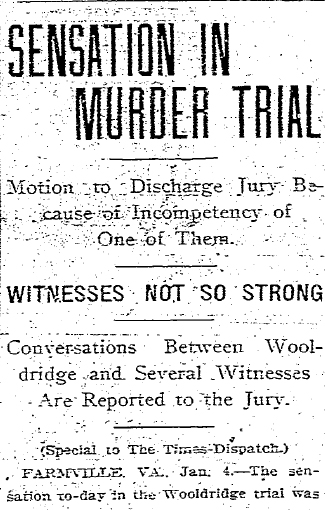
More Witnesses for the Prosecution
On January 5, 1905, The Times-Dispatch continued its detailed coverage of the Wooldridge trial. The newspaper still considered it front page news. Oddly, it featured this misleading headline:
Sensation In Murder Trial
Whoever was writing headlines at The Times-Dispatch was apparently not following the trial which concerned arson, not murder.
Another lengthy article related that the prosecution produced a parade of witnesses, most of whom repeated their testimonies from August. They included R. D. Forbes and Van Anderson. Miss Nora O’Brien, J. H. O’Brien, and Dr. J. B. Noland, who reviewed the issue of the medicine bottles. R. D. Forbes discussed the well-worn information about the tracks around the house. Reese Morgan and J. C. Sutherland, one of the men who arrested Charlie Forbes, supported Edloe Spencer’s testimony. According to Sutherland, Wooldridge told the men to watch the night train for Charlie Forbes.
The following day, the impressive number of witnesses for the prosecution filed in. Cliff Wooldridge appeared unaffected, cheerfully entering the courtroom, apparently content. Soon, he was joined by his daughter, Maud, who kissed her father affectionately. Under his happy exterior, however, Wooldridge showed signs of nervousness. Affected by his extended ordeal, he was on edge and laughed openly at things he found amusing. Judge Hundley was not amused by the prisoner’s behavior and demanded order in the crowded courtroom.
C. A. Spencer, the jailer in Buckingham County, testified that Wooldridge attempted a jailbreak sometime in October. According to Spencer, one morning at 8:00 AM, he found the lock to Wooldridge’s cage broken and Wooldridge standing outside the cell. Spencer admitted that there was no further evidence that Wooldridge tried to escape.
According to The Times-Dispatch, Peter A. Forbes, Buckingham County’s Clerk of Court and John S. Forbes’ younger brother, “was visibly affected while on the stand.” He and Wooldridge had conversed several times about the burning of John S. Forbes’ property. The witness repeated Wooldridge’s comment that one man ought to own both farms, referring to the adjoining Wooldridge-Forbes land.
Nancy Morgan, who was described as “an old time colored woman,” testified again, causing much “amusement” with her lively account.
Conversely, emotions were tense when merchant Richard D. Payne stated that Wooldridge ought to be hung for what he did, believing his actions were tantamount to murder. Payne repeated Wooldridge’s confounding statements that Charlie did not commit arson but if Charlie did, so did he. Again, Payne quoted Wooldridge’s sentiments “that he wished forty square miles of that county could be sunk in hell and he would be willing to go with it.”
With this incriminating statement, the Commonwealth rested its case, reserving the right to later call a witness who was not present. The defense was given one and a half hours to prepare their evidence.
Coming next: A Juror Challenged
Need to catch up? Click here for The Famous Forbes Case of Buckingham County: Part I

Witnesses for the Prosecution
On January 4, 1905, the front page of The Times-Dispatch carried this bold headline:
NEW TESTIMONY IS VERY DAMAGING
J. H. Forbes repeated what seemed to be incredibly damaging conversations with Wooldridge. He stated that Wooldridge told him that the burning of the Forbes home was planned a month before it took place. Wooldridge said to him that “the whole thing [was in] the hollow of his hand.” Prior to the fire, Wooldridge told him that there was “going to be a big ‘bust up’ over at Forbes soon.” And, once again it was repeated, Wooldridge said “if he had control of lightning he would kill the last damned one of them,” meaning the entire Forbes family. For jury members (and the prosecution), these conversations seemed tantamount to confessions.
Mr. Alex. Forbes, another relative of John S. Forbes and a Buckingham County Supervisor, was the next witness. According to the newspaper, his testimony was equally damaging.
He testified that on the 31st of December, two months prior to the fire, Wooldridge, in the presence of J. H. Forbes and himself, said Charlie Forbes was a dangerous man, and there would be a bust up soon at his home. Again when in jail, Wooldridge sent for Mr. Alex. Forbes to come to see him, and while conversing with him in his cell, Wooldridge asked: “Do you think, like the balance of the people, that this affair is a great mystery?”
Alex. Forbes answered in the affirmative and Wooldridge continued, “I could explain it all, and will after I am out. I would do so now, but it would ruin that [boy].” The boy he was referring to was Charlie Forbes.
Mary Turner testified that Wooldridge had visited her in Appomattox County the day after the fire.
The star witness that day, however, was Edloe Spencer, who was identified as a Norfolk and Western Railroad engineer. In addition to repeating prior testimony, Spencer stated that he and Wooldridge had always been good friends and the necessity of arresting him was “unpleasant.”
This time the reporter made it clear that Officer Fogus, from Farmville, Reese Morgan (Charlie Forbes’ first cousin), and Clarence Sutherland accompanied Spencer to Wooldridge’s home. As in the previous trial, Spencer stated that Wooldridge admitted that he had been expecting the arrest, gathered some clothes, and then made the strange remark — “some money he had might be stolen from Mr. Forbes.” Wooldridge also inquired why Buckingham officials had not come to get him, then ventured a reason: “You couldn’t get one in the county to come here.”
Mrs. Wooldridge, who was standing nearby, echoed her husband’s remarks, saying “No, not even would Edmund Hubard dare put his feet in here.” To that statement the defense objected. In contrast to Mrs. Wooldridge’s expressed feelings, Spencer felt that Buckingham was “so bitter against” Wooldridge that it was best to take him to the Farmville jail.
According to Spencer, Mrs. Wooldridge continued, saying that Charlie Forbes took the money. Mr. Wooldridge told his wife to “hush up.” Unstoppable, she added, “Charlie Forbes gave his father $9.00 that morning and that night went back and got it all.”
Spencer added that Wooldridge claimed he would help lynch the man who set fire to Forbes’ place; however, he did not know who that man was. Then Wooldridge supposedly stated there were three men involved and said, “You have got me, now get the other two.” Again Spencer repeated that Wooldridge charged that Charlie Forbes “got him into it” and was unsure of Wooldridge is exact meaning. Spencer also offered the opinion that Wooldridge had disgraced his family.
Unsurprisingly, Congressman Flood took exception to all of Edloe Spencer’s testimony. The court ruled that the jury should hear all of it. The cross examination of Spencer was long and intense; he remained calm and, according to the reporter, “evidently impressed the jury.”
Coming Next: More Witnesses for the Prosecution
Need to catch up? Click here for The Famous Forbes Case of Buckingham County: Part I

Trials Begin in Farmville
Most of December passed as Wooldridge and Forbes waited in the Buckingham County jail. On December 29th, The Times-Dispatch printed an article designed to reinterest their readers in the arson case. It noted that Sheriff Williams had summoned witnesses for the cases which were to be held in the Prince Edward Circuit Court beginning on January 2nd. According to The Times-Dispatch Wooldridge’s witnesses from the initial trial were ready to testify again in Farmville.
The prisoners expected to be moved to the Prince Edward County jail two days prior to the opening of the trial.
In 1904, transcriptions of trials were not routine and Wooldridge hired a stenographer, who took down the evidence in his case when it was heard in July. These transcripts might prove useful as a basis of comparison when the same witnesses came to the stand. Would their testimonies be consistent with the ones given the previous summer?
~
Indeed, public interest had not waned over the many months. Now correspondents wrote to Richmond from Farmville, covering the day-to-day excitement of the new trial. The Times-Dispatch reported that the Prince Edward jail, where Wooldridge and Forbes were being held, was now thoroughly cleaned and the two prisoners were comfortable.
Wooldridge’s new trial, in Prince Edward County, opened on January 2, 1905. The selected jurors were: T. A. Calhoun, H. L. Womack, J. D. Watson, G. T. Butcher, G. W. Redd, N. T. Dillon, W. H. Wood, Caleb Baldwin, Ponsford Butcher, G. E. Barksdale, E. W. Venable, and C. H. Dixon.
The morning was consumed with court business and, by afternoon, the prosecution was ready to proceed. The first witness was Janie Forbes, daughter of John S. Forbes. Janie, who had been teaching public school at Malone, chose not to resume her job while the new trials were in progress.
According to The Times-Dispatch, she made a strong impression:
Her appearance in the court-room this afternoon brought with it the death-like stillness which pervaded the hall of justice from the time she took the witness stand until the lawyers were through questioning her.
Essentially, she reiterated the testimony she gave in August. The reporter dramatically described the “bitter cold” of the night she and her father were driven from their home and the impressive “blaze,” which consumed their dwelling house and the other buildings. Janie offered a new detail, stating that Wooldridge sent an invitation by Floyd Jones to her and her father, saying “his doors were open to them.” They declined to go to the Wooldridge home, choosing to stay with nearby relatives. Earlier, Floyd Jones had taken the note from the Forbes home to Wooldridge, telling him of the fire.
Coming Next: Witnesses for the Prosecution
Need to catch up? Click here for The Famous Forbes Case of Buckingham County: Part I
More News from the Appomattox and Buckingham Times
On November 30, 1904, Quoit, correspondent from Buckingham Court House for the Appomattox and Buckingham Times, managed to relay some personal information relating to the Wooldridge – Forbes case:
We learn that the family of Mr. Edloe Spencer, the star witness in the Wooldridge – Forbes cases is suffering severely from attacks of those terrible diseases, typhoid fever and pneumonia. One child died a week ago, and two more are still sick, one in Buckingham at the home of Mr. R. T. Morgan and the other at home in Farmville. Mr. Spencer will have many sympathizers among his many relatives, and friends who believe in the guilt of the accused in the now celebrated cases, in which he figured so conspicuously.
[An article from 1894 in the Appomattox and Buckingham Times stated that Mr. and Mrs. Edloe Spencer, of crew, were in Andersonville, Buckingham County, visiting “their father” – Mr. R. T Morgan. Oddly expressed, Eldoe Spencer married Martha Virginia “Mattie” Morgan. Spencer’s mother was Sarah Morgan.]
~
The December 14th issue of the newspaper contained an interesting column comparing the conditions of jails in Roanoke, which was apparently in a state approaching the “Black Hole of Calcutta,” Farmville, Buckingham, and Appomattox County. The article read in part:
At the last term of Judge Hundley’s Court in Prince Edward county a special committee appointed by the Judge to look into the condition of the jail of that county made such report as is pictured of the Roanoke jail. The Judge said very plainly that he would not incarcerate people in such a place and took steps to improve the condition of things. In the meantime he entered an order removing Wooldridge and Forbes to the Buckingham jail until the date of their trial, January 2ndnext.
It is pleasant for us to be able to say that Sherriff Williams and Jailer Spencer keep the Buckingham jail in a perfect sanitary condition – clean and white as lime can make it. This too is true, that the building is an old brick structure probably 100 years old.
The Appomattox jail is carefully looked after by Sheriff McKinney and Jailer Smith, and while its builders intended that it should be modern they failed to make it so, but its sanitary condition is very good.
What is true of the Buckingham and Appomattox jail may be true of every jail in Virginia, and the Judges are right in enforcing cleanliness and a perfect sanitary condition in every jail in the commonwealth.
Coming next: Trials Begin in Farmville
Need to catch up? Click here for The Famous Forbes Case of Buckingham County: Part I

The Jail in Farmville
On November 25, 1904, The Farmville Herald updated its readers on the Wooldridge-Forbes case. It reprinted a Times-Dispatch article which published a shocking headline stating that the Farmville jail was “fearfully” unsanitary. The article began with Congressman Flood’s request for a continuance.
Mr. Flood, of counsel for the defense for Wooldridge, moved for a continuance until the March term. Judge Hundley overruled this, stating that while he was disposed to do all he could for the accommodation and convenience of counsel on both sides, a sense of duty to the public demanded that these prisoners have as speedy a trial as law and justice would permit.
It was agreed that Wooldridge’s case would be tried in early January of 1905 and January 2nd was decided upon for a special term. No mention was made of a date for Charlie Forbes’ case.
The Farmville Herald expanded the details concerning Judge Hundley’s orders:
Just before the prisoners were taken back to jail, somewhat of a sensation was sprung when Judge Hundley announced that it had been reported to him that the county jail of Prince Edward was in a terrible sanitary condition, and that he wanted the jailer brought before him for the purpose of an explanation. Sheriff Dickinson arose and said that he would have Jailer Matthews come before his honor, whereupon Judge Hundley replied: “You are the jailer by law.” Matthews, the acting jailer, however, came immediately before the court, but before he could attempt an explanation of the jail conditions Judge Hundley said he would thoroughly investigate the matter, and appointed a commission to examine the prison. The report of the commission which was composed of Mr. Flood, Col. Hubard and Mr. J. L. Hart, indicated the condition of the quarters for prisoners to be very unsanitary, ill-smelling and infested with vermin. The beddings and floors were reported as filthy in the extreme and the place unfit for the habitation of human beings.
The matter was brought to the attention of the court upon the application of the attorneys for Forbes and Wooldridge….
Judge Hundley also stated from the bench that complaint had come to him that the prisoners in this jail were neither properly nor well fed; and that he would look into this, as the commonwealth paid amply for the feeding of her prisoners.
The Court issued a rule against the Board of Supervisors, and said that he would resort to any extreme to have this remedy applied to the outrageous conditions prevailing at the jail.
Commonwealth’s Attorney Watkins stated to the court that the Board of Supervisors had done everything they could to put this jail in a sanitary condition, and that as for the vermin it was due to the character of the prisoner(s).
Judge Hundley remarked that the complaints of Prince Edward’s jail were the only ones he had ever had of any other prison on his circuit, and that he would investigate the charges in order to ascertain, if possible, who is to blame and that he would in the meantime have Wooldridge and Forbes taken back to the Buckingham jail to be kept until the day of their trial in January.
Coming next: More News from the Appomattox and Buckingham Times
Need to catch up? Click here for The Famous Forbes Case of Buckingham County: Part I


 slate river ramblings . . . .