

“Schoolhouse German” c. 1893-94
Courtesy Sarah Forsyth Donnelly and Small Special Collections, University of Virginia
Following the Slate River Ramblings post on August 28th, Buckingham Mystery: Axtell Academy, several readers offered their thoughts about the photo’s caption, “Schoolhouse German.”
In the 1890s, a Cotillion or a “German” was a popular dance. In Virginia, the term persisted through the 20th century, referring to a party with dancing rather than to a specific style of dance. Margaret Thomas commented, “Nearby University of Virginia had a German Club dating back to the late 1800’s and sponsored dances which became known as ‘Germans.’ Virginia Tech’s German Club still sponsors a “Midwinter German.”
According to social historian Elizabeth Aldrich, “The dance was introduced in New York about the year 1844. At the time the quadrille was a fashionable dance, but was known as the cotillion. To make a distinction between that and this dance, which was called the ‘German Cotillion,’ gradually the word cotillion was dropped, the dance became simply ‘The German.’”
White frocks may have been an integral part of many “Germans.” Slate River Ramblings reader Mary Carolyn Mitton remembers, “In the 1950s, at Radford College, on the Saturday afternoon before the dance, the women dressed in white ball-styled gowns and walked in columns down into a sunken gathering area, west of Madame Russell Hall.”
The young ladies, gathered at Axtell, are appropriately dressed for a summer dance. Are the shadowy figures, inside the building, their eager partners? Why young Logan Bruns (b. August 20, 1889) was included in the photo is anyone’s guess. Fortunately, his birth date helps date the image.

Over the decades, there have been many Buckingham County correspondents to The Farmville Herald.
In April of 1932, the following individuals provided “The News of Buckingham” from several communities:
F. R. Moon, Jr. Warminster, Va. County Chairman
CONTRIBUTORS: Mrs. F. S. Spencer, Mrs. H. M. Culbreth, Mrs. Gladys Camden
Sheppards: Mrs. M. J. Cox
Buckingham: Mrs. J. B. Boatwright
Dillwyn: Mrs. W. W. Moore
New Canton: Mrs. Kramer Anderson
Gold Hill: Mrs. W. B. Clarke
Alcoma: Mrs. T. A. Collins
Arvonia: Miss Julia Fuqua
Additionally, from time to time, Miss Lulie Patteson wrote a special feature.
Recognize someone?
Know of others who helped report Buckingham news during the early 20th century?
Please comment.

In 1907, Richmond’s The Times-Dispatch announced the opening of another school at Axtell.
Open Catholic School
MANTEO, VA. September 1 – A Catholic school for negroes has been established at Axtell, with one teacher in charge. This School is intended to prepare pupils for the Catholic school at Belmead.
The Catholic school at Belmead (a.k.a. Saint Emma’s Industrial and Agricultural School) was located in Powhatan County, east of Buckingham County, south of the James River. In 1969, the surviving structure was accepted to the National Register of Historic Places. According to the application:
Belmead’s architectural significance has long tended to overshadow its important as a site associated with the education of southern Negroes. Some years after the War Between the Sates, Belmead was sold by the Cocke family and passed through several hands until it was bought in the 1890’s by Colonel Edward de Vaux Morrell and his wife Louise (Drexel) Morrell of Philadelphia for $28,000. Mrs. Morrell was the half-sister of Mother Katherine Drexel, founder of the Sisters of the Blessed Sacrament. In 1897 the Morrells conveyed Belmead to the Sisters of the Blessed Sacrament for Indians and Colored People, naming it St. Emma’s Industrial and Agricultural Institute in honor of Mrs. Morrell’s mother Emma Bouvier and her patron Saint, Saint Emma.
Does a Slate River Rambling reader know more about the African-American school at Axtell?
“Schoolhouse German” c. 1893-94
Courtesy Sarah Forsyth Donnelly and Small Special Collections, University of Virginia
The building seen behind these lovely Virginia ladies may be the newly finished Axtell Academy. The women are identified below. The names in parentheses are in the original caption, the names in brackets were added by Sarah Donnelly. I have retained the original punctuation.
First Row (standing): Misses Annie Scott (Shanklin), Bertha Krumbhaar, (Hellwige) Lena Logan [later Mrs. Douglas Forsyth], Mary Cox Minor, visitor to Scotts, Juliet Scott
Second row (seated): Lily Logan [later Mrs. Albert Morrill], Sally Wellford, (Hamilton) with Logan Bruns, Misses Ellen Scott, Rea Watkins, (Williams) Noel Forsyth (Elliott).
Can a Slate River Ramblings reader explain the photo’s label, “Schoolhouse German?”
The founding and existence of Axtell Academy, located in northwestern Buckingham County, is not a mystery.
The Academy was founded by Meta Logan, later Mrs. Hartwell Cabell. The building was completed in 1892; the first commencement was held on June 3, 1893. Could this photo have documented that first commencement?
Virginia State Records indicate that Juliet Scott, pictured above, taught public school at Axtell during 1894–85. According to Sarah Donnelly, this Scott family lived in Richmond and summered at Donegal, located near Warren on the north side of the James River.
Coming next: Another School at Axtell
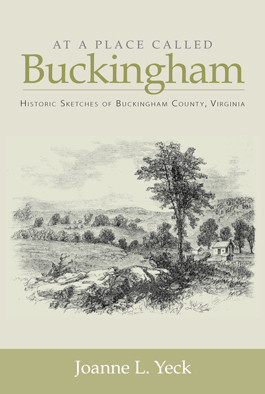
Used copies of “At a Place Called Buckingham” are selling on Amazon for over $39.00!
There are still plenty of new copies available for the list price of $20.00.
In Virginia
Buckingham: Housewright Museum (U.S. Route 60, in the village of Buckingham)
Scottsville: Baine’s Books and Coffee (485 Valley Street)
Charlottesville: Albemarle Charlottesville Historical Society (200 Second Street, NE)
Appomattox: Baine’s Books and Coffee (205 Main Street)
Not in Virginia?
Order online from Braughler Books.
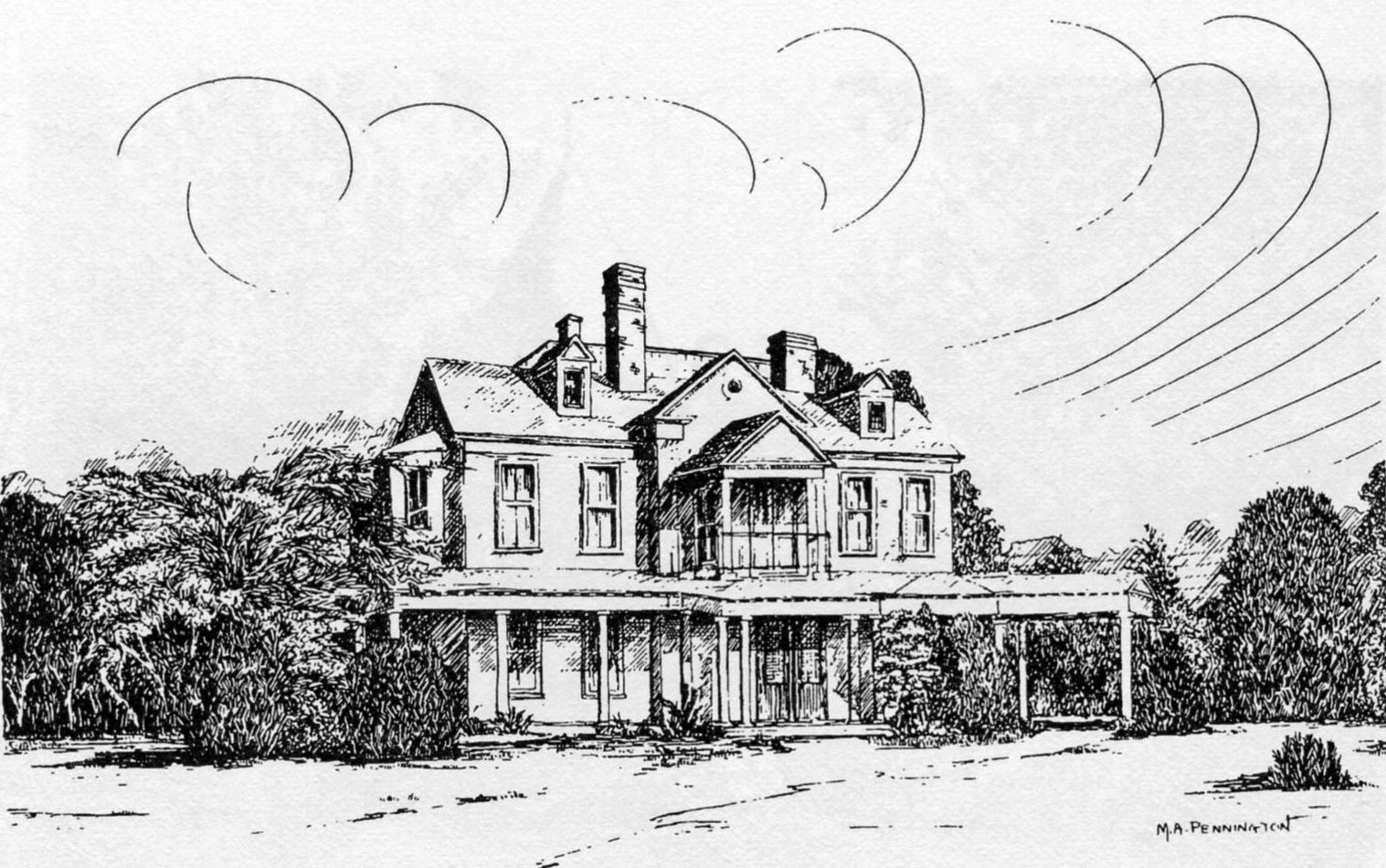
Algoma, Courtesy Historic Buckingham
In 1904, an extraordinary obituary appeared in Richmond’s The Times-Dispatch, marking the death of General Thomas M. Logan’s faithful servant, Ellen Jasper. At Algoma, Ellen was known as Mammy.
OLD SERVANT DEAD.
Ellen Jasper, Aged Sixty-four,
Passed Away Wednesday.
At an advanced age, Ellen Jasper, a negro servant, died at 1 o’clock Wednesday afternoon at Algoma, in Buckingham county.
The faithful old woman was associated with General Logan’s family for more than thirty-five years, and her devoted service and sterling qualities made her appreciated and beloved as few nurses are. She nursed all of General Logan’s children and all except one of his grandchildren never failing to do her duty and render any service cheerfully, faithfully and thoroughly. In the trials and vicissitudes of life she was loyal and unselfish.
The recollections of unceasing service and of unwearying devotion made her beloved as a member of the family as well as by the heads of the house as by the children and grandchildren. These will ever cherish as a tender and fragrant memory the remembrance of one who was ever loyal, unselfish and true in every thought, word and act.
Her body was brought to Richmond Friday afternoon and was borne to Cedarwood Cemetery, where a brief but impressive service was conducted by Rev. Benjamin Dennis, rector of Meade Memorial Protestant Episcopal Church, Manchester. The pall bearers were all white. The casket was hidden beneath a bed of flowers, laid on by tender, loving hands.
The deceased is survived by one son, James M. Jasper, who for twenty-six years has been a faithful messenger to the State Department of Public Instruction.
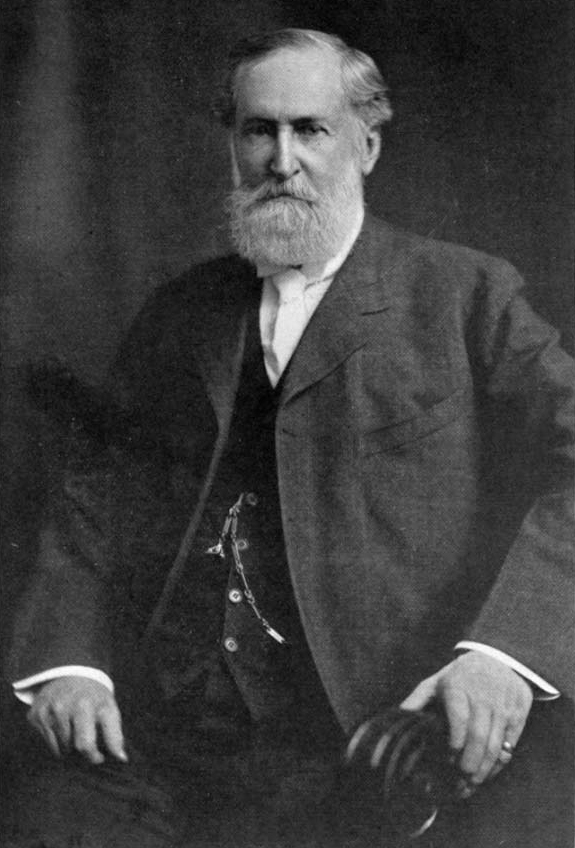
General Thomas M. Logan
Courtesy Elizabeth P. Scott, “The Algoma Log Book”
Thomas Muldrup Logan, born in 1840, was a native of Charleston, South Carolina; however, he and his family left their mark on Buckingham County. During the latter years of his life, his summer home was at Algoma, situated not far from Howardsville in the northwestern section of Buckingham.
In 1914, General Logan died in his New York City apartment. The New York Times called him a “financier and railroad builder.” He was the “principal organizer” of the Southern Railway and a business associate of John D. Rockefeller. Upon his death, General Logan’s body was brought to Hollywood Cemetery in Richmond, Virginia.
In 2003, Elizabeth P. Scott completed a transcription of “The Algoma Log Book,” which “logged” life at Algoma from September 9, 1890 to September 5, 1893. In her introduction, Mrs. Scott wrote:
A copy of the Algoma Log has been on our shelf for years, unread because the handwritings were so difficult to decipher. Last year, because of some success with other family records, I felt challenged to tackle this one.
Algoma was the summer home of Genl. & Mrs. T. M. Logan of Chesterfield County and Richmond. It was one of several such retreats upriver from Scottsville, accessible by railroad from Richmond and by horseback from Charlottesville and elsewhere. The log gives a charming picture of life in a busy hospitable household. Family, guests, and neighbors come and go. Horses and farm life are of central importance. And we see a cluster of households, with an abundance of attractive young people drawn together in an enthusiastic social life.
Don’t miss Ruth Klippstein’s article, “An agreeable little window on the past,” about summer days at Algoma in the August issue of Scottsville Monthly. You can download a PDF of the magazine at Fluvanna Review.
Coming next: General Logan’s Faithful Servant
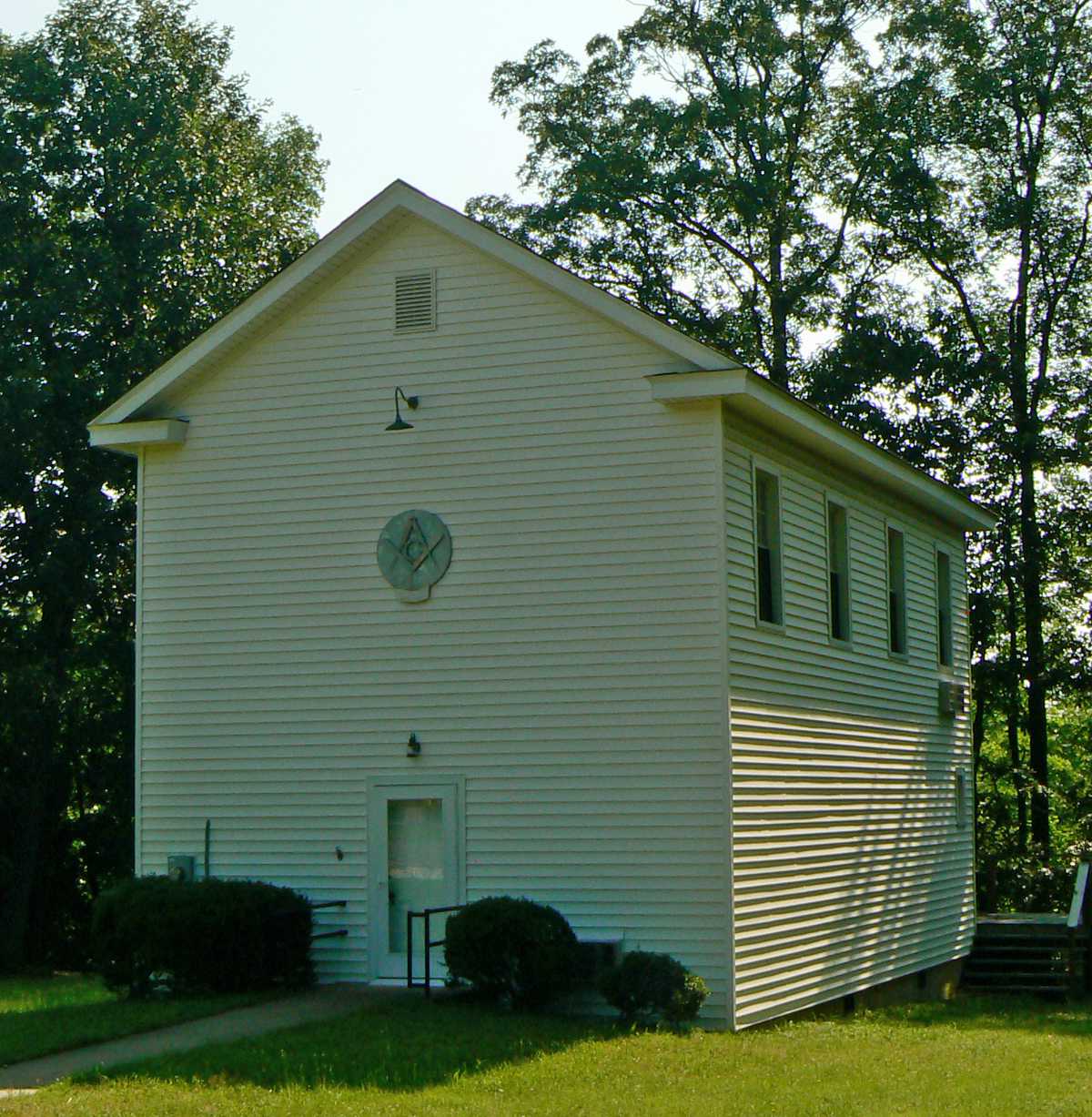 Taylor Lodge # 117, Courtesy Jeremy Winfrey
After the Civil War, Frank N. Maxey established a small community at his home, Well Water, in northern Buckingham County. Eventually, it included a Masonic meeting place. Here is part of the history of Taylor Lodge #117 posted at Virginia Masonic Lodges.
A dispensation was granted on April 17, 1874, for the formation of a Masonic Lodge at Well Water, Buckingham County, Virginia by the designation of “Taylor Lodge.” Officers designated in the dispensation were:
William H. Taylor: Worshipful Master
John R. Agee: Senior Warden
F. N. Maxey: Junior Warden
The charter for Taylor Lodge No. 117 was issued on December 16, 1874.
The first communication of Taylor Lodge was held on May 14, 1874. Four petitions for membership were received at this meeting, accompanied by the fee of five dollars with each petition. On motion, it was unanimously resolved that the stated meetings of this Lodge shall be held at 10 o’clock A. M. on the first Thursday after the second Monday in each month. It is noted in the minutes that there was a shortage of money, as often times members would pay ten cents, twenty-five cents or fifty cents at a time on their dues. Sometimes, when a bill was presented to the Lodge for payment, it was ordered paid as soon as sufficient funds came into the treasury. Though there was a shortage of money, we find that the members performed many acts of charity for other needy members and widows. We also note that attendance was stressed and if a member missed many meetings, he was cited to appear at the next meeting to show cause why he should not be suspended. In April 1879, the time of the monthly meetings was changed from Thursday to the second Saturday in each month at 7:00 P. M. In 1881 the meeting time was changed to Saturday before the first Sunday in each month at 1:00 P. M….
At the September 1894 meeting, a committee was appointed to find a suitable location for the purpose of erecting a new Lodge hall. At the October meeting, the committee made a report on three locations: Well Water, Sharon Church and Centenary, which resulted in the site being chosen near Centenary Church. A committee was appointed to secure deed and title to the land on which to build. On September 28, 1895, the cornerstone of the new Lodge was laid in due and ancient form. Brethren from Scottsville Lodge No. 45 and Stonewall Lodge No. 300 assisted the Brethren of Taylor Lodge. The contract for the new building was awarded to L. F. Lightfoot for $545.00, and the building was to be completed by October 1895.
For more about F.N. Maxey and Well Water, see “At a Place Called Buckingham”
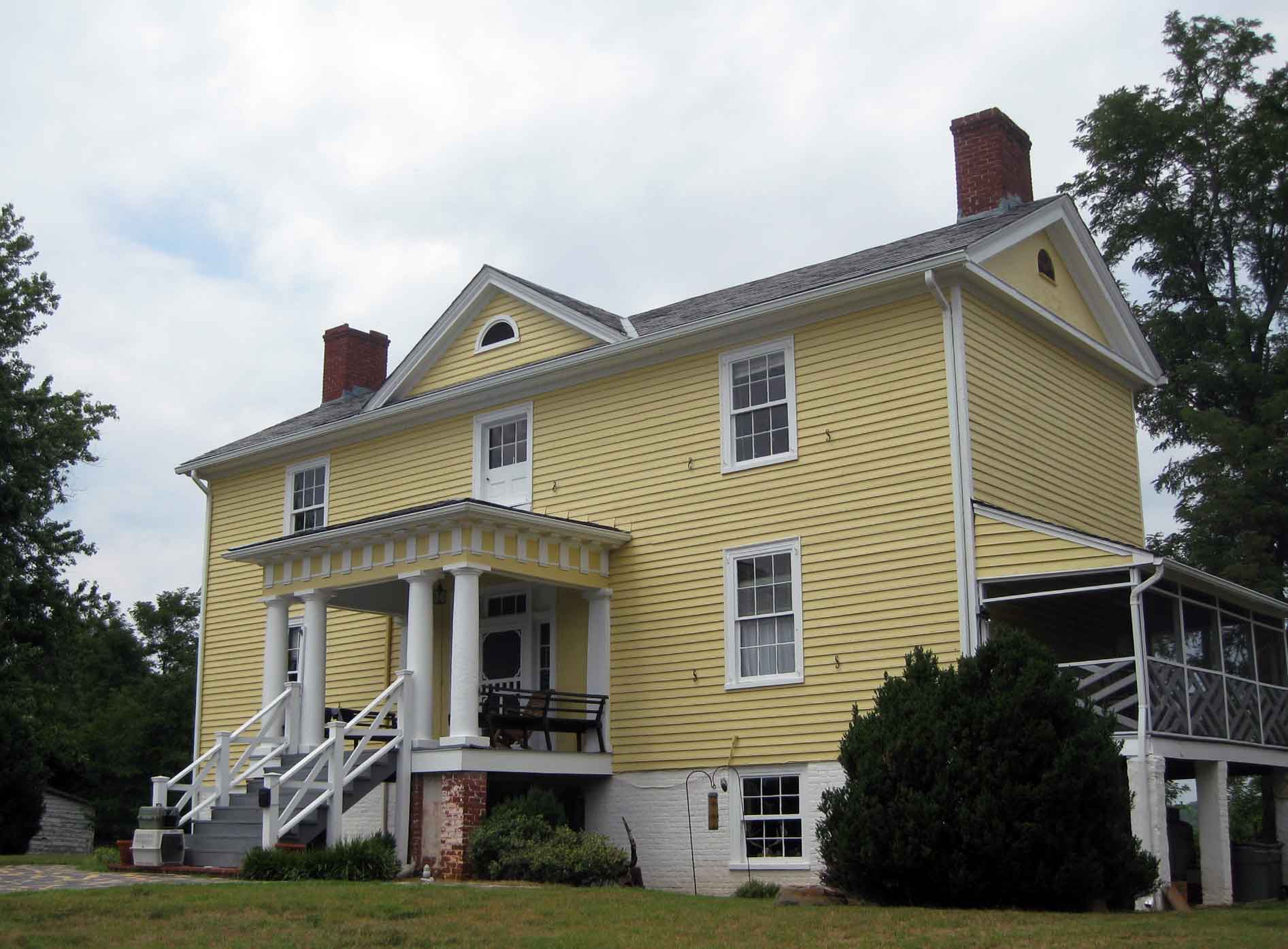
Seven Islands, Photo by Joanne Yeck
On February 4, 1902, the Richmond Dispatch reported the death of Philip Ambler (1834-1902), a widely-known teacher from Buckingham County.
P. B. Ambler’s Death. Prominent Resident of Buckingham. A Well-Known Educator
Arvonia, VA., February 3 – Mr. P. B. Ambler, of Buckingham county, died Saturday in Lynchburg.
The deceased a short while ago went to visit relatives in the Hill City, thinking the change would be beneficial. But he gradually grew worse, and thus was unable to return home.
His wife remained with him till death claimed her husband.
The remains reached Bremo Sunday, and were taken to his late residence, “Seven Islands,” where the funeral service will be held at 2 p.m. today.
Mr. Ambler was a ripe scholar, a polished gentleman and an unassuming Christian soldier. He was truly an “old Virginia gentleman.”
For a number of years he filled a professorship at Hollins Institute with credit to himself and honor to the school.
After severing his connection with this institution, he retired to his handsome estate, situated two miles from Arvonia, where he soon started a classical school, preparing young men for the various universities and colleges.
Mr. Ambler was born in Amherst county, two miles from Sweetbriar Institute, but moved to Buckingham where he married Miss Willie Nicholas.
His only child, Professor Nicholas Ambler, fills the Chair of Mathematics at Roanoke College. Mr. Ambler was well and favorably known, and related to the most distinguished families in Virginia.
Click here to read more about Seven Islands School.

The Virginia Shop just restocked “At a Place Called Buckingham” and The Jefferson Brothers.
If you’re in Richmond consider visiting The Library of Virginia and its wonderful gift shop.
“At a Place Called Buckingham” is also available online from The Virginia Shop.


 slate river ramblings . . . .