
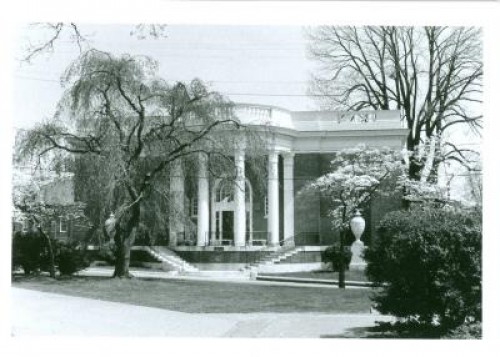
Courtesy Albemarle Charlottesville Historical Society
On October 4th, please join me and local historians, Richard Nicholas and Phil James, for the First Fridays Book Fair at the Albemarle Charlottesville Historical Society.
Location: McIntire Building, 200 Second St., NE, Charlottesville
Date: October 4, 2013 from 5-8 pm
Click here for more details: First Fridays Book Fair
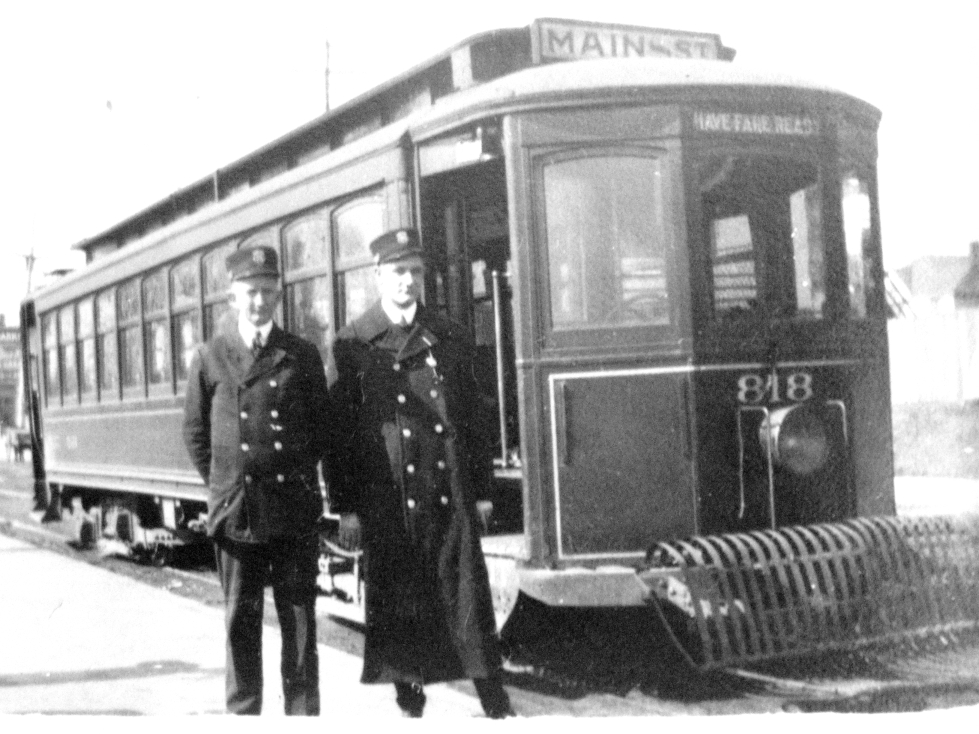
Photo Courtesy Kitty Snow
Buckingham slate graces the Mortuary Chapel at Hollywood Cemetery in Richmond, a permanent reminder of the many families, including my Woodsons, who migrated from Buckingham County to Richmond at the end of the 19th century and the beginning of the 20th century. Tom Woodson (b. 1875) became a conductor on the Richmond streetcar, a far cry from farming, hunting, and whittling at his home on Muddy Creek.
Interested in Tom Woodson’s transition from country to city, I was drawn to Kitty Snow’s first book, From a Richmond Streetcar: Life through the lens of Harris Stilson (Dietz Press, 2013). Read more about her and her great-grandfather’s photography in the July 10th post: Buckingham County: Migration to Richmond
Kitty Snow is preparing a new book, On the West Clay Line, and she’s using crowd funding to help her with the project. Visit her Kickstarter page and learn how you can be a part of preserving Richmond’s history: Richmond, 1919: pictures and stories
Photo Courtesy Frances Harris-Hill
This month, Buckingham County’s Chestnut Grove School is 100 years old.
Slate River Ramblings follower, Fran Harris-Hill, who saved, moved, and restored the building writes:
When my brother told me this building had deteriorated so bad his plan was to burn it, I began planning how I could save it. With his promise not to burn it until I could figure out how to move, restore and pay for it, I became obsessed with the idea. Adam and Aaron Harris (my nephews) agreed to take on this project. While Adam spent most of the time working on the school, Aaron was there to help, when needed. I am so appreciative for all they did. Megan Harris (Adam’s wife) has written an article for the BUCKINGHAM BEACON.
Click here for Megan Harris’ article: “Chestnut Grove: One-room Schoolhouse Restored to Former Glory”
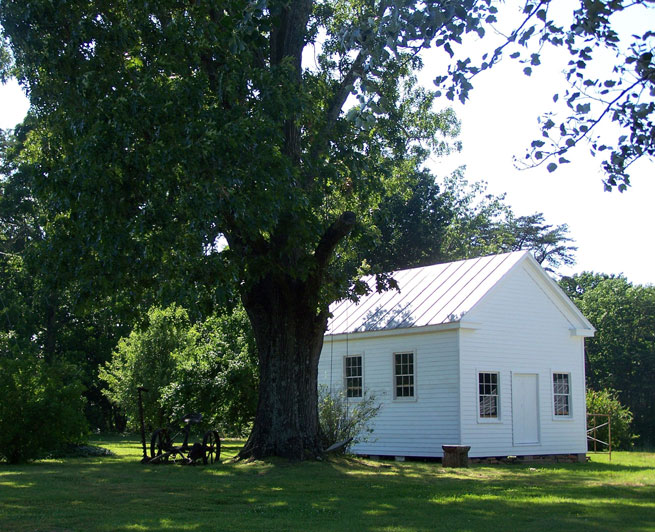
Photo Courtesy Frances Harris-Hill
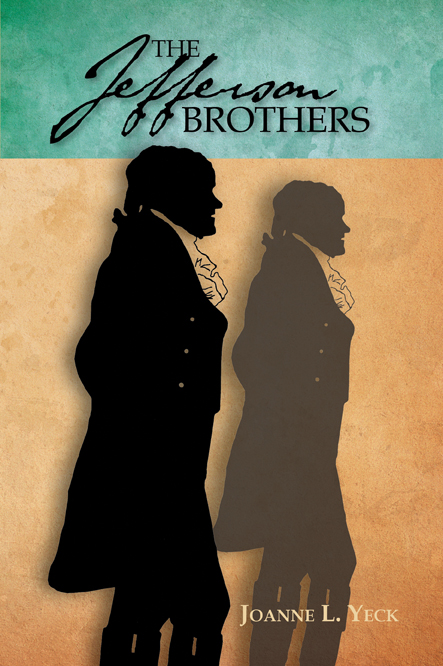
If you will be in the Richmond area on October 1st, please join me at noon at the Library of Virginia for a book talk and signing of The Jefferson Brothers.
For more about the on-going series of book talks at the Library, please click: Library of Virginia Events
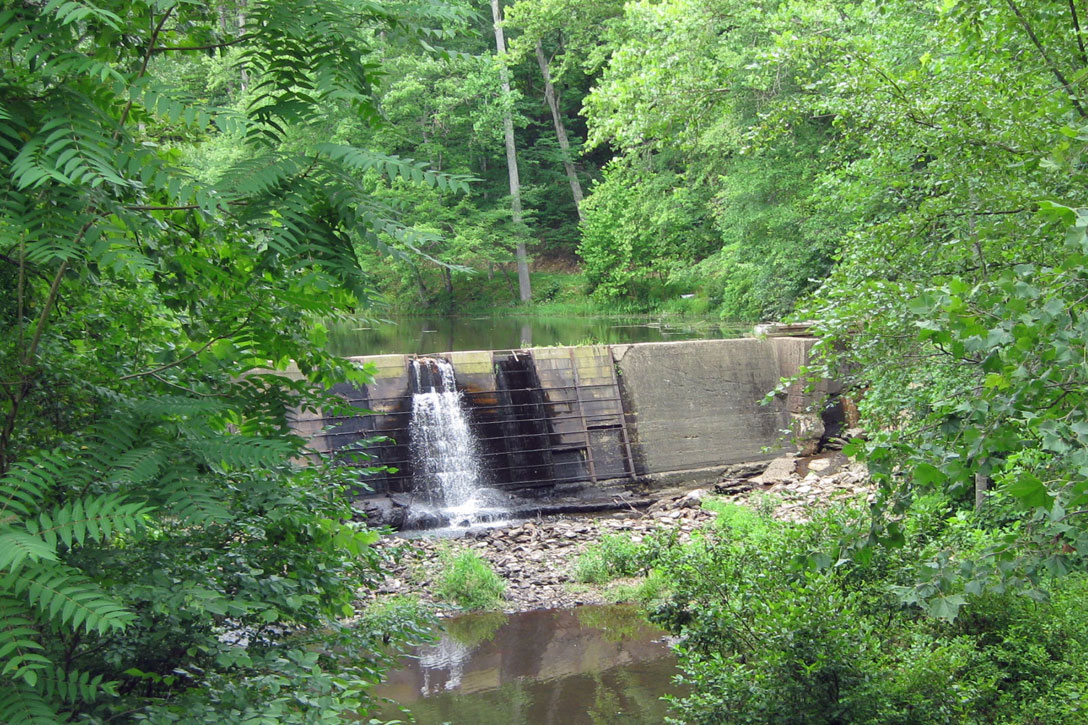
Payne’s Mill Site, Photo by Joanne Yeck
Recently, one Slate River Ramblings reader shared memories of happy days spent at Payne’s Pond….
Ah, the good ole days at Payne’s Pond! I used to fish there, and ride in the wagon with Louie Randolph when he took corn and/or wheat down to have it ground. We’d get there, then someone would walk up the hill and knock on the Payne’s door so that one of them — either Mrs. Payne, Mr. Payne, or the daughter Annie would come down and open the mill and sluice gate. The water would then start to flow and the big wheel would turn and grind the grain that we poured into a big hopper. Out came the corn meal or flour which we would bag and take home to eat. For a little boy, it was all very fascinating and great fun.

Headstone for Robert M. Ayres
Buckingham County
Photo by Jeremy Winfrey
Looking for information about a veteran buried in Buckingham County? Try consulting the Family Search archive: United States, Applications for Headstones for U.S. Military Veterans.
This collection consists of images of over 621,000 applications for headstones received by the Cemeterial Division of the Quartermaster General from two National Archive microfilm publications. The first publication, over 290,000 applications, covers 1925 to 1941 and is M1916. Most are for veterans of the Civil War or later. A few may cover earlier wars. The second publication, over 331,000 applications, covers 1941-1949 and is M2113. These records are part of Records of the Office of the Quartermaster General, Record Group (RG) 92.
Below is a sample application for Elisha Z. Robertson of Buckingham County. The record includes basic information about his military service as well as the year of his death and the name of person who applied for the headstone. In this case, the applicant was G.M. Ayres.
Click here for more information: United States, Applications for Headstones for U.S. Military Veterans
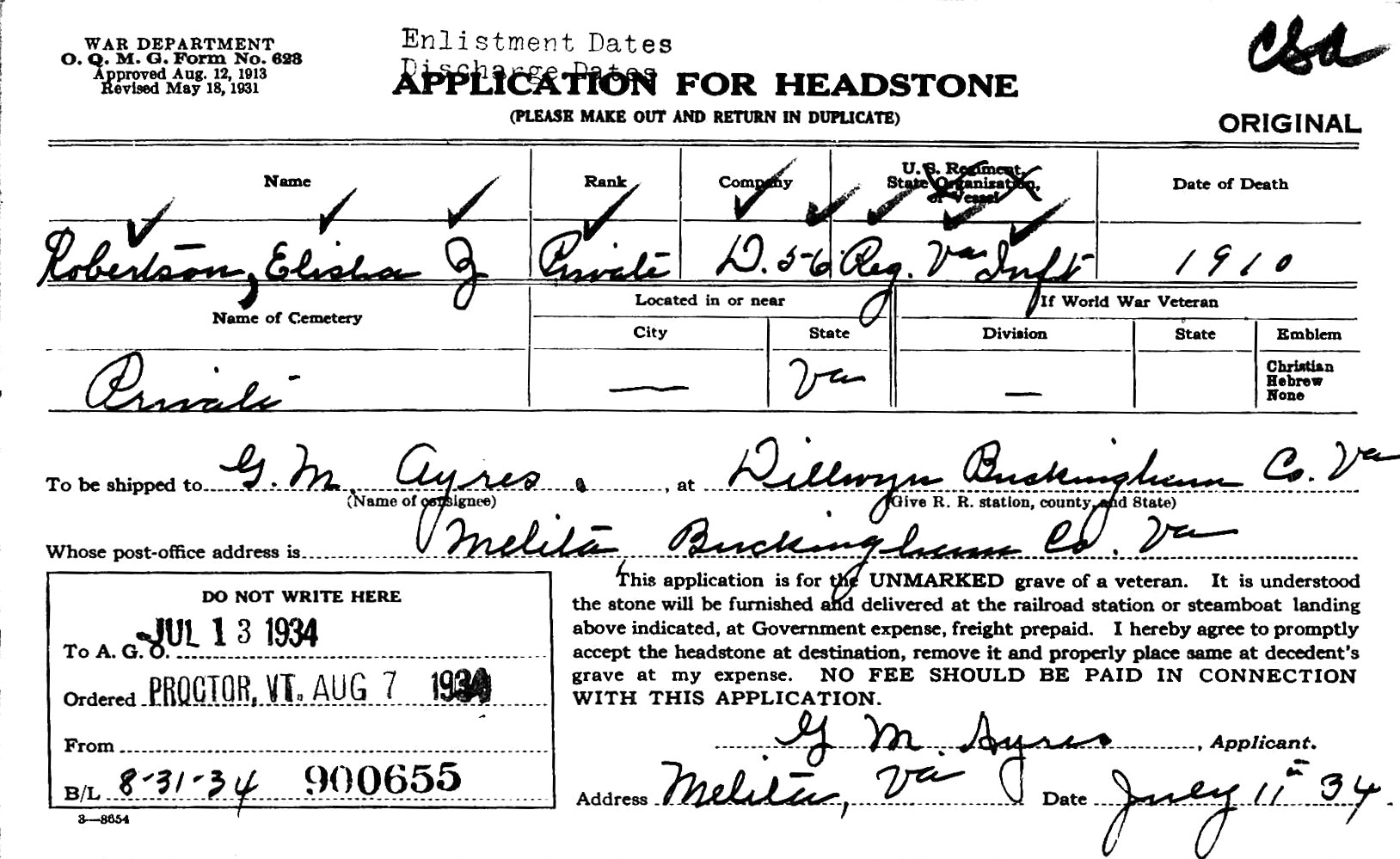
Military Headstone Application for Elisha Z. Robertson of Buckingham County

Recently, Thomas Archer Saunders, Jr. commented at Slate River Ramblings, remembering his summer experiences in Buckingham County. Tom’s mother, Lucille Davidson Saunders, is the daughter of Benjamin “Ovid” Davidson, of Davidson’s Orchard. During World War II, Ovid hired German POWs and owned two paintings made by a prisoner who signed his work Pet. Schmitz. One was a painting of Mount Vernon; the other was of Monticello.
For those of you who wanted more details about the peaches grown in the county, here is what Tom had to say:
Regarding Davidson’s Orchard, I worked there each summer during the peach harvest in the mid 60′s, probably from 1963-1966. I would spend most of the month of August there “helping out,” but sometimes just getting in the way.
Someone asked about the varieties of peaches that were raised. They included Georgia Belles (a free stone white meat peach that bruised easily, but were highly prized by many for their flavor), Elbertas (a yellow free stone peach – they had more of these trees than any other variety), Redskin (a few of these – they got ripe earlier than the Georgia Belles or Elbertas) and a Jones peach that was a new variety (the Jones peach was a free stone yellow meat peach that grew larger than the Elbertas and had less fuzz, making it much more attractive to the eye).
When I helped out there I had very little appreciation for the hard work it took to make a living raising peaches and apples. I look back on my experiences there with much pleasure. I have talked with my cousin, Ellett Snead (also Benjamin Ovid Davidson’s grandson) about writing down our memories of the orchard. A lot of good men worked there and there are a lot of good stories we remember. Ellett lived in Fluvanna and grew up at the orchard. I did not grow up in Buckingham, but visited often.
As you know, the orchard cold storage building, equipment sheds, grading shed etc. were located on US 15 between Avon and Dillwyn. The time I spent there was before the days of the interstate highway system. Davidson’s Orchard was a popular stopping place of many out of state travelers heading south to Florida or into the northeast. It also drew customers from all over central VA.
The Davidson brothers advertised on WRVA radio in Richmond. It was always a big deal when the radio station came to visit. Local folks bought peaches and apples by the bushel. Many of them canned the peaches. A bushel of Jones peaches went for $5.00, the Georgia Belles $4.00 and the Elbertas $3.50. A large portion of the harvest was sold to the public from the cold storage location on US 15, but part of the crop was also sold by the tractor trailer load to ice cream companies, baby food companies and grocery stores. Less desirable peaches or those that had gotten too ripe were trucked to a company in Petersburg that used them to make peach wine.

Rolfeton (2013), Courtesy Longwood University, Archeology
Recently, seven archeology students from Longwood University surveyed Rolfeton, once one of Buckingham County’s finest homes. With their professor, the students tested a new type of software capable of creating measured drawings using “a total station and autocad.”
In 1937, Garnett Agee Williams relied on her own, less sophisticated, observations when she surveyed Rolfeton for the Virginia Historical Inventory. Helpful informants, Robert K. Brock (of Farmville and part- owner of the house), Mrs. Rebecca Eldridge (of Buckingham and a relative of the Irving Family) and Mrs. Henry Worley (then occupant of Rolfeton) aided Mrs. Williams with her description.
According to the survey, the house was built c. 1812 by Rolfe Eldridge for his son, Thomas Kidder Eldridge, who was Clerk of Court in Buckingham County for many years, following in the Rolfe family tradition. The house is located about one mile north of Buckingham Court House.
Visit Longwood Archeology’s Facebook page and learn more: Longwood Archeology

Hollywood Cemetery, Richmond, Virginia c. 1900
In 1898, the Mortuary Chapel at Hollywood Cemetery in Richmond, Virginia was completed. The beautiful building was topped with a roof of slate quarried in Buckingham County. An announcement in The Richmond Dispatch, which ran on May 22, 1898, described the Gothic architecture and proclaimed:
“It is a beautiful portal, well suited to the beautiful city of our dead.”


In 1913, six Buckingham Slate companies took out an advertisement in the Richmond Times-Dispatch proclaiming that Buckingham County quarries produced “The Best Roofing Material on Earth.”
That claim is still in force 100 years later!


 slate river ramblings . . . .