
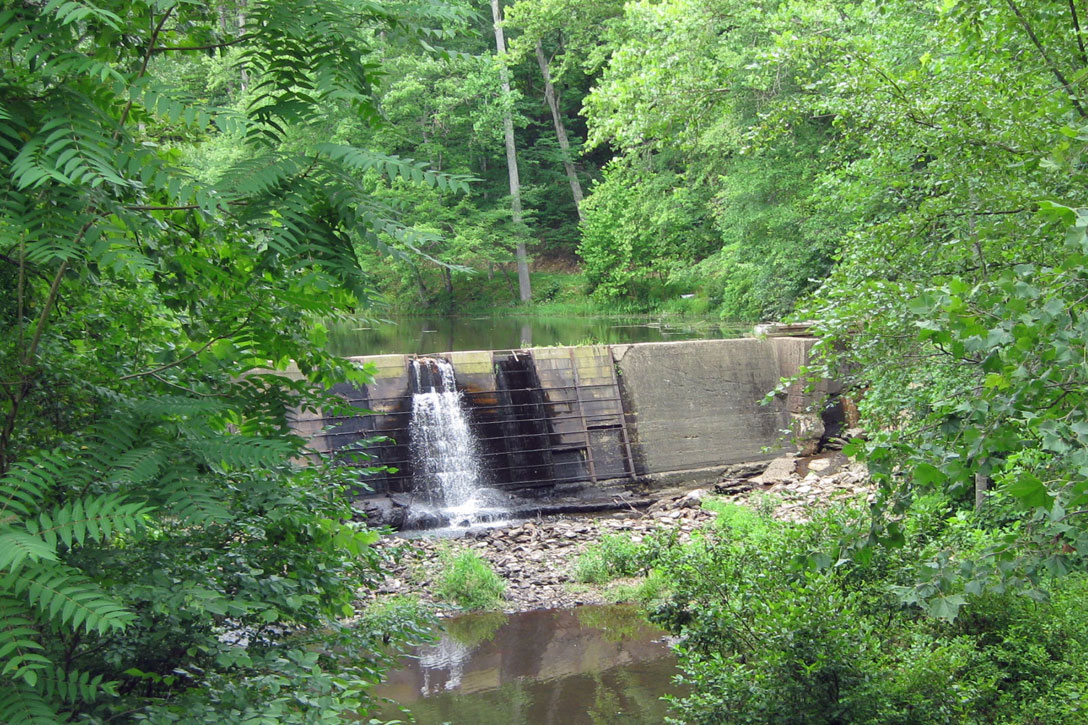
Payne’s Pond (2010), Photo by Joanne Yeck
The property in northern Buckingham that became Payne’s Mill was at one time known as “Winfrey’s Tract” and, in the 1850s, was purchased by Peter Field Jefferson, son of Randolph Jefferson. Peter Field erected a mill there and also purchased an existing mill on what was then known as Big George Creek.
In 1858, Jefferson sold to James Harris and Harris’ son-in-law, Sam Allen, operated the large James River farm. Later, Nathan Payne purchased it from the James Harris estate and ran a saw mill.
In living memory, a grist mill operated at Payne’s Pond. Fortunate Buckingham boys and girls fished in the mill pond on lazy summer days.
To learn more about the 20th century grist mill, which ground “Old Fashioned White Corn Meal,” visit Scottsville Museum online. Scroll down to read: “A Scottsville Miller and Her Daughter.”

Arvon Presbyterian Church, Courtesy Historic Buckingham
Many Buckingham County aficionados know of the grave markers in the Arvonia Memorial cemetery inscribed in Welsh. According to the Richmond Dispatch, during the 19th century, services were conducted in Welsh at Arvon Presbyterian Church. The community was home to many Welsh immigrants who worked in the local slate quarries.
This blurb ran in the newspaper on April 22, 1888:
“Mr. Robert J. Evans, a licentiate of Vermont Presbytery, was received under care of the presbytery. He is a native of Wales, and has been preaching chiefly in Welch to this church for several months past.”
For more about Arvonia Memorial cemetery, consult Buckingham Burials, Vol. 1, compiled by Janice J.R. Hull. It is available online at Historic Buckingham Inc.
Thanks, Cuz. Mary Carolyn. Keep searching those old newspapers!
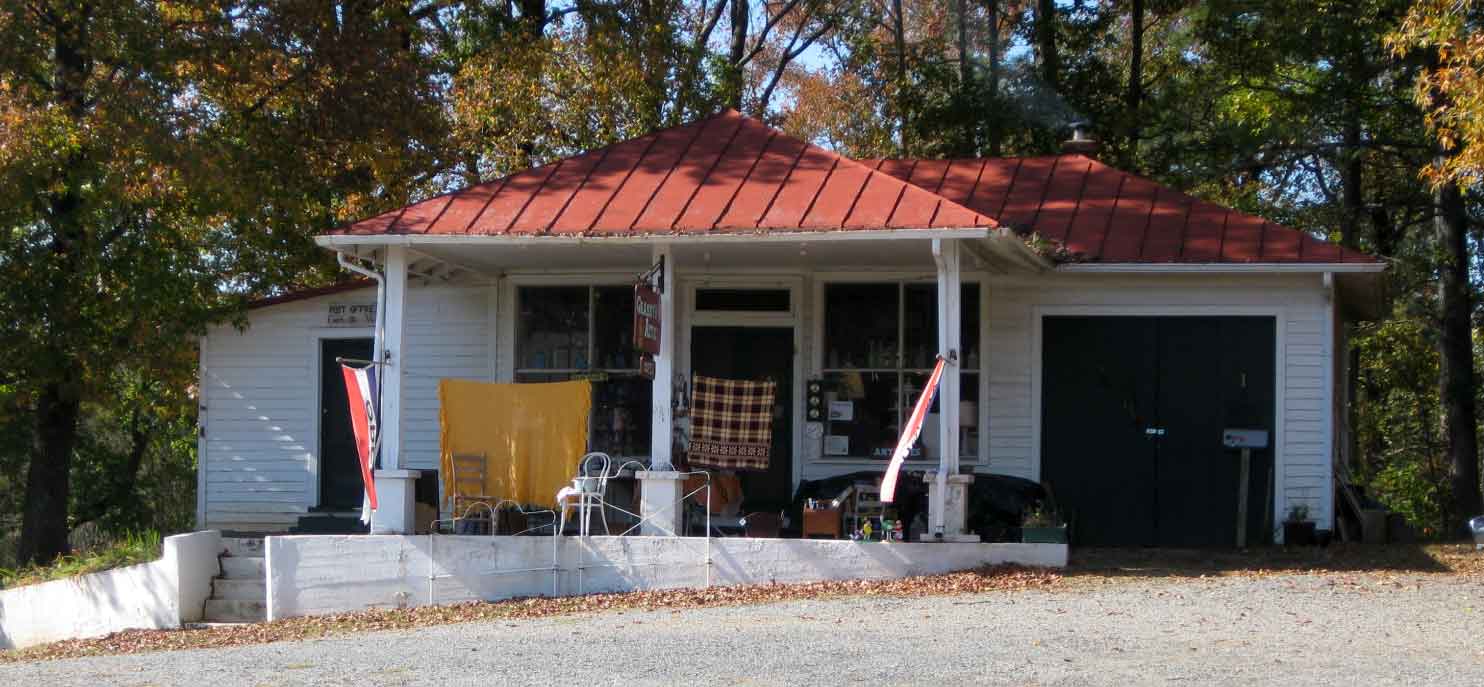
Curdsville P.O., 2011, Photo by Joanne Yeck
In the spring of 1861, a new high school opened in Buckingham County. Given the timing, with war on the horizon, it doubtless didn’t last long. The opening of the school does, however, demonstrate Confederate optimism and Buckingham’s long-standing value of education. Its quasi-military orientation may suggest that the citizens of the county were preparing for the inevitable. This advertisement ran in Richmond’s The Daily Dispatch on September 14, 1860.
BUCKINGHAM HIGH SCHOOL
~
CHAS. W. CRAWLEY, A. M.
THOS. J. GARDEN, A.M.
~
This Institution is within six hours’ travel from Richmond, Petersburg, or Lynchburg, upon the stage route between Farmville and Buckingham Court-House, and far from any place of dissipation.
TERMS:
For everything except lights, $200 for 10 months. Only fifty pupils taken.
The design of this School is to combine the military with the common system of school teaching. The session to open upon the first Thursday in February, 1861. Call at the principal bookstores in the State and see Prospectus of the School, or apply to
THOS J GARDEN.
Curdsville P.O., Buckingham county, Va.

Scottsville Museum, Photo by Connie Geary
One of my Scottsville cousins recently asked, “Was Lulie Patteson’s history of Scottsville preserved in book form?”
To the best of my knowledge, Lulie wrote a short series for The Scottsville News, which appeared in 1933. Copies of these articles survive at Small Special Collections, University of Virginia.
Here is how I described them in “At a Place Called Buckingham” …
Her three-part history of Scottsville remains one of Lulie’s longest known efforts. The first installment appeared on the front page of The Scottsville News on Thursday, May 4, 1933. The lengthy headline declared: “Scottsville Plays a Major Part in Albemarle’s Past, Establishing of County Seat Is recorded, Would Appear That About Every Citizen Held Office Those Days.” Beginning with the establishment of Albemarle’s new county seat on land patented by Edward Scott and the swearing in of county luminaries such as Joshua Fry and Peter Jefferson, Miss Patteson follows Scottsville’s history through the years. She delineates the opening of the first ordinaries and Scott’s ferry, then leads her reader to the great bustle of the canal years, and concludes with General Sheridan’s devastating raid on Scottsville during the final days of the Civil War.
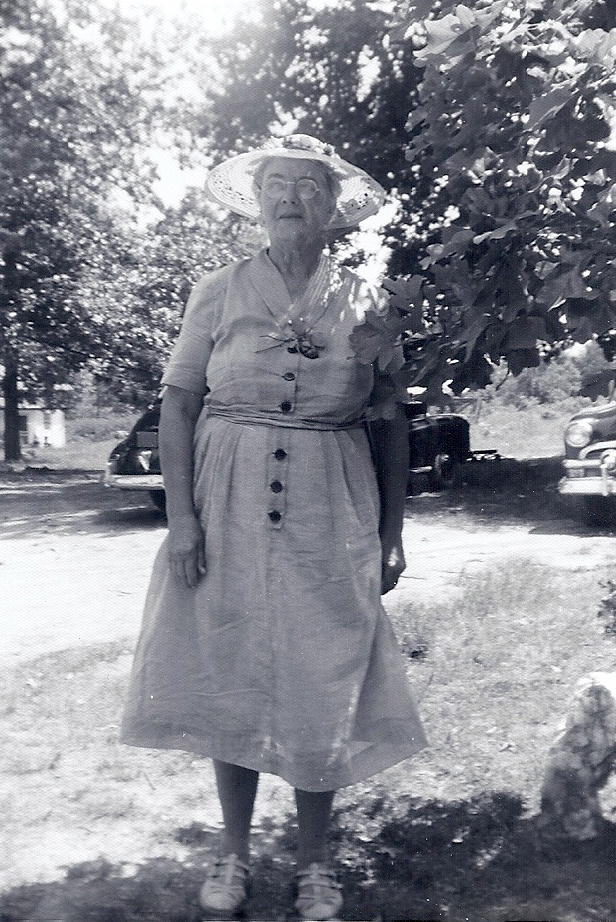
Lulie Patteson
For more about Lulie Patteson’s writings and her life story consult, “At a Place Called Buckingham”….
Today, Scottsville Museum is the official storehouse of the town’s history. For the best and most reliable source of Scottsville history online, visit the virtual Scottsville Museum.

This beautiful family portrait was found in a Maxey family collection, originally stored in the Maxey homeplace off Highway 20, at Maxey Creek. Like so many photos we find in closets and attic boxes, they are unidentified.
They may be Maxeys or kin to Maxeys. Perhaps, they are Agees? Or Selfs?
If you recognize them, please comment.
Horace Greeley
Finally, it was Horace Greeley’s grandchildren who managed to stake their claim on their Buckingham land.
Did the promised pot of gold ever materialize?
The following appeared in the Inland Printer (April 1912–September 1912):
GREELEY GRANDCHILDREN GET OLD FARM.
After litigation lasting twenty-one years the three surviving grandchildren of Horace Greeley – Dr. Horace Greeley, Nixola Greeley Smith, the writer, and Ida Greeley Smith, of East Orange, New Jersey—have been reinstated in possession of a farm consisting of 500 acres at Buckingham Court House, Virginia. The farm, which is worth about $12,000, has been held by the Rev. Frank M. Clendenin, of Westchester, who got title to it by paying $12 in back taxes when the three grandchildren of the distinguished journalist were infants. The Rev. Mr. Clendenin married a daughter of Horace Greeley. Judge Hundley held that the tax title was invalid, and that the grandchildren were the rightful heirs. — (signed) Fourth Estate.
For Part One: Buckingham Mysteries: Horace Greeley and Buckingham Gold

Marshall Perkins Claiborne, Courtesy Ted Kinker
It should not come as a surprise that the banjo was a favorite instrument in Buckingham County. Pictured above is Marshall Perkins Claiborne (12 March 1873–19 August 1939), accompanied by his beloved banjo. He was not a professional musician. In 1930, he was in the lumber business. His wife was Aubra Gordon Price (21 April 1890–14 May 1966).
Claiborne was born in Buckingham, his parents were Serg’t Temple Irving Claiborne, C.S.A. and Martha Elizabeth “Patty” Scruggs, both of the county. His Buckingham pedigree was a long one, stretching back to his great-grandfather, Leonard Cliborn, who lived on land adjoining Whispering Creek and bordering the Bolling family at Chellowe. Leonard Cliborn fought in the Revolutionary War, came to Buckingham from Chesterfield County in 1809, and married Frances “Fanny” Tanner of Amelia County. Marshall’s grandparents were Thomas O. Claiborne and Laura A. Garnett of Cold Comfort, Gravel Hill.
For more about the Claiborne family in Buckingham County, just type “Claiborne” in the search box at Slate River Ramblings.
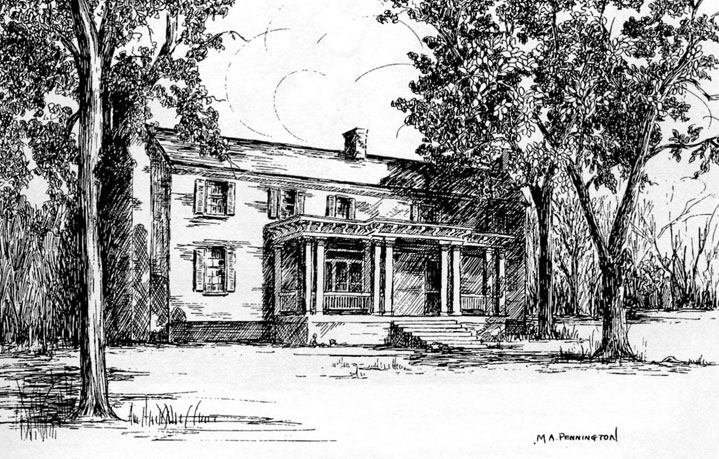
Variety Shade, Courtesy Historic Buckingham
Summertime means family reunions and Buckingham County is no exception. Occasionally, news of reunions in Buckingham made the Richmond papers. On 16 August 1936, the Richmond Times-Dispatch ran the following:
Bondurant Clan Holds Buckingham Reunion
BUCKINGHAM Aug. 14 – (Special)
Descendants of the late Alexander J. and Mrs. Emily Morrison Bondurant held a family reunion at their ancestral home, Variety Shades (sic), last week. Present were Professor Alexander L. and Mrs. Bondurant of the University of Mississippi, George P. Bondurant, an attorney-at-law, and his family from Birmingham. Mr. and Mr. Samuel R. Bondurant of Buckingham, Miss Fannie Bondurant of Buckingham and Dr. Gros Harrison and Mrs. Loula Bondurant Harrison and their children and grandchildren.
Variety Shade was founded by the late Colonel Thomas Lee Bondurant, a prominent farmer and political leader of his day. It is said that the name Variety Shades (sic) was given [to] the place because of the variety of shade trees that grew on the lawn of several acres. Colonel Bondurant represented his district in the State Senate, having been elected over the late Thomas S. Bocock of Appomattox.
Learn more about this widespread family with deep Buckingham roots:
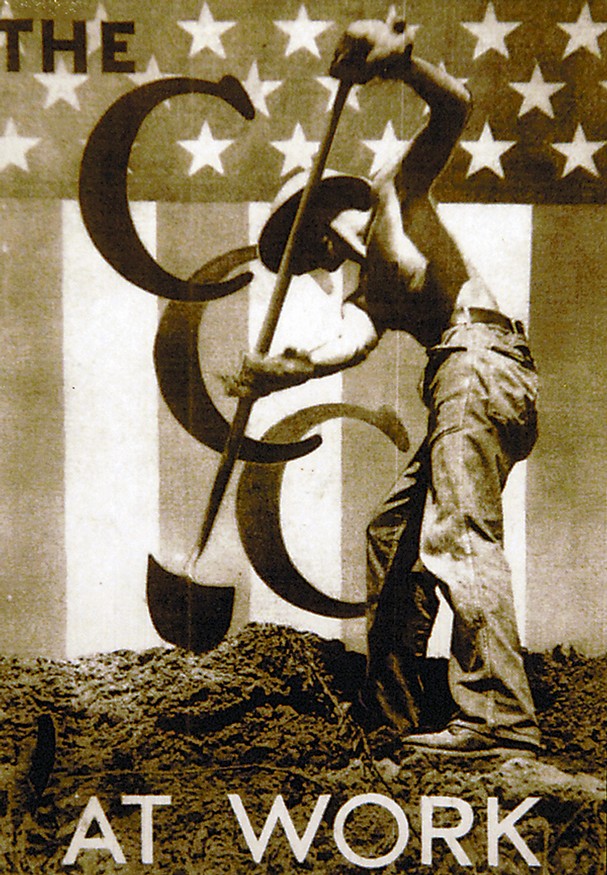
July 17, 2013 marks the 80th anniversary of the founding of Buckingham County’s CCC Camp P-56, Company 1367, located at the foot of Buckingham County’s Willis Mountain.
The Civilian Conservation Corps (CCC) was a significant and successful economic stimulus program created during the initial months of Franklin D. Roosevelt’s first administration.
Camp Buckingham, as it was commonly called, had operated for nearly one year when, on June 7, 1934, it was “reconstituted” as a “Negro” camp. Until the camp’s closing in 1937, the men of this all African American Corps contributed greatly to the building of roads and bridges in Buckingham, as well as fighting forest fires. 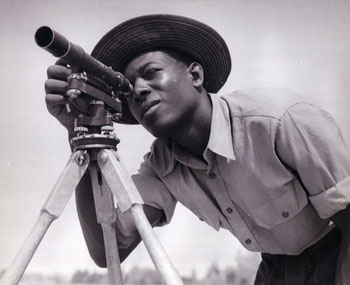
Here’s a big “thank you” to all the men of the CCC. You made a huge difference!
For the whole story, please read my article in this month’s Buckingham Beacon.

Huguenots Fleeing by Jan Luykens
It is Bastille Day, France’s version of the 4th of July, which brings to mind the influence of Huguenots, French Protestants, on Buckingham County.
Several of the original Huguenot families who settled at Manakin Towne (Goochland County, Virginia) in the early 1700s, made their way west along the south side of the James River. Apparently, they liked the area that would become Buckingham County and made it their home.
My French families include Agee, Bondurant, Ford (Faure), and Guerrant. I suspect they added a significant dash of refinement to Buckingham’s English stock, creating intermarriages such as Woodson-Agee, Moseley-Bondurant, Moseley-Guerrant, and Harris-Ford.
Do you have Huguenot ancestors who lived in Buckingham County? If so, please comment with your surname.


 slate river ramblings . . . .