

For two summers during World War II, Braxton L. Apperson, Jr. and his brother helped pick peaches at William and Ovid Davidson’s Orchard located in Buckingham County. Both summers, German POWs were bussed from Camp Pickett (south of Farmville) to help pick the Buckingham fruit. Mr. Apperson remembers that they were brought in the mornings and returned to Camp Pickett each evening, bringing their own lunches. It was a relaxed atmosphere with only one American guard per bus. Unconcerned about escapees, the guards remained at the store building while the POWs were in the orchards picking. Mr. Apperson remembers that most of the POWs did not speak English and kept to themselves at lunchtime.
In other cases, Buckingham farmers drove to Camp Pickett, picked up several POWs in the morning and returned them to the camp in the evening. Some farms provided meals.
In the 1950′s, Braxton Apperson’s brother was stationed in Germany where he met one or two former POWs who had worked in sawmills in Florida. They recalled that not all Germans were eager to return home when the war ended.
 Last month’s posts about German POWs working for Buckingham County farmers produced lively comments from readers of Slate River Ramblings.
The Geneva Convention prohibited the POWs from accumulating American currency, however, they were allotted 10 cents per day in canteen credits (“script”) with which to buy luxury items such as beer, tobacco, candy, or toilet articles.

Many were eager to earn more script and, according to author John Hammond Moore who wrote “Hitler’s Wehrmacht In Virginia, 1943-1946,” trustworthy enlisted men could volunteer for work on the base, earning another eighty cents a day in credit or to be held in reserve until peace came. They worked in mess halls, laundries, motor pools, and general construction. Others were hired by locals to cut pulpwood or pick fruits and vegetables. These employers had to establish that there was no American labor available for the jobs and paid “the prevailing wage.”
The German prisoners worked throughout central Virginia. At Green Mountain, not far from Esmont in Albemarle County, Charlie and May Hamner hired POWs to help them work their farm. They also furnished potatoes for the prison camp at White Hall. At the time, Charles Hamner, Jr. was only seven or eight years old. He remembered that the POWs spoke English and were themselves excellent farmers. Friendly fellows, they helped young Charles fix his bicycle.
If you missed last month’s posts, click here:
World War II: German POWs in central Virginia
World War II: POWs Apprehended in Buckingham County
Coming Next: More POWs in Buckingham
 Hatton Ferry (c. 1910), Courtesy Historic Buckingham
It’s summer and that means the Hatton Ferry is running – river permitting. Please visit the official site to learn more about the history of the ferry: The Hatton Ferry
And don’t miss Sue A. Miles’ article, “The Ferry Man of Hatton Ferry,” in this month’s Buckingham Beacon. If you live outside of Buckingham County, you can find a PDF of the May-June issue here: “The Ferry Man of Hatton Ferry.”
This link will take you to the Slate River Rambling post: Ferry Cross the James
I have a special fondness for the Hatton Ferry and for the photo above. My ancestor’s brother-in-law, Matt Layne, is sitting in one of the buggies. He married Elizabeth “Lizzie” Lavity Harris on July 7, 1886 in Buckingham County.

Diane Apperson, Slate River Ramblings follower and long-time member of Mt. Zion Baptist Church, provided the photo above of Rev. William H. Taylor’s grave.
One church history notes: “Rev. L. R. Thornhill delivered the address October 25, 1889 on the occasion of the burial of Rev. Taylor. At the time of his death, there only 2 members still living that were there when he came to Mt. Zion. A slate marker enclosed by an iron fence costing $75 was erected at his grave and his picture continues to hang in the church sanctuary.”

Rev. William H. Taylor, Courtesy George Cauble
The portrait above came from the collection of Nancy Lee Goodman Cauble, the G.G.G. Granddaughter of Rev. William H. Taylor who married Mary W. Ferguson of Buckingham County. For forty years, Rev. Taylor preached at Buckingham County’s Mt. Zion Baptist Church; he is buried in a solitary wrought-iron fenced area near its front door.
Stories passed down through Nancy’s family describe Rev. Taylor preaching in the fields and riding on horseback to Appomattox County to minister there. Some of his marriage returns are preserved in Lost Marriages of Buckingham County Virginia, compiled by Randy Kidd and Jeanne Stinson. This valuable Buckingham County resource is available online from New Papyrus Publishing Co.
A typical entry: Abner Hudgens married Elizabeth Lee Snoddy, 24 December 1868, Buckingham County, Virginia, married by William H. Taylor. GROOM: age 23, single, born Buckingham County, son of Albert Hudgens and Mary S. Hudgens, occupation: farmer. BRIDE: age 17, single, born Buckingham County, daughter of John J. Snoddy and Barbara Snoddy.
For more about Mt. Zion, see these Slate River Rambling posts:
Today, Slate River Ramblings introduces “Buckingham Memories.” Think of it as a scrapbook of times past, tidbits remembered by Buckingham County residents. It might be an old song, a saying memorized as a child, even a country recipe.
This tongue twister was remembered by Mary Virginia Bagby Adams, who learned it in the 1930s or 40s during her girlhood in New Canton, and passed it on to her daughter, Dianne Adams George.
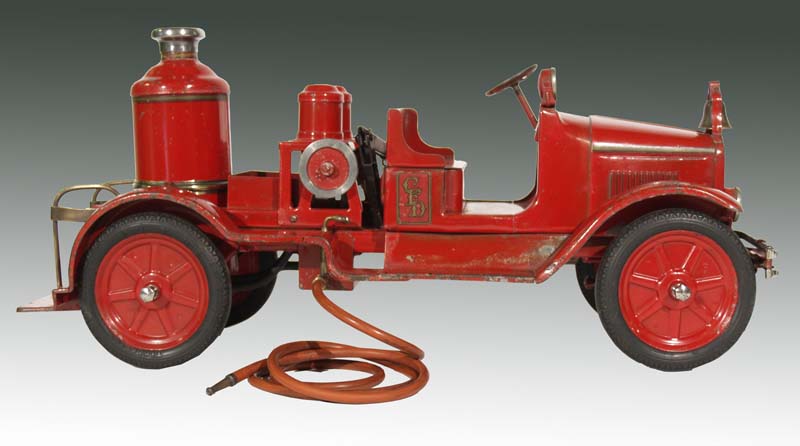
Why Fire Engines Are Painted Red
Three times four is twelve.
Twelve inches makes a ruler.
Queen Mary was a ruler.
And, Queen Mary was also a ship.
Ships go through the water.
Fishes go through the water, too.
Fishes have fins.
The Finns fought the Russians.
Russians are called Reds.
Fire engines are always rushin’.
So, they had to paint them red.
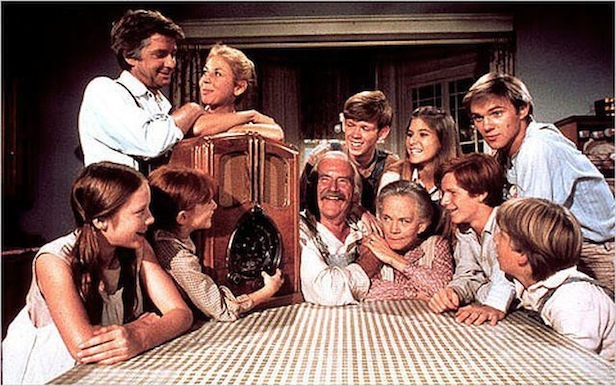
A Slate River Ramblings reader recently pointed out that in teleplays for the long-running series, The Waltons, creator Earl Hamner, Jr. loosely disguised a wide variety of locations in and around his home in Schuyler, Nelson County. For example, Hamner’s alma mater, Richmond College, became Boatwright College, remembering Dr. Fredrick Boatwright, who was President of Richmond College when Hamner was a student.

Earl Hamner, Jr.
The website, The Walton’s Mountain Locations, collects, describes, and decodes some of the Virginia locales used in the series including: Rockfish, Covesville, Charlottesville, etc. Buckingham County is where the Baldwin family lived and it is featured in “The Reunion” (Season 1, Episode 13).
 Today marks the six-month birthday of Slate River Ramblings. If you are new to the blog, please explore the archives.
Try searching keywords such as: schools, churches, Civil War, Virginia Historical Inventory, etc.
Invite your friends to join the fun. Follow by email or on the Facebook page for Slate River Press.

Louise Harrison McCraw was born in Buckingham County in February of 1893. By 1920, she was a Grammar School teacher in the county and, sometime before 1930, she moved to Richmond where she and her sister, Elizabeth “Bessie” McCraw (1888-1941), lived in a boarding house on Park Ave. in the city’s Fan District. Bessie worked as a hospital nurse and Louise had become a librarian. This might be the story of many sisters who moved from Buckingham County to Richmond in the early 20th century; however, Louise’s life took a surprising turn. Together with James McConkey, she became a founder of Richmond’s Braille Circulating Library. Her title was “Secretary” and the library was originally housed in the Young Men’s Christian Association building. By 1935, under Louise’s direction, the library was sending evangelical Christian literature to every state in the nation and to sixteen foreign countries.
Today, in its 83rd year of operation, the Library is located on Stuart Ave. and its website states that it “does not charge for any of its services, incurs no debt, operates on a cash basis, receives no federal or state funding, but is sustained by concerned individuals, foundations, and churches. It is unique to note that few ministries have been in continuous operation for so long a period of time without an endowment or some other source of funding. The Braille Circulating Library is truly a ‘faith ministry’.”
For more about the Braille Circulating Library and its mission click here: Braille Circulating Library
That’s not the end of Louise’s story. Beginning in the early 1930s, she authored at least a dozen religious novels and a biography of her colleague, James McConkey. She died on January 25, 1975. Her published works include:
1934: Starward
1936: Hearts That Understand
1937: Glorious Triumph
1938: Blue Skies
1939: with William McConkey, James H. McConkey, A Man of God
1940: Shining After Rain
1941: Does God Answer Prayer?
1942: Nest Among the Stars
1943: On the Wings of the Morning
1945: Not All That Glitters
1946: Crystal Sea
1952: The Honor of Preston Reed
1961: My Heart’s at Liberty
1965: It Shall be Forever
1979 [?]: As the Snow on the High Hills

Courtesy Virginia Currents
In June of 2009, an episode of the Virginia Public Television newsmagazine, Virginia Currents, featured a segment about the dismantling of Buckingham County’s Boatwright House. In the 1850s, this was the home of John T. Claiborne, founder of Oak Grove Academy and, later, was the property of Dr. Frederic William Boatwright.
Dr. Boatwright (born in White Sulphur Springs, WV, 28 January 1868) was the oldest child of Rev. Reuben Baker Boatwright and Maria Elizabeth (Woodruff) Boatwright and was elected President of Richmond College on December 11, 1894, serving until June of 1946.


 slate river ramblings . . . .