
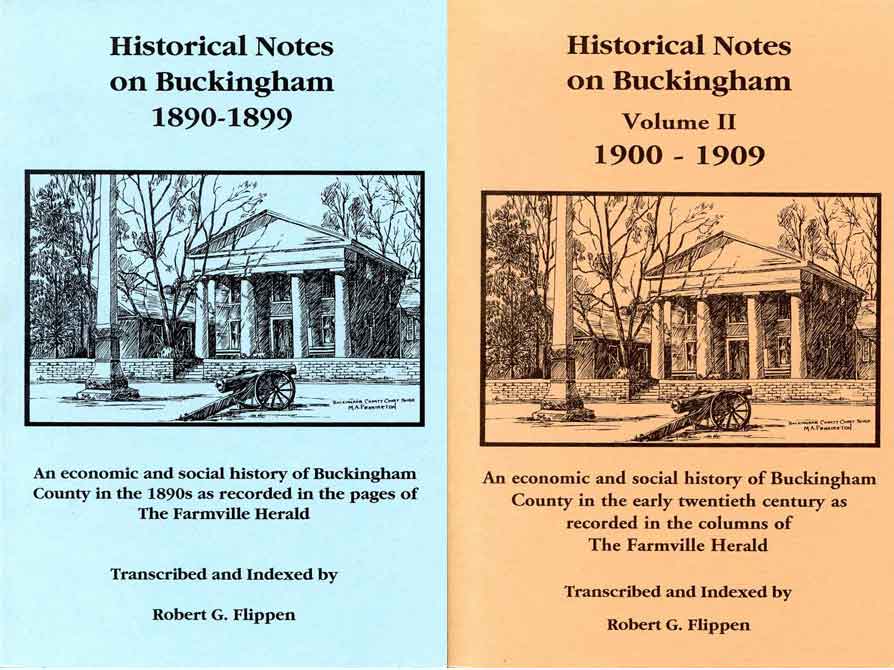
In two very valuable volumes, Robert G. Flippen has collected twenty years of Buckingham County news published in The Farmville Herald.
The Buckingham correspondents to the Herald tended to concentrate on the southern part of the county, the communities nearest Farmville such as Sheppards, New Store, and Curdsville.
From time to time Slate River Ramblings will highlight favorite entries from these years. They provide a glimpse of Buckingham County’s culture, firmly planted in the 19th century. Many of the conveniences and innovations of the modern age – electricity or indoor plumbing, for example – were still in the distant future. Its entertainments remained simple and the comings and goings of the old families were news worthy, as in this report:
FROM SHEPPARDS
January 24th, 1893
Mr. Fayette Cox has returned to Missouri. He gave a very favorable report of the State, and several more of our young men expect to emigrate thither in a short while.
Mr. William Nickelson and wife will leave Virginia for Pennsylvania in a week or so. It is distressing to see people go away, but we can’t help it.

Old newspapers can be endlessly fascinating. They also are a fundamental source of information for historians. During the 19th century, local newspapers in Virginia came and went with great regularity. To my knowledge, Buckingham County never had a newspaper of its own in the 19th century.
This does not mean that the citizens of Buckingham were without news. Many subscribed to Richmond newspapers. Buckingham native, Col. Thomas M. Bondurant owned the Richmond Whig, and his cousin, Alexander Moseley was its Editor for many years.
The Scottsville Register (published 1859-1872) carried Buckingham news; however, surviving issues are scarce. There were multiple Farmville papers, including The Farmville Herald, which began publication in 1890.
The Appomattox and Buckingham Times was published from 1891–1909, at Appomattox Courthouse. Its masthead announced that it was “devoted to the local and industrial interests” of the two counties. In 1909, it became The Times-Virginian and is still published today. Many pre-1909 issues of the Appomattox and Buckingham Times survive and, in the months to come, Slate River Ramblings will highlight tidbits from various Buckingham correspondents who wrote for the paper.
Coming Next: Robert G. Flippen’s gleanings from The Farmville Herald in his books: Historical Notes on Buckingham.
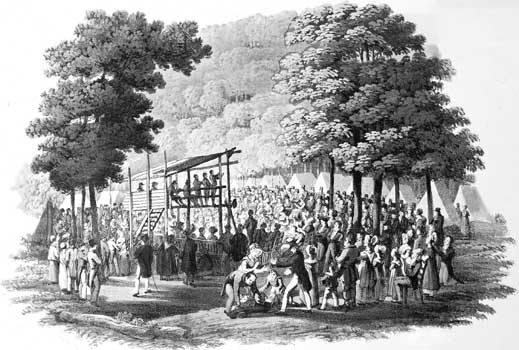
19th Century Camp Meeting
Among the Buckingham County-related manuscripts held at the Library of Virginia is a speech given in 1937 entitled “The Contribution of Buckingham [County] to the Confederacy.” Delivered before the United Daughters of the Confederacy, the manuscript is unsigned and attributed to William Shepard.
During his talk, Shepard remembered:
Burford’ s mountain, a rocky, hill just north of the road between the Court house and New Canton, people gathered every summer for the purpose of attending, for two weeks, a camp meeting. Here they had an opportunity to hear preaching in the morning, partake of a picnic dinner and refreshments offered at mid-day. The social season in the summer was a revival season, when the people indulged in “Vacations with God.” As a boy I attended several of these camp meetings, much to the disgust of my father.
William’s father was Miller Jones Shepard of Guinea Mills and apparently not a Methodist. William Shepard was born in the summer of 1897. The camp meetings he attended were likely held during the 1920s.
I’d enjoy hearing from any of you who might know more about these revivals at Burford’s Mountain.

Earl Hamner, Jr.
At least one branch of the Hamner family was established in Buckingham by the early 19th century. Bill Davidson mentioned that Ann Hamner Cobbs married Baker W. Davidson in Bedford Co., VA in 1827. They settled in Buckingham by the early 1830s. Ann was the daughter of John Lewis Cobbs, Sr. and Susannah Hamner.
Circa 1850, Buckingham-born Mary Ballard Chambers, niece of my ancestor George Chambers, married James S. Hamner. Their daughter, Bettie Allen Hamner (1853-1909), later married Walker Burford Freeman and was the mother of journalist, historian, and biographer Douglas Southall Freeman.
In 1900, Earl Hamner, Jr.’s grandfather, William C. Hamner, and his substantial family were living in Buckingham County along the James River near Warren Ferry. While in Buckingham, the Hamners intermarried with some of the county’s best known residents, including members of the Spencer, Patteson, Tindall, Glover, and Dibrell families. Eric Grundset reports that c. 1905, William C. Hamner moved his family from Buckingham to Schuyler, Nelson County. Eric’s mother was the daughter of Earl Hamner, Jr.’s uncle, Lewis T. Hamner.
By 1930, Earl H. Hamner, Sr. was beginning his own substantial family. Earl Hamner, Jr. was six years old when the census was taken.
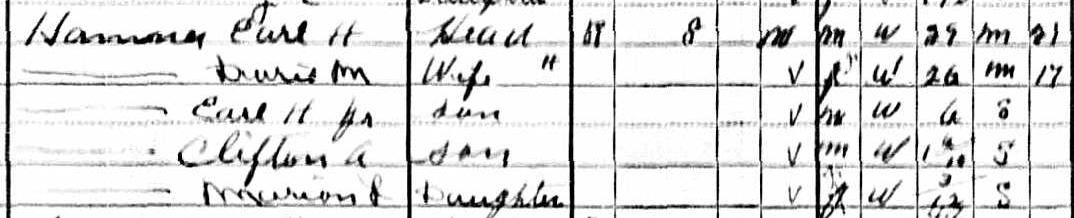
Nelson County Census (1930)
If you have ties to the Hamners of Buckingham, please share your lineage or, even better, a story or two. That would make Earl Hamner, Jr. smile.
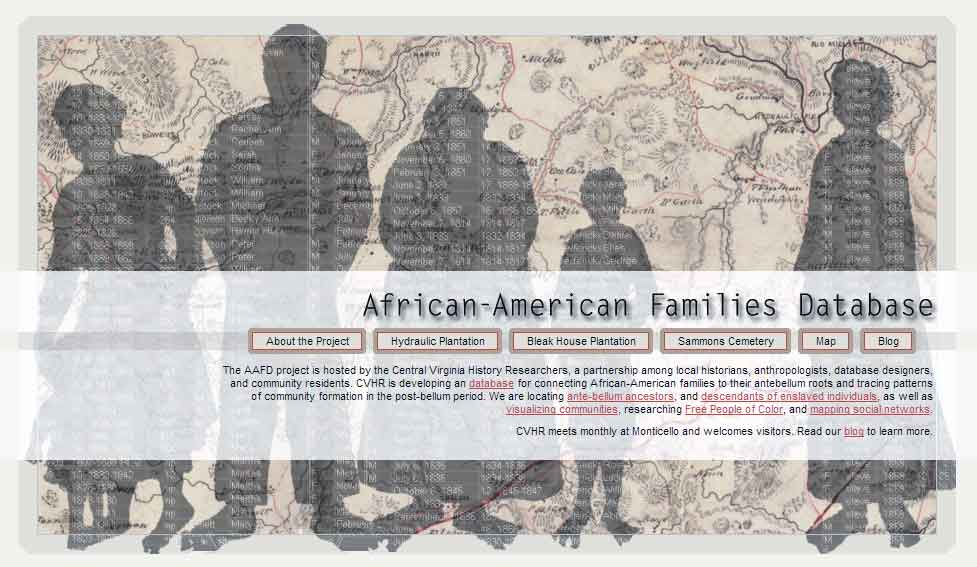
Families rarely stay within one county and frequently spill over into adjacent ones. Those of us who conduct research in Buckingham are fortunate that Albemarle, Cumberland, Fluvanna, Nelson, and Prince Edward counties have substantial surviving records. Often important data is unearthed in an adjacent county. For example, I broke through my Woodson brick wall when it was discovered that my John T.L. Woodson was named as the grandson of Tarlton Woodson in an Albemarle land deed.
In Albemarle County, a group called Central Virginia History Researchers (CVHR) is exploring various aspects of slave and free African-American life. CVHR includes a diverse collection of members who have decades of historical, genealogical, anthropological, and archaeological experience. Some members focus on their own families; others use family history to illuminate social and cultural history.
Drop in at their African-American Families Database and learn how CVHR approaches research. You just might find a nugget that applies to your ancestors!
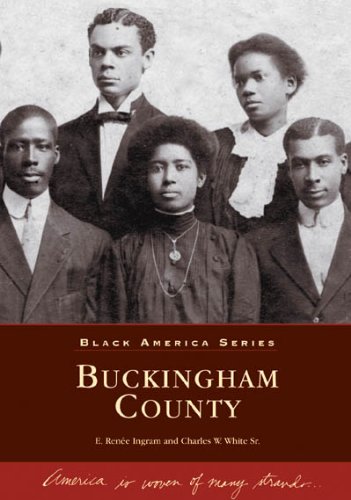
Buckingham County genealogy and history prior to 1869 is challenging research for us all, but it is especially challenging for African Americans with Buckingham roots. It is not hopeless, however. In the coming weeks posts will discuss the interconnectedness of Buckingham’s black and white families, offering some unexpected places to look for information.
Many of you are already familiar with E. Renée Ingram and Charles W. White Sr.’s book, Buckingham County, a selection in Arcadia Publishing’s Black America Series. If you haven’t seen this exceptional pictorial volume, I highly recommend it.
At Amazon, you can “Look Inside” and see what I mean: Buckingham County
Coming next: Central Virginia Historical Researchers

The Norvel House, Photo by Joanne Yeck
The mystery house described in the January 16, 2013 post has been solved by Coz. Jeremy Winfrey. This impressive home near Sharps Creek on Spreading Oak Road once belonged to the Thomas Benton Norvell family.
In 1880, Thomas Benton Norvell (d. 22 January 1897) was a merchant, living here with his wife and children. In 1930, his daughter, Alice (Mrs. Nelson Tindall of Hatton Ferry), ordered a Military Headstone for his grave at “his old home.” During the Civil War, Norvell served as a Sergeant in Company D, 56th Virginia Infantry, a.k.a. The Buckingham Yancey Guards.
In the early 20th century, the home was occupied by Norvell’s widow, Mary, and was eventually left to his son, Hay Booth Norvell (31 January 1880–6 August 1952) who is buried at Sharon Baptist Church.
Does anyone know if the Norvells operated a store at their farm?
Earl Hamner, Jr.
Most of us know that Earl Hamner, Jr., novelist and creator of The Waltons, grew up at Schuyler in Nelson County. Fewer of us know that he regularly visited kinfolk across the James River in Buckingham County. Hamner remembers:
Summer would arrive and with it crickets and blue birds and cousins from Richmond and Petersburg, up for a visit. We would go barefooted and catch fireflies in the twilight. After darkness fell we would sit on the front porch and listen to ghost stories told by our grandparents. Some nights my father would take the whole gang down to Drusilla’s Pond to catch blue gill and bass. There were two sisters who had drowned there, but we would leave before their ghosts were said to come out with the darkness. Some nights my father would call up bob white quail and lure them to the edge of the porch. On Sundays we would drive over to Uncle Benny Tapscott’s farm in Buckingham County. He would let us go down to his spring house and bring back chilled watermelons and cantaloupe. We would eat them in the yard and spit the seeds on the ground.
Buckingham melons must have been delicious and spitting seeds an awful lot of fun!
In the Winter 2013 issue of Broadside (Library of Virginia), Hamner recalls his thrill when the first little library, “Friendship Corner,” was established in Schuyler. You can read about in “Why Membership Matters: From the Desk of Earl Hamner Jr.”:
On April 2nd (6:30 pm) Hamner will appear at the Library of Virginia for a celebration of the gift of his private papers and manuscript collection.

View from Planterstown, Photo by Joanne Yeck
Not all of Buckingham County’s river towns dotted the James River. The Appomattox River offered a potential transportation route to those living in the southern part of the county. In the 1790s, when many river towns were established in central Virginia, several Buckingham planters planned one on the Appomattox. On January 15, 1798 the Virginia General Assembly passed the following act:
Be it enacted by the General Assembly, that 25 acres of land, the property of Ichabod Hunter and John Epperson, lying at the Cutbanks in the County of Buckingham, shall be, and they are hereby invested in William Perkins, Jr., Charles Yancey, John Johns, Joel Watkins, Daniel Moseley, Henry Flood, Nathaniel Lancaster, Robert Kelso, Anthony Winston, Stephen Pettus, Gentlemen, trustees, to be by them or a majority of them, laid off into lots of half an acre each, with convenient streets, shall be and is hereby allowed the owners of lots in Planterstown, in Buckingham County, to improve the same in manner required by law.
In 1937, Elizabeth McCraw wrote two surveys about the Planterstown site for the Virginia Historical Inventory. She described the location as south from New Store, 4.2 miles on Route #609, thence east .4 of a mile on private road. One survey was simply called “Planterstown.” It focused on a single house, once owned by the Gilliam family. At that time, this last standing structure of Planterstown was in poor repair.
Here on the “Planterstown” property was situated an old colonial town just below the site of the Cut Bank Bridge that used to span the river at that place. A charter was secured and the town laid off but never seemed to have grown beyond a store and a couple of tobacco warehouses. Just above the town site is the old homestead, also known as the old Gilliam home.… The place was in the Gilliam family until 1920.
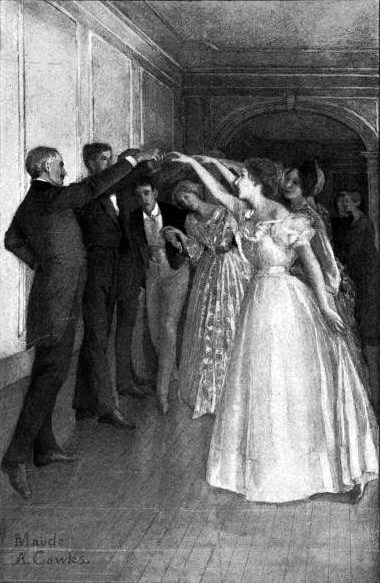 The Virginia Reel by Maude A. Cowles
Among the Buckingham County-related manuscripts held at the Library of Virginia is a speech given in 1937 entitled “The Contribution of Buckingham [County] to the Confederacy.” Delivered before the United Daughters of the Confederacy, the manuscript is unsigned and attributed to William Shepard.
In his speech, Shepard described good times Buckingham-style. These types of country entertainment lasted through the 19th century and well into the 20th century.
Dancing, card playing, foxhunting and horse racing, as elsewhere in Virginia, were the principal diversions of the young people. In addition to dances held in private homes, Buckingham possessed several summer resorts. Among there were: Buckingham Sulphur Springs and Physick [a.k.a. Physic] Springs, where the sick and afflicted gathered in substantial hotels – entire family frequently occupied cottages. At Spreading Oak dancing was held in the open under a large tree.
An irritated Methodist clergyman of this period wrote that “If as much energy were used in Buckingham in prayer as in dancing, it would be a citadel of the saints. Wherever I went there were fiddles going and houses rocking, and on the tables lay dusty Bibles.”
Coming soon: More about Buckingham Springs


 slate river ramblings . . . .