

The Summer 2019 issue of Central Virginia Heritage contains a lengthy essay by Karen Lucas Williams, detailing her search for her Diuguid ancestors in Buckingham County. The Introduction to “Margaret’s Letter,” begins:
One of my earliest genealogy research projects was to document the life of my ancestor, William Diuguid, born in Aberdeen, Scotland in 1717, and my descent from him through his son, George Diuguid, an American Revolutionary War patriot. The Duguid family settled in Old Albemarle County, later Buckingham County, Virginia, before the Revolutionary War, and eventually changed the spelling of their surname to Diuguid.
As most of us have discovered, searching for ancestors in Buckingham County requires patience and lots of creative thinking.
Many thanks to Karen for sharing her process and her discoveries.
Copies are available at Amazon: Central Virginia Heritage, Summer 2019
Follow this link for more about the Central Virginia Genealogical Association.

Appomattox And Buckingham Times. Courtesy Virginia Chronicle.
On September 21, 1904, news from Buckingham County via the correspondent “Quoit” was printed in the Appomattox and Buckingham Times:
There is quite a good deal of sickness in this neighborhood at this time, though mostly confined to colored people.
Mr. P. H. Grigg, son of Mr. P. A. Grigg, is quite ill at the home of his father, near the village (Buckingham Courthouse). His symptoms are very much those of fever, so says Dr. Morriss, the attending physician; but his case has not so fully developed as to enable the doctor to diagnose with certainty. We hope Phil will have no further affliction than those that are necessary for the working out of a “far more exceeding and eternal weight of glory.”
Quoit’s quotation comes from 2 Corinthians 4:17 —
“For our light affliction, which is but for a moment, worketh for us a far more exceeding and eternal weight of glory.” (King James)
Quoit’s pen name may refer to a single-chambered megalithic tomb, also known as a Dolmen; a type of brooch dating before the European Middle Ages, or the ring used in the game of quoit’s.
Coming next: Buckingham County News, 1904, Part II

In the Spring of 1816, Richmond’s Enquirer printed the following “for sale” notice for Virginia Mills:
FOR SALE.
That well-known and valuable property, the VIRGINIA MILLS, — Situated in the County of Buckingham, about sixty miles above Richmond, upon the Slate River, a mile from its junction with James River, which is navigable in all seasons to the Mill door.
This establishment consists of a substantial stone house, seventy feet long, by forty wide, and five stories high — with 4 pair of 5 feet Burr stones, and all the necessary machinery for manufacturing flour upon the latest and most improved plan; a Saw-Mill capable of doing as much as any other, (the neighborhood affording a sufficiency of timber to keep it constantly going, which is brought to the mill to be sawed on shares.)
The dwelling house is handsomely situated; half a mile from the Mill; with every necessary building for the comfortable accommodation of a small family. — At the Mill is a good store house and counting-room, miller’s house, cooper’s shop, &c.
It is thought unnecessary to mention in an advertisement that many advantages this property possesses over any other of its kind in the upper country, it is presumed those disposed to purchase such property, will first review the same, when the terms, which shall be liberal, will be made known by the subscriber.
ARCHIBALD TAYLOR
To learn more about the property, click here: Buckingham Mills: Virginia Mills
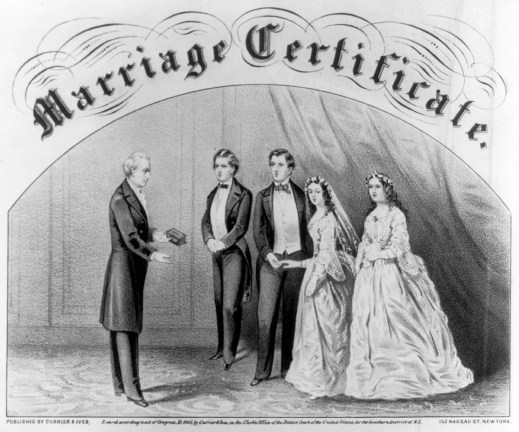
On February 14, 1895, Lynchburg’s The News reported the following nuptials:
A very pretty but quiet wedding occurred in Scottsville Tuesday evening. Mr. Samuel R. Bondurant, of Buckingham county, was married to Miss Sally Bocock, youngest daughter of the late Nicholas Bocock, by the Rev. Thomas E. Locke, of the Episcopal Church. After the ceremony, the bridal pair took the west-bound train via Lynchburg to Auburn, Ala., to visit the groom’s parents at that place. Mr. Bondurant is a prominent young farmer of Buckingham, and a son of Professor. A. J. Bondurant, of Auburn, Ala., and the bride, a charming brunette, is one of Albemarle’s favorite belles.
For much more about the Bondurant and Bocock families, enter their surnames into the search box at the right and enjoy the results from the archives at Slate River Ramblings.
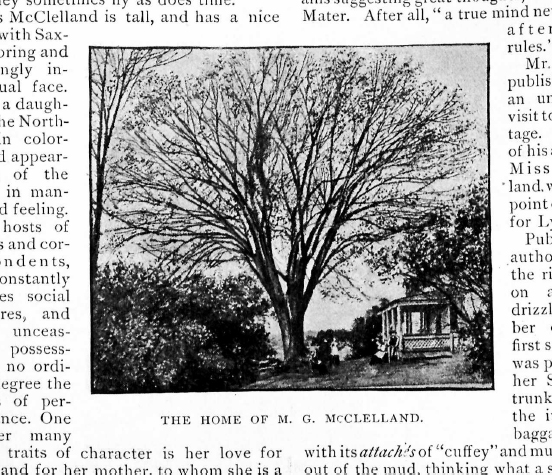
Elm Cottage.
Author Mary Greenway McClelland (1853–1895) was once one of Buckingham County’s best known citizens. Born in Nelson County, she wrote and published novels from her home at Elm Cottage, overlooking the James River.
In the spring of 1895, Lynchburg’s The News of followed her illness from consumption, printing in March:
Miss McClelland, who has been ill for two months at her home in Buckingham County, is convalescing. Her physician reports the lungs free of inflammation, and the trouble is now confined to the larger bronchial tubes where it is more manageable. He predicts a certain, although perhaps tedious recovery. On account of her illness Miss McClelland was compelled to decline the invitation of the Woman’s Club, in Richmond, to read one of her stories at their March reunion. An appointment had been made for her to read in conjunction with Thomas Nelson Page.
The doctor’s prediction proved inaccurate. In the August 3, 1895 issue of The News, the newspaper reported:
DEATH OF MISS M. G. MCLELLAND.
The Novelist Passes Away At Her Home In Buckingham.
Miss M. G. McClelland, the distinguished Virginia novelist, died at 6 o’clock Thursday, at her home, Elm cottage, in Buckingham County. She has been for a long time a sufferer from consumption, and has been lingering at death’s door for many weeks.
Miss McClelland’s life was full of beautiful Christian deeds, and through her individuality and personality, as it lends a tone in her literary works, she will be loved and admired for generations to come.
The titles of some of her works were “Oblivion,” “The Palmtree,” ⸻ “The Old Post Road,” ⸻ “St. John’s Wooing: A Story,” and “Ten Minutes to Twelve.” At the time of her death, she had already completed “Westover,” a novel, it is said which she regarded as her best.
This time, the newspaper’s prediction proved overly optimistic. None of McClelland’s titles are remembered today. Perhaps they are only awaiting rediscovery.
For more about this once well-known Buckingham County authoress, click on the following:

James River at New Canton. Photo by Joanne Yeck.
In 1844, Richmond’s Whig published a letter to the Editor signed “Many on Slate River.”
To catch up, click here: Buckingham County: An Inlet at Perkins’ Falls, Part I
Despite the fact that the letter to the Whig Editor was signed “Many on Slate River,” the correspondent’s summary was written in the first person. This organized conclusion for this “argument” might have been written by an attorney. Who was the spokesperson for the Slate River farmers and millers?
The letter to the Whig Editor concluded:
It is understood that petitions have been presented for inlets at Warren, Scottsville and Perkins’ Falls — and the [last] mentioned has paramount claims, as several hundred persons have signed this petition. That is the great central location—the meeting ground between Hardwicks and New Canton, where all the different parties should consent to meet. We all know that every man cannot have his own wants subserved, and it is incumbent on all to sacrifice something for the general good.
Scottsville is too remote from the great central district of country described, and being 4 or 5 miles farther from extensive the milling establishment of Hocker’s than Perkins’ Falls or Warren.
I have shown that this district of country considered in extent and in productions, is at this time subject to heavy exactions at the several Ferries, or to a burdensome and expensive land carriage to New Canton. That the tolls lost by the Company on produce sent to New Canton that would seek the inlet at Perkins’ Falls, would more than pay the expense of a public Ferry at that point. That Hocker’s Milling establishment, where 40,000 bushels of Wheat may be manufactured, should deserve especial regard. That Warren or Scottsville have but few claims compared to Perkins’ Falls. That Scottsville is some 4 or 5 miles more distant from Hocker’s and the central region named, than either of the other places specified. That distant companies enjoy more ready, safe and cheap conveyance to the Richmond market. That the excessive tax incurred by Hocker on land carriage of Flour, falls most heavily on the producers of some 30 or 40 bushels of Wheat.
We ask how long shall the Southside, at least this portion of it, be deprived of great natural advantages which we once enjoyed? This Mammoth Scheme promised to bring innumerable blessings to our fire-sides, but when we half seen millions squandered and the result only partial benefits, it is time to withdraw our support from a scheme which promises to entail more calamities than substantial good. The people of Buckingham are decidedly adverse to the expenditure of another dollar on the improvement, until ample facilities have been provided for the Southside. We consider it incumbent on the Company at an early day to establish the inlet at Perkins’ Falls. We have been debarred of our rights for several years. We may be divested of them for five more, but justice, though sometimes slow, will surely come.
MANY ON SLATE RIVER
~
Interested in learning more about ferries in and around Buckingham County? Consult “Ferrying across the James River,” in my book “At A Place Called Buckingham” (Volume Two).

In 1844, Richmond’s Whig published a letter to the Editor signed “Many on Slate River.”
To catch up, click here: Buckingham County: An Inlet at Perkins’ Falls, Part I
~
Among those eager for an inlet at Perkin’s Falls were members of my Chambers family, who owned a manufacturing mill on Slate River. Along with the Hocker family, my ancestor George Chambers (1783-1846) stood to profit from the creation of an inlet at Perkins’ Falls.
The letter to the Whig Editor continued:
Nor is this the sum total of the Wheat or Flour that would seek the inlet at Perkins’ Falls. Chambers has a manufacturing Mill on Slate River, and he would no doubt send his Flour to the same inlet. Many persons residing within the limits of the country above described, would be alleviated of excessive burdens by having an inlet, who now pay heavy exactions to the Ferries at Warren and Scottsville, or to be coerced to travel 25 or 30 miles to New Canton.
The sums saved to the Company in tolls on Hocker’s Flour alone between Perkins’ Falls and New Canton, where he now sends his Flour, would defray all expenses the Company would incur by at once establishing a public Ferry and inlet to the Canal at Perkins’ Falls. There is also a considerable quantity of Tobacco produced within the country mentioned, and subject to heavy exactions at intermediate points, or to be hauled 25 or 30 miles to New Canton. To show the inequity of the burdens, and at the same time most unjust and oppressive system of taxation to many of our citizens are daily subject to, it will only be necessary to state that persons residing near the Bent Creek, Hardwicks or New Canton inlets, can procure their Tobacco to be shipped by hogshead at about $1 per hogshead freight, and storage; while at Warren Ferry, for instance, $2.50 is demanded for the same.
Coming Next: Perkins’ Falls, The Great Central Place

Hocker’s Mills (a. k. a. Slate River Mills). Courtesy Historic Buckingham.
In 1844, Richmond’s Whig published a letter to the editor signed “Many on Slate River.”
To catch up, click here: Buckingham County: An Inlet at Perkins’ Falls, Part I
The correspondence from a collective of farmers and mill owners along Slate River continued:
The manufacturing Mills of Hocker, situated 4 miles north of Buckingham Courthouse and about 12 miles south of Perkins’ Falls, the same from Warren’s Ferry, and 16 or 17 from Scottsville, have to encounter most serious inconveniences. The New Canton inlet is 25 miles distance from Hocker, where the whole of his Flour is now waggoned at the most enormous expense, averaging 50c per barrel, which would almost ship it from Richmond to England. This burden falls not heavily on the Miller but on some 200 farmers—the producers of the Wheat out of which his Flour is manufactured.
There will probably be some 35 or 40,000 bushels of Wheat ground at his establishment this season. Give Hocker the inlet at Perkins’ Falls, where he is most desirous of approaching the Canal, and you at once not only supply him with a convenient inlet to which he could with his own teams haul his own Flour and make daily trips, but it would enable him to give some 4 or 5 cents more in the bushel for Wheat, which would as you really perceive, amount to no inconsiderable sum saved to the Wheat growers in the adjacent country.
For much more about Hocker’s Mills search the archives at Slate River Ramblings.
Coming next: Chambers Mill on Slate River
In 1844, Richmond’s Whig published a letter to the editor signed “Many on Slate River.” The correspondence is interesting not only because it reveals how many individuals felt about connecting to the James River and Kanawha Canal but also names operating mills in the northern part of the county in the mid-1840s. The letter from Buckingham County began as follows:
To the Directors of the James River & Kanawha Company.
There has been for the last twelve months much excitement prevailing in the Northern part of Buckingham with regard to the most suitable location for an inlet to the Canal.
This is a district of county lying between the Hardwicks and New Canton inlets inexistent from 40 or 50 miles, and extending south of the river some 20 miles or more, embracing a very fine section of the county at present almost entirely excluded from any advantages to be derived from the James River navigation. In truth, the people contiguous to the river in Campbell, Amherst or Nelson, some 50 miles more distant from the Richmond market in this portion of Buckingham, can at present send their produce to Richmond at about the same prices that we now have imposed on this section of the Southside.
To exhibit to you more clearly some of the many disadvantages we have to labor under, it will only be necessary to make a simple statement of facts. . . .
Coming next: Hocker’s Mills
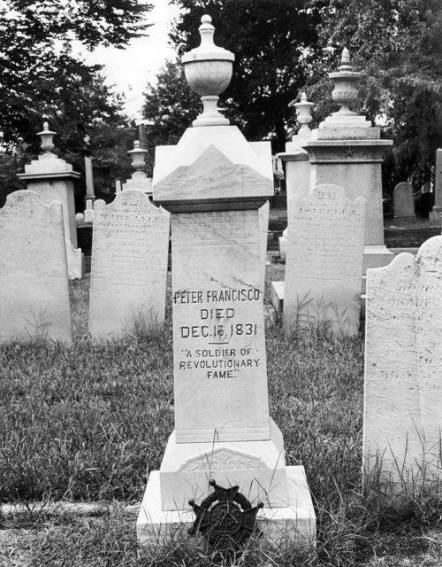
Need to catch up? Click here: Buckingham Notables: “The Western Sampson,” Part I
Peter Francisco was a raconteur of the first order, as was the man who penned this article. He knew how to spin a story, keeping his readers interested even with this oft told tale of Francisco’s extraordinary strength and peaceful ways. The article concluded:
Francisco was a powerful built man, standing six feet and one inch in height, weighing 200 pounds. His muscular system was extraordinarily developed, and he had been known to shoulder with ease a cannon weighing 1, 100 pounds; and a gentleman of undoubted veracity, still living in Virginia, who knew him well says, “He could take me in his right hand and pass over the room with me—playing my head against the ceiling as though I had been a doll baby. My weight was 195 pounds.” His wife, who was a woman of good size and fair proportions, he would take in his right hand and, holding her out at arm’s length, would pass around the room with her and carry her up and down stairs in this position. He would take a barrel of cider by the chimes, and, holding it in his mouth would drink from the bung a long and hardy draught without any apparent exertion.
Yet with all his strength he was a very peacefully disposed man, and never made use of his power except in case of necessity about his usual vocations or defense of the right. On occasions of outbreaks at public gatherings, he was better at rushing in and preserving the public peace than all the conservative authorities on the ground. Although uneducated he was withal a companionable man, and his anecdotes and stories of war, of which he possessed a rich fund, rendered him a welcome guest in the first families of State. His industriousness and temperate habits, together with his kind disposition, made him many friends; and through their influence he was appointed Sergeant-at-arms of the Virginia House of Delegates, in which service he died in 1836. He was buried with military honors in the public burial ground at Richmond.
~
While attempting to decode Bill Stokes’ statement, “I am the Kentucky game chicken,” I discovered that this article about Peter Francisco was widely published in the spring and summer of 1855, appearing in such diverse newspapers as the National Era (Washington, DC), the Warrick Democrat (Newburgh, IN), the Atlanta Weekly Intelligencer, and the Chester Standard (Chester, SC) under the headline “PETER FRANCISCO, ⸻OR,⸻Samson of the Western Hemisphere.”
Our “local hero” enjoyed a national reputation!
~
Eager to learn more about Peter Francisco? Try searching the archives at Slate River Ramblings and consult “From Waif to Legend: Peter Francisco” in my book, “At A Place Called Buckingham”.


 slate river ramblings . . . .