

Scottsville Museum.
I am delighted to announce that my article, “Randolph Jefferson’s Legacy,” appeared in Scottsville Museum’s Spring newsletter.
Click here to download a PDF and read more about the descendants of Randolph Jefferson, particularly Peter Field Jefferson of Scottsville: “Randolph Jefferson’s Legacy”
I also encourage you to explore Scottsville Museum’s website. Its rich content often crosses over with the history of Buckingham County. Click here for the home page: Scottsville Museum.
Read all about Peter Field Jefferson and his siblings in my newest book: Peter Field Jefferson: Dark Prince of Scottsville & Lost Jeffersons.
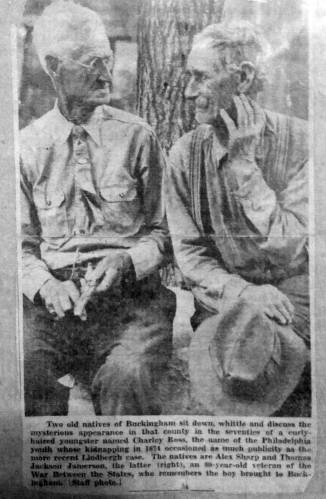
Buckingham County Natives, Alex Sharp (left) and Thomas Jackson Jamerson, CSA (right).
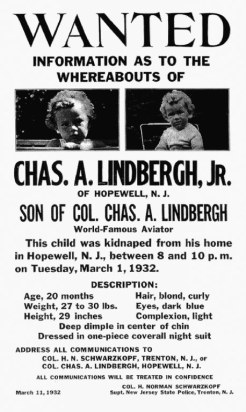
In 1932, the kidnapping of the Charles Lindbergh baby sparked many heated conversations, including this one in Buckingham County between Alex Sharp and Thomas Jackson Jamerson, who recalled another famous kidnapping in 1874. That year, newspaper readers across the country followed the story of the kidnapping of Charley Ross of Philadelphia. Learn more about Charley’s fate at Wikipedia: Charley Ross
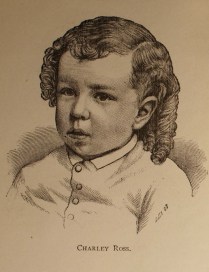
According to the caption accompanying this photo of Sharp and Jamerson, Charley Ross “appeared” in Buckingham County. Can a Slate River Ramblings reader expand on this comment?
Thanks to Andrea Potts for sharing this fascinating clipping.
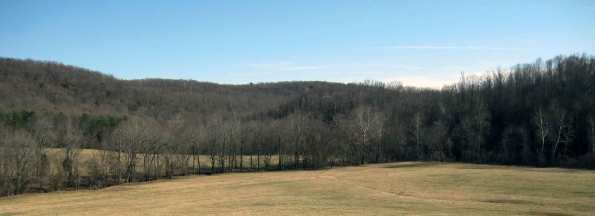
Site of Planterstown. Photo by Joanne Yeck.
Click here to catch up: The Buckingham Road Revisited, Part I
Randy Crouse shared the notice below in support of his understanding that, in the early 19th century, a “Buckingham Road” definitely ran through Buckingham County. He noted that while the 1912 article, “An Episode of ‘The Buck and Game Road’,” was interesting and warranted further research, his research, based on the historic newspapers, revealed mentions of a Buckingham Road—in Buckingham County—associated with farms, taverns, inns and stage lines, adding, “This gentleman’s statements do not make sense to me. Perhaps there was a Buck and Game road but I do not believe it is synonymous, contiguous or coincident with the Old Buckingham road.”
Crouse offered the following example, which ran in February 19, 1802 issue of The Examiner:
FOR SALE,
A V A L U A B L E
T R A C T OF L A N D,
IN Buckingham County, on the main road called the Buckingham road, containing four hundred ten acres, and on the waters of Willis’ river, about four miles above Dobson’s Mill, ten miles from Caira, twenty miles from New Canton, and four miles from Planter’s Town on Appomattox. This land is well adapted for the culture of Corn, Wheat and Tobacco; on which there is about seventy-five or an hundred acres of low grounds, that will answer extremely well for meadows, &c. ; about one hundred fifty acres cleared. To any person inclinable to purchase, the terms will be made known by the subscriber living on the premises.
Daniel Jones
February 8th, 1802.
~
Was the Buckingham Road referred to in this and other advertisements an extension of the road that still exists today? Was it a completely separate thoroughfare?
Please add your comments below and keep the conversation going!
Curious about life in Planterstown or New Canton? Enter those terms in the search box on the right and enjoy the results.

Did the “Buckingham Road” once run through New Store?
Was it the stage line mentioned here?
Click here to catch up: The Buckingham Road Revisited, Part I
The conversation continued as to whether or not the Buckingham Road ever ran in Buckingham County, probably distinct from the thoroughfare studied by Dr. Agnes Gish in her exhaustive book, Virginia Taverns, Ordinaries and Coffee Houses: 18th–Early 19th Century Entertainment Along the Buckingham Road.
Slate River Ramblings reader Randy Crouse provided some fascinating information, writing:
I have been working on a new book, which is almost complete, that is a transcription of every news article regarding Buckingham county from 1736 to 1850. I have read thousands upon thousands of articles in dozens of newspapers, especially the Va. Gazette and numerous Richmond papers.
The Buckingham road is mentioned from very early on, including as part of a stage line that runs through Buckingham county, makes stops in Buckingham county (New Store and or New Canton I believe) and mentions Taverns and Inns in Buckingham county situated upon this road. Stage lines used the road going from Richmond to Lynchburg via Buckingham.
Coming next: The Buckingham Road Revisited, Part III

Traube Tavern, Old Buckingham Road
The December 6, 2018 post at Slate River Ramblings, “Buck and Game Road,” generated a lively conversation.
Click here to read the original post: Buck and Game Road
Today’s Old Buckingham Road starts in Midlothian, joining the current Hwy 60. After winding passed Powhatan County Courthouse, the road veers off towards Farmville. Several Slate River Ramblings readers attested that this highway, dotted with historic inns and houses, never went to or through Buckingham County.
Another blog follower pointed out that the exceptionally useful historic road orders, collected by the Virginia Highway Transportation & Research Council and originally edited by Nathaniel Mason Pawlett, contained no reference to a “Buck and Game Road.” These road orders do, however, contain references to “Buckingham Road” [1738–1748] in the relevant reports for Goochland County [1728-1744] and Albemarle County [1744–1748], the once much larger versions of these counties which encompassed today’s Buckingham County.
Slate River Ramblings reader Randy Crouse suggested that anyone interested in the history of the Buckingham Road should consult Agnes Evans Gish’s scholarly and definitive book: Virginia Taverns, Ordinaries and Coffee Houses: 18th–Early 19th Century Entertainment Along the Buckingham Road (Heritage Books, 2012). I concur.
Then Randy Crouse shared some of his own research. . . .
Coming next: The Buckingham Road Revisited, Part II

Buckingham Courthouse, 1914, before the concrete fence was proposed.
Courtesy Small Special Collections, University of Virginia.
In January of 1920, cash was flowing into and around Buckingham County. Prosperous times resulted in a new concrete fence around Courthouse Square. According to Charlottesville’s Daily Progress, the new fence added greatly to “the looks of things.”
There had been a cold spell and, as a result, much harvesting of ice while the temperatures were low. Thrifty farmers were already plowing for spring crops, even before the year-end holidays.
The newspaper went on to report new costs to the county: “Immense qualities of lumber have been hauled on the new sand-clay roads in auto trucks, and the roads have been much injured by the running of these immense machines heavily loaded.” One price of progress!
All in all, Buckingham County was beginning the new decade on a high note. Mr. Thomas D. Eason, state inspector of agricultural schools, had recently visited and commented positively on advancements being made in Buckingham County’s high school’s agricultural department.
Thanks, as always, to Phil James for sharing gleanings from the Daily Progress.

At the dawn of a new decade, Charlottesville’s Daily Progress printed current wage information for employers hiring in January of 1920. What was labor in Buckingham County worth?
Farm laborers expected $2.50 a day and board.
Wood choppers were asking one dollar for cutting a cord of wood in 8 foot lengths. They got $2.50 per cord for cutting pulpwood.
Miners who had returned from the coal fields, presumably in West Virginia, were saying that when they were able to get work in the mines, they earned $10 -12 per day.
The article also noted that the price of farm land had increased an extraordinary 100%. As a result, many properties had changed hands.
Coming next: Buckingham County Business: Prosperity, 1920

Sugar & World War I
On January 1, 1920, Charlottesville’s Daily Progress printed year-end financial news Buckingham County including the fact that farmers had sold a good percentage of their tobacco crops, raising prices to a new high. “From fifteen dollars to sixty-five dollars has been paid for the dark tobacco raised in the section, and wrappers have sold on the local markets as high as one dollar a pound.”
The newspaper went on to note that this money was circulating throughout the county. Foodstuffs were plentiful, only sugar had been scarce. Merchants were receiving notes from wholesalers stating: “No sugar to be had. Will ship sugar as soon as we get some.” Neighbors were sharing with each other and this shortage was not yet considered a hardship.
Prices were generally high, though hog meat was an exception. Revenue from sales was not covering the cost to raise the swine.
Coming next: Buckingham County Business: Wages, 1920
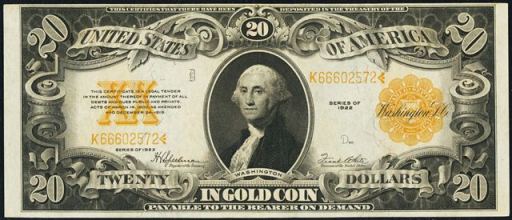
$20 in 1920 is equivalent to about $200 purchasing power in 2019.
Following World War I, Buckingham County and other rural communities experienced an unusual influx of cash. In a society that had long relied heavily on barter, lots of people were “flush.” Some of the consequences may have been a bit startling.
Charlottesville’s the Daily Progress reported the phenomenon on April 15, 1919:
MONEY PLENTIFUL IN BUCKINGHAM
Money is handled more freely than ever before and some negroes and also some whites who are getting money, from the government cannot be employed for anything. One washwoman whose husband is in the army got a check at one time for $125, and some people have been getting money from relatives who were sent to war. One man who had never owned a home has bought a farm, expecting to pay for it with the insurance he gets ($57.50 a month) on account of the death of his son, who died in camp.
Other financial news included the fact that seed potatoes were selling for less than usual. Eggs milk and butter were plentiful. Not many people had “put up ice” over the winter. Perhaps this was, in part, because an ice plant was opening soon at Dillwyn.
Thanks to Phil James for sharing this “news.”
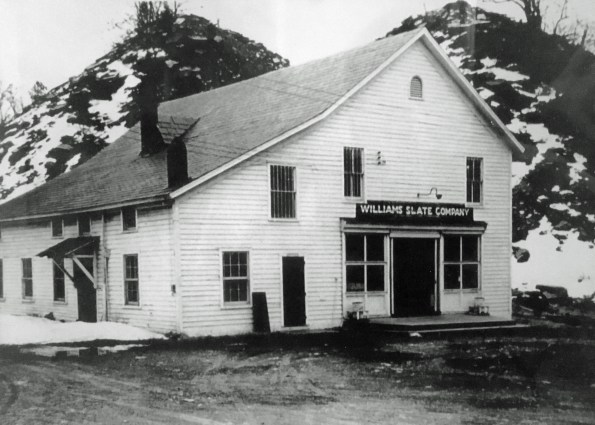
Williams Company Store. Courtesy Bob Jeffery.
Arvonia and its slate quarries remain a favorite topic at Slate River Ramblings.
Adding to our knowledge about the community, Bob Jeffrey consulted John Williams’ privately printed autobiography, Five Generations, which includes several passages concerning the Williams Company Store, pictured above. Mr. Williams grew up in Arvonia during the 1930s and recalled the following:
“This store, started by our grandfather and his brother (John R. and Evan R. Williams), included food, meats, animal feed, clothing, shoes, hardware, roofing materials, window sash, ice cream and candy. Many other items were included, and because of transportation problems and an extreme shortage of money, this truly had to be a “country general store.” (p. 78)
“All quarry workers had a charge account at the Company General Store, but payment in full was expected on Friday payday. ‘Another Day Older and Deeper in Debt, I Owe My Soul to the Company Store,’ certainly rang true in Arvonia, Virginia.” (p. 81)
The Williams Company Store was originally located next to the main quarry and the railroad depot. Within sight of the Williams brothers’ houses, it probably opened c. 1880 when the Williams Slate Company was established. The business was still operating in 1950 when John Williams returned to Buckingham County, taking over as President of the company. During the early 1950s, a new company store opened at the quarry on Arvon Road, above Hunts Creek.
For more about the Williams brothers of Buckingham County, follow these links:
Buckingham Slate: The Williams Brothers
Buckingham Slate: John R. Williams


 slate river ramblings . . . .