
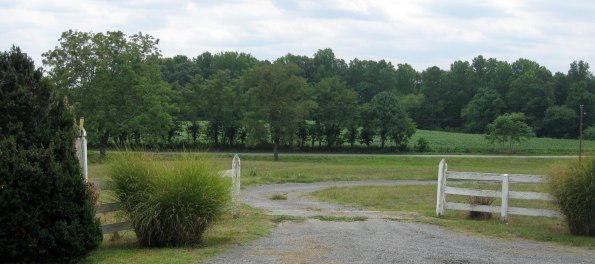
 Seven Islands, Buckingham County (2010), Photo by Joanne Yeck
Since the inception of Slate River Ramblings, three years ago today, over 500 history lovers now follow the blog.
Many thanks to all of you for making it a success and for caring about the people and places of Buckingham County, Virginia.
The content at Slate River Ramblings just keeps growing. As of December 2015, there are over 500 posts and 100’s of expansive comments by readers.
There are more serialized, true-crime stories to come, with a truly Dickensian tale coming this spring.
So, stay tuned to the adventures at Slate River Ramblings and invite your family and friends to join us as we continue to ramble through Buckingham County’s history.
Terror Reigns
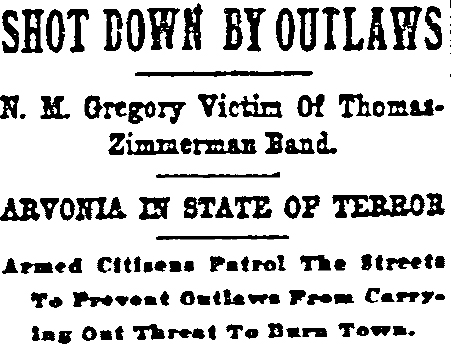
On September 28, 1908, Buckingham County citizens were shocked when a Mr. Gregory was shot in the back. Interest in the problems of Arvonia quickly expanded beyond Virginia. The Augusta Chronicle of Augusta, Georgia, printed the news the next day:
PROMINENT VIRGINIAN
People Scouring Country in Quest of Assailant.
Richmond, Va., Sept 28 – Waylaid and mysteriously shot on the highway near Arvonia in Buckingham county, Virginia, late Saturday, N. M. Gregory, a prominent resident of the county, lies at his home probably fatally wounded, while a posse of indignant citizens is scouring the country in search of his assailant.
News of the shooting reached here late today, communication being difficult, owing to the inaccessible character of the country.
It is believed that Mr. Gregory was shot by some member of a band of outlaws who recently escaped from the Buckingham jail. The community is reported to be greatly excited over the outrage.
Surely, he was the same N. M. Gregory the outlaws had raided the previous summer, stealing his fine young cow. Baltimore’s The Sun described him as a well-known business man and capitalist. In later reports, Gregory will be described as a merchant and farmer. The Sun went on to say:
The shooting of Gregory is believed to have been in a spirit of revenge because of testimony which he recently gave against Arthur and Benjamin Zimmerman and Charles and William Thomas, which testimony led to the conviction of the men for housebreaking. Shortly thereafter the four men made their escape, assembled the dispersed gang about them and began to terrorize the neighborhood. Men and women in Arvonia, including Gregory, received letters signed by the Zimmermans and Thomases threatening to burn the town and lynch the inhabitants. The countryside is said to be in sympathy with the outlaws.
Gregory alleges that two women whom he met on the road Saturday night gave the signal that resulted in the shooting. The identity of these women cannot be ascertained.
The town of Arvonia is being patrolled tonight by armed citizens, who fear that the outlaws may attempt to execute their threat to burn the place. The women of the town are panic-stricken, many of them fleeing to larger communities in anticipation of bloodshed.
The next day, a report in The Daily Press stated that N. M. Gregory had left the Penlan neighborhood and was on his way home on “the noted Seven Islands, in James River,” when he was shot. His condition remained critical. The Times-Dispatch printed that Gregory was “a substantial and reliable citizen, the head of a family, and a member of the Masonic fraternity.” He was being treated by Dr. Glover.
Was N.M. Gregory (also identified as N. W. Gregory) the man who infiltrated the gang in July and was identified in The Times-Dispatch as “Bob” Gregory? It seems odd that such a prominent citizen could fool the gang into thinking he would join them. Yet, many reports stated that N. M. Gregory “caused” the gang’s arrest.
Undoubtedly, the people sympathetic to the outlaws wanted easy access to liquor, even though it was illegal, and supported the outlaws’ blind tiger. Some may have been angered by their disenfranchisement following the establishment of Virginia’s new constitution. If they could have voted, they would have voted to continue the legal licensing of liquor in Marshall District. In 1903-1904, it was the affluent and literate citizens of Arvonia who succeeded in making Marshall District “dry.” Their desire for temperance and determination to eradicate saloons clearly did not represent the majority sentiment in the district.
Click here for more about the contest in Marshall District: The Whiskey Wars
Coming next: Coast-to-Coast News
Need to catch up? Click here: The Buckingham Outlaws: Part I

James River, Photo by Joanne Yeck
Reward Offered
Two weeks following the jail break, a reward for $450 was offered for information leading to the capture of The Buckingham Outlaws. The Times-Dispatch stated that the men were believed to be hiding out at their old headquarters three miles outside of Arvonia and that Willie Thomas had “jumped his bond.” The newspaper also provided a vague description: “In appearance the men are typical backwoodsmen.”
On September 25, 1908, The Farmville Herald offered a more detailed description saying that they were “lanky, tall, spare, with unshaven faces and bushy hair. All of them wear mustaches, more or less sandy in color, and their ages range from thirty-five to forty-five years.”
The Herald described their hiding place as the brush and ivy-bushes between the Slate and James rivers. The paper also noted that Benjamin Zimmerman had previous charges against him for bigamy and rape.
Was the rape charge the assault of his wife’s relative mentioned in The Evening News? If so, which wife? If indeed Ben Zimmerman married twice without benefit of divorce, was one of them living with him at the hideout?
In 1900, Ben Zimmerman (b. September 1870) was living with his mother, Rhody; his brother, Joe; and his wife, Mildred, in Marshall District. According to the census, Ben and Mildred had been married for five years. His occupation was described as day laborer.
Given the fact that the men were supposed to be hiding out in the very place they were last captured, the officials of Buckingham County didn’t seem to be in a hurry to apprehend them again.
Coming Next: Terror Reigns
Need to catch up? Click here: The Buckingham Outlaws: Part I

Jail Break
Since early August of 1908, three of the four outlaws had been jailed at Buckingham Court House. Inexplicably, Willie Thomas was let out on bail, released by Bail Commissioner John Boatwright during Commonwealth’s Attorney Hubard’s absence from the county. Thus, only three men, Charles Thomas and Ben and Arthur Zimmerman were confined to a cell on the second floor.
On Saturday night, September 5th, the three desperados broke out of jail, taking advantage of an old repair in the wall where two rivets held an iron bar in place. On Tuesday, September 8th, Richmond’s The Times-Dispatch reported the escape:
After cutting the rivet and bending the piece of iron back so that they could crawl through, the prisoners tied the sheets together, and fastening one end to the grating, they let themselves down, leaving three notes – one to the sheriff, one to the jailer, and one to the other prisoners in jail. They told the jailer that they liked the board he furnished them, but staying there was too confining, and if he got them again he would have to burn the mountains and sift the ashes. They thanked the sheriff for some small kindness he had shown them, and told him they would be back the first day of court.
The other prisoners in jail – two young negroes – when asked if they knew what time these three white men left the prison, said they did not know.
It is not known how the rivet was cut, but it is thought to have been done with an old case-knife, which was inserted between the bars. Doubtless Saturday night was chosen as the time of escape because there was a downpour of rain and the darkness occasioned by the clouds precluded all chance of detection.
A later report called the letters “saucy” and stated that the men had claimed if they ever returned to Buckingham Court House, it would be as corpses.
On September 30th, The Denver Post printed that Willie Thomas was responsible for assisting the jail break. The Times-Dispatch noted that Willie Thomas was “generally considered the shrewdest of the gang.”
Where was the guard? What was Jailer Spencer doing on Saturday evening?
Coming next: Reward Offered
Need to catch up? Click here: The Buckingham Outlaws: Part I

There is still plenty of time to give the gift of local history!
Here’s where you can purchase these books (and many others) about Buckingham County and Virginia:
~
In Virginia
Buckingham: Housewright Museum (U.S. Route 60, in the village of Buckingham)
Buckingham: Nancy’s Gift Shop (U.S. Route 60, in the village of Buckingham)
Scottsville: Baine’s Books and Coffee (485 Valley Street)
Monticello: Monticello’s Gift Shop [The Jefferson Brothers]
Charlottesville: Michie Tavern General Store [The Jefferson Brothers]
Charlottesville: Albemarle Charlottesville Historical Society (200 Second Street, NE)
Appomattox: Baine’s Books and Coffee (205 Main Street)
Richmond: The Library of Virginia: The Virginia Shop (800 East Broad Street)
Not in Virginia? Shop online at:
Albemarle Charlottesville Historical Society
Library of Virginia: The Virginia Shop

The Back Story
On August 5, 1908, Roanoke’s The Evening News ran a substantial front-page article about the Buckingham outlaws. Their correspondent in Arvonia used this opportunity to introduce the situation to the readers in Roanoke. Based on other headlines in that evening’s edition, the newspaper leaned towards sensational stories. The excitement in Buckingham County fit their agenda.
TO RAISE MONEY TO PROSECUTE OUTLAWS
Expected Alleged Notorious Band Will Be Given Penitentiary Sentences
Arvonia, Aug. 5 – A movement is on foot here to raise a considerable sum by private subscription to help the State in prosecuting Benjamin Zimmerman, Arthur Zimmerman, William Thomas and Charles Thomas, a bold gang of outlaws who were sent from here to the Buckingham jail Friday night.
These outlaws have done hundreds, if not thousands, of dollars’ worth of damage to this community. They have multitudes of charges hanging over them, any one of which will give them a penitentiary sentence.
Benjamin Zimmerman, the supposed leader of the gang, was charged last year with criminally assaulting a relative of his wife’s. He is said to have threatened her life and the life of her husband if either of them told on him. At length a warrant was issued, and a constable attempted to make his arrest two or three times without success. It is generally reported here that the officer was afraid to serve the warrant.
The gang has been conducting a blind tiger about three miles west of Arvonia for the last three years. At first they got their liquor from stations on the Buckingham Branch railroad, but later got their supplies from Shores (Fluvanna County), across James river. Their headquarters is reported to have been a most disgusting place. Here the four men sold liquor illicitly to hundreds of negroes and not a few whites, and made the place a center of crime and debauchery.
. . . Last summer they were reported to have stolen much live stock, a fine young cow from N. M. Gregory, pigs, chickens and turkeys.
Last summer they were charged with having destroyed the fine watermelon patch of Mrs. Ambler, pulling up the vines by the roots. They were also charged with burning up the hay stacks of “Jeff” Johnson and destroyed his plant bed this spring.
They figured in innumerable rows, cutting and shooting scrapes and disreputable riots. It is reported that they had planned to steal James Ayers’ flock of sheep the night after the robbery for which they were arrested and lodged in jail.
The four men are now safe in the Buckingham jail and the trial will probably come off in October. It is thought here that Aubrey E. Strode, H.D. Flood and others will be asked to assist Commonwealth’s Attorney Hubard in the prosecution. The general sentiment here is that all of the men will be landed in the penitentiary.
Despite the confidence expressed by The Evening News, the outlaws did not remain safely in jail for long.
Click here for more about Aubrey E. Strode.
Click here for more about Commonwealth’s Attorney Edmund W. Hubard.
Coming Next: Jail Break
Need to catch up? Click here: The Buckingham Outlaws: Part I

The dwelling house at Seven Islands. Photo by Joanne Yeck
Attack on Seven Islands
Apparently, Buckingham County officials were waiting for a clear-cut, open crime to arrest The Zimmerman-Thomas Gang. It came in July of 1908 when the men raided the smokehouse at Seven Islands, long the home of the Nicholas family. The Times-Dispatch reported on August 2, 1908:
On Monday night the four men and one Bob Gregory, who claims to have entered the gang in order to report on them, went to the home of Mrs. Willie Ambler at the noted Seven Islands mansion, it is alleged, and broke into the smokehouse and stole a large number of old country hams and middlings. Gregory reported the theft and warrants were issued. A strong posse went from here to the headquarters of the gang, between the James and the Slate Rivers, and captured them. The leader was lying upon the bed with a double-barreled shotgun at his head and in his pockets were two revolvers. He was surprised and disarmed. Most of the meat was found in his room. The other three men were similarly caught.
This is the only time “Bob” Gregory will be mentioned in connection with the apprehension of the outlaws. Later reports will vary as to whose smokehouse was raided. Mrs. Ambler’s garden, however, had been struck before and her home, Seven Islands, lay dangerously close to the thieves’ den.
Click here for more about life at Seven Islands.
Coming Next: The Back Story
Need to catch up? Click here: The Buckingham Outlaws: Part I
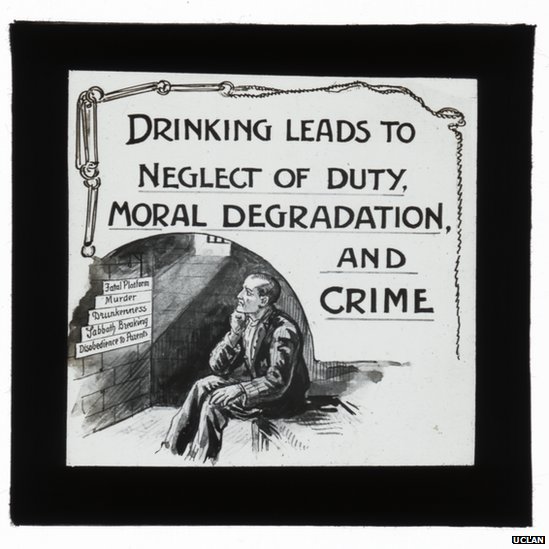
Only months prior to the murder of the Stewart brothers in Buckingham County, in the late summer and autumn of 1908, a gang of outlaws, in the style of Western desperados, terrorized the town of Arvonia and its environs, burning and looting. For at least three years, they had operated a “blind tiger,” in a secluded spot, across Bumpass’s Bridge, about three miles west of Arvonia. There, they sold illegal liquor mostly to Blacks in the neighborhood, though often to Whites, as well. Their business was undoubtedly booming. In 1903, Buckingham County’s “Whiskey Wars” had left the county nearly dry. By 1904, a lone saloon survived at Warren Ferry far from the thirsty men near Arvonia’s slate quarries.

The Zimmerman-Thomas Gang
On July 31, 1908, a posse captured four men responsible for a reign of terror in northeastern Buckingham County. They stood before Justice of the Peace D. Livingston Pierce and were tried in front of a large crowd of citizens – Black and White. Found guilty, they prepared to face a grand jury.*
The next day, five constables, all heavily armed, guarded their prisoners — the Zimmerman brothers, Ben and Arthur, and the Thomas brothers, Willie and Charley. According to Richmond’s The Times-Dispatch, they were “four desperate men, with hands tied with ropes and legs chained together and locked with padlock.” At dusk, a wagon containing the criminals pulled out of Arvonia and a large crowd watched the men head for the Buckingham County jail in Maysville.
They were arrested for housebreaking, though the list of charges against them, individually and collectively, went back many months. The Times-Dispatch concluded that “it was generally understood everybody was afraid to attempt to arrest them.”
Everybody? It is understandable that a single, local constable might hesitate to serve a warrant, but what about Sheriff Lewis W. Williams? Why should he and his deputies be intimidated by this gang of outlaws? Is it possible he was looking the other way for his own purposes?
Coming Next: Attack on Seven Islands
Need to catch up on the story of the murder of the Stewart brothers?
Click here: The 1909 Buckingham Murders: Part I
*The newspaper may have been in error and this J.P. was D. Livingston Jones. See comment below.

Elm Cottage-on-James
In the late 19th century, Elm Cottage-on-James was the home of the McClelland family, which included the celebrated authoress, M. G. (Mary Greenway) McClelland. The cottage, “long, low, and rambling,” was dwarfed by an enormous elm tree.
An article in the monthly magazine, The Home-maker, described the cottage which was built by Colonel John Cabell, son of Colonel William Cabell, a pioneer settler of the James River Valley. It sat directly across the James River from Norwood, former site of the Cabell-founded school.
The cottage was located for the view, “limited but lovely,” of the river and the Blue Ridge Mountains in the distance. It was not so well situated for “convenience in housekeeping, accessibility to water and the outside world.”
Isolation from close neighbors, however, provided the kind of peaceful life many writers require. The article went on to say that “Miss McClelland leads an every-day life, ideally quiet and without interruption.”
Once, McClelland’s publisher, Henry Holt, paid an unexpected visit to Elm Cottage. According to the sketch in The Home-maker:
Unaware of his approach, Miss McClelland was on the point of leaving for Lynchburg. Publisher and author met on the river-banks on a dreary, drizzly November day. His first sight of her was perched on her Saratoga trunk watching the improvised baggage-wagon . . . and mule struggle out of the mud.
A classic Buckingham County scene if ever there was one!
Click here for more about M.G. McClelland
Coming Next: A New Buckingham County Serial – “The Buckingham Outlaws”
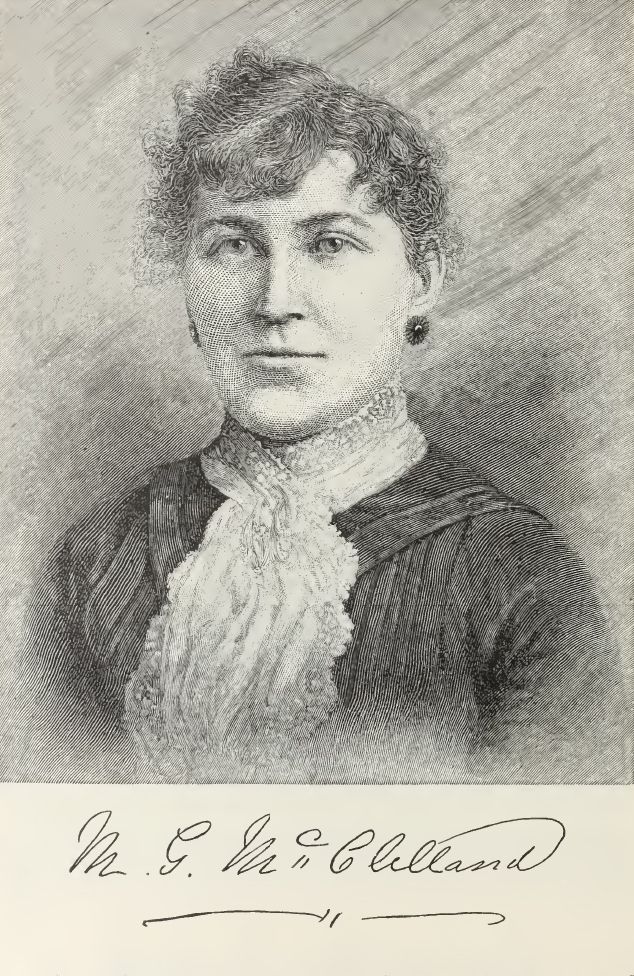
Mary Greenway McClelland (1853–1895)
M.G. McClelland was a popular novelist in the late 19th century. She lived in Buckingham County with her parents and sister at Elm Cottage-on-James. She was born in Nelson County, home of her paternal grandmother, Margaret (Cabell) McClelland of Union Hill and Montezuma (a.k.a. Spring Hill). Though Miss McClelland always used her initials for her professional name, on the 1880 census in Buckingham County, she appears as Mary G. McClelland, age twenty-six.
In April of 1891, she was featured in the monthly magazine, The Home-maker, and described as follows:
Miss McClelland is tall, and has a nice figure, with Saxon coloring and a strongly intellectual face. She is a daughter of the Northland in coloring and appearance, of the South in manner and feeling. With hosts of friends and correspondents, she constantly declines social pleasures, and works unceasingly possessing in no ordinary degree of the genius of perseverance.
She had no formal schooling nor a governess, was educated by her mother, and had the advantage of a fine Virginia library. She wrote at night, when the house was quiet.
Baltimore’s The Sun called her a rapid and prolific writer of novels and short stories:
Her style is terse, direct, and with a straightforward tone that has often been mistaken for masculine work, and deceived many of her readers, who knew of the author only as M.G. McClelland, and did not guess that the “M” stood for Mary.
In 1893, Richmond’s The Times called her “one of the most gifted writers that Virginia has.”
Her books were published by Henry Holt & Co., a major New York publishing house. Her titles include: Princess; Oblivion; Jean Monteith, Self-made Man; and Woman’s Kingdom, which was condemned from the pulpit as “Unchristian.” While none are remembered today, they sold well at the time of publication.
In August of 1895, she died of consumption at Elm Cottage, cutting short a very successful, if ephemeral, career.
Coming Next: Elm Cottage


 slate river ramblings . . . .