

An undated clipping titled, “Curdsville Mill At Least a Century Old,” written by Jim Berry, featured the photo above of John Washington. Berry wrote:
Anyone around the Curdsville area can tell you how to get to the Curdsville Mill, one of the oldest structures in Buckingham County, and most people can tell you something of its history. But one thing no one there agrees on is just how old the mill is, except John Washington.
John, a spry 85-year-old Negro farmer, who lives near the mill can rattle off the history of the sturdy brick structure with an air of almost absolute surety.
According to Washington, construction on the mill was begun in 1820 at the order of W. E. Gannaway, the first owner. It was finished five years later in 1825. Washington says his grandfather, a carpenter, helped build the interior of the mill during those five years.
To be continued….
A reminder. . . .
Please join me for a panel discussion at the Library of Virginia.
“The Joys and Challenges of Historical Research”
March 17th ~ Noon ~ Library of Virginia
Learn more about the research and writing of . . .
“At a Place Called Buckingham” — Volume Two.
A book signing will follow the panel.
Library of Virginia, 800 East Broad Street, Richmond, Virginia
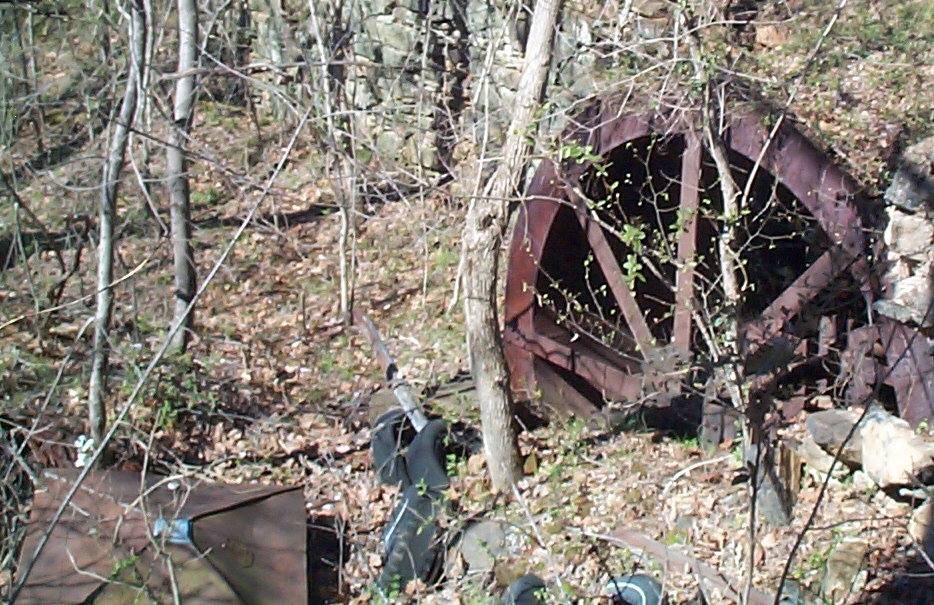
Ruins of Curdsville Mill, Courtesy Fran Harris Hill
On September 27, 1859, R. & W. Gannaway advertised in the Richmond Whig, offering for sale a Valuable Farm and Manufacturing Mills.
The tract of land was described as containing between 1,400 and 1,500 acres, adjoining the lands of Col. E.W. Hubard, Mrs. Martha B. Eppes, the Rev. Wm. C. Meredith, and others. The tract was ½ mile from a “circular saw mill” and, about ten miles from Farmville, on the Farmville and Buckingham Plank Road. It included a fine orchard, with “almost every variety of fruit;” a Brick Dwelling House, with eight rooms; and an office in the yard.
Additionally the Gannaways advertised the following:
We also offer the Curdsville Mills, on Willis’s River, with 15 or 30 acres of land attached, of excellent quality, and well enclosed with plank fencing. These mills are of brick, and in thorough repair. There are three pair of Burrs, a rubber and corn mill, with two water wheels, and capable of grinding between 25 and 30,000 bushels of wheat. We will sell the mills 3 or 400 acres of adjoining land, if desired, which is also well timbered.
Buckingham County land tax records indicate that, in 1857, Richard and William Gannaway bought 76 acres, including Curdsville Mills, from Alexander Moseley and that these mills were originally owned by William Phaup and others.
Click here for more about Curdsville Mill.
Please join me and our host, Historic Buckingham, for a presentation, book signing, and refreshments.
~
Maysville Presbyterian Church
March 15th ~ 2:00 PM
~
Maysville Presbyterian Church, 12945 W James Anderson Hwy, Buckingham Court House
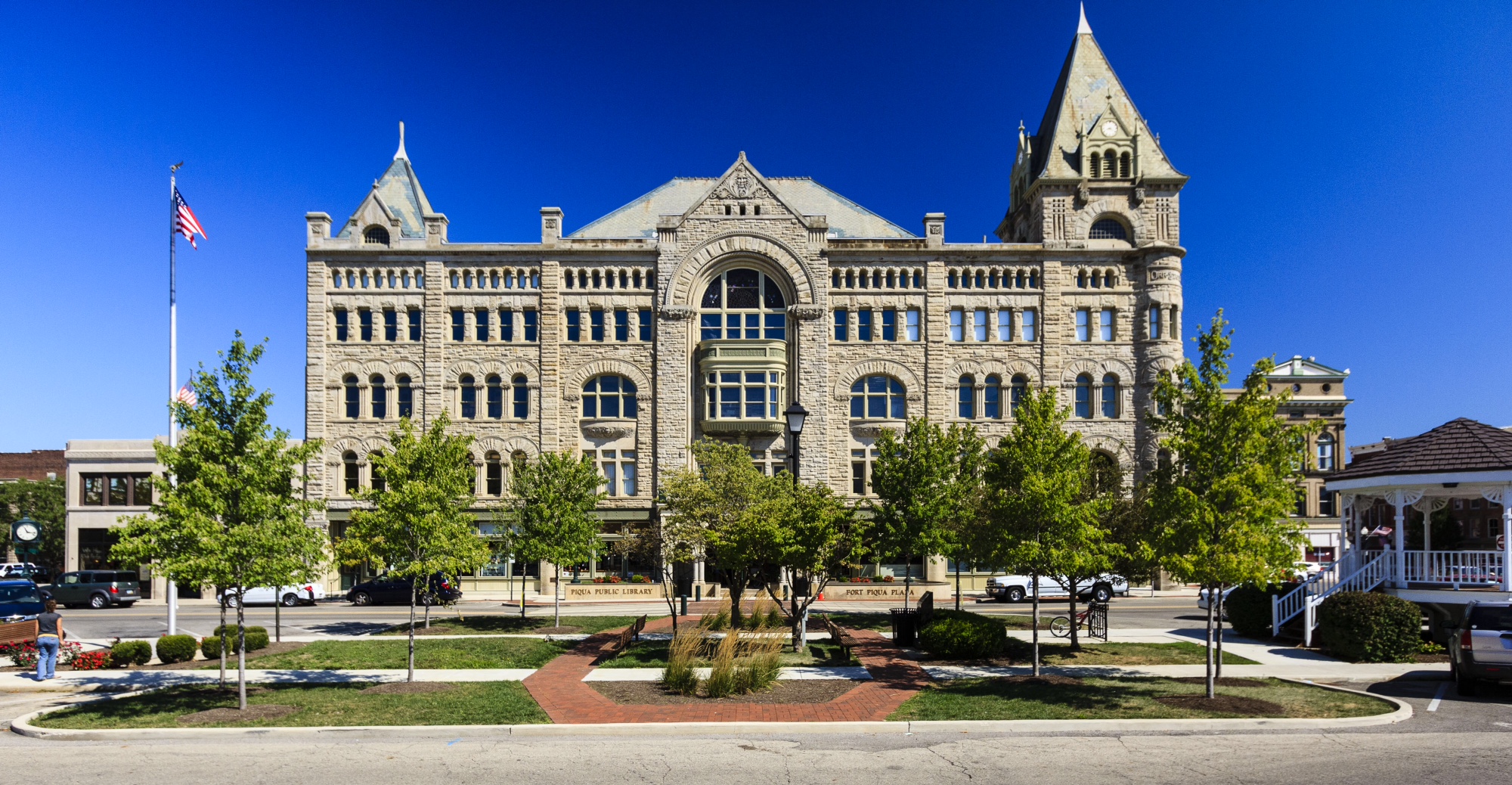
Fort Piqua Plaza Conference Center and Public Library, Photo by Andy Snow
Are you in Ohio and working on your genealogy and family history?
Join me in Piqua, Ohio on Saturday, March 7th, for “Routes to Roots.” I’ll be talking about my journey from writing family history to local history and demonstrating how Ohio families with roots in Virginia can benefit from the amazing collection at the Library of Virginia.
Read more in The Piqua Post.

Quarrymen at “The Big Quarry,” beside Hunts Creek and next to the old railroad station.
Courtesy Robert Jeffery
You can’t believe everything you read in the newspapers – old or new!
Recent posts at Slate River Ramblings, “Arvonia: A Bit of Old Wales” and “Old Castle,” quoted a full-page story that ran in the March 29, 1936 Sunday Supplement of the Richmond Times-Dispatch. While the prose was evocative and charming, the facts behind the story were less than complete.
Slate River Ramblings reader, Robert Jeffery, who has deep roots in Arvonia, commented:
Interesting post today. I’ve got to think the Times-Dispatch is somewhat misinformed here. There was extensive slate mining in the area from the 18th century on. The Virginia State Capitol in Richmond was roofed with slate from the quarries there in 1785. The Nicholas Tract, later purchased by my relatives John R. and Evan Williams, was well known to Thomas Jefferson.
The best source I know for information about the slate industry is an unpublished thesis by Laurie Pitts Jones (of the Arvonia Pitts’ and Jones’), “The History of the Slate Industry in Buckingham County Virginia.” I quote: “Two brothers, Evan R. Williams and John R. Williams, were the first of these Welshmen to arrive in Buckingham. In 1871, the same year of their arrival, they purchased a small tract of land along Hunt’s Creek near the present day site of Arvonia from William Price and his wife.” My great-grandfather, Robert Owen Jeffrey, married Jane Williams, the sister of the Williams brothers, and became the superintendent of the Williams Slate Quarry.
Bob Jeffery went on to note that the Edwards and Roberts quarry was developed in the 1880s and 1890s and that M.E. Jones and Hugh Hughes were also Arvonia residents and quarrymen.
Interested in learning more about the quarries in Arvonia? I highly recommend, “’Of the best quality’: Buckingham Slate,” by S. Allen Chambers (Virginia Cavalcade, Spring 1989).

Covered Bridge, Trent’s Mill, Courtesy Library of Congress
While researching photographer Frances Benjamin Johnston for “At a Place Called Buckingham” – Volume Two, I discovered the above photo in the collection at the Library of Congress. Taken by Johnston in 1933, it is identified as Covered Bridge, Trent’s Mill, Buckingham County, Virginia.
The Library adds this comment: “Photo shows man walking away from Trent’s Mill, a covered bridge on a dirt road. The 1767 grist mill is in right background on the other side of the Willis River in Cumberland County.”
Three years later, in 1936, Marie Keller Frazee wrote a detailed survey of Trent’s Mill for the Virginia Historical Inventory. She located the mill “.3 mile north of Cumberland Court House, Cumberland, Virginia on U.S. Route #60: thence left 5.7 miles on Route #622: thence left .2 mile on Route #650.” It had stood in this location at Hatcher’s Creek since 1843.
Does a Slate River Ramblings reader remember the covered bridge? If so, please comment.
Read more about Frances Benjamin Johnston in the February issue of the Buckingham Beacon.
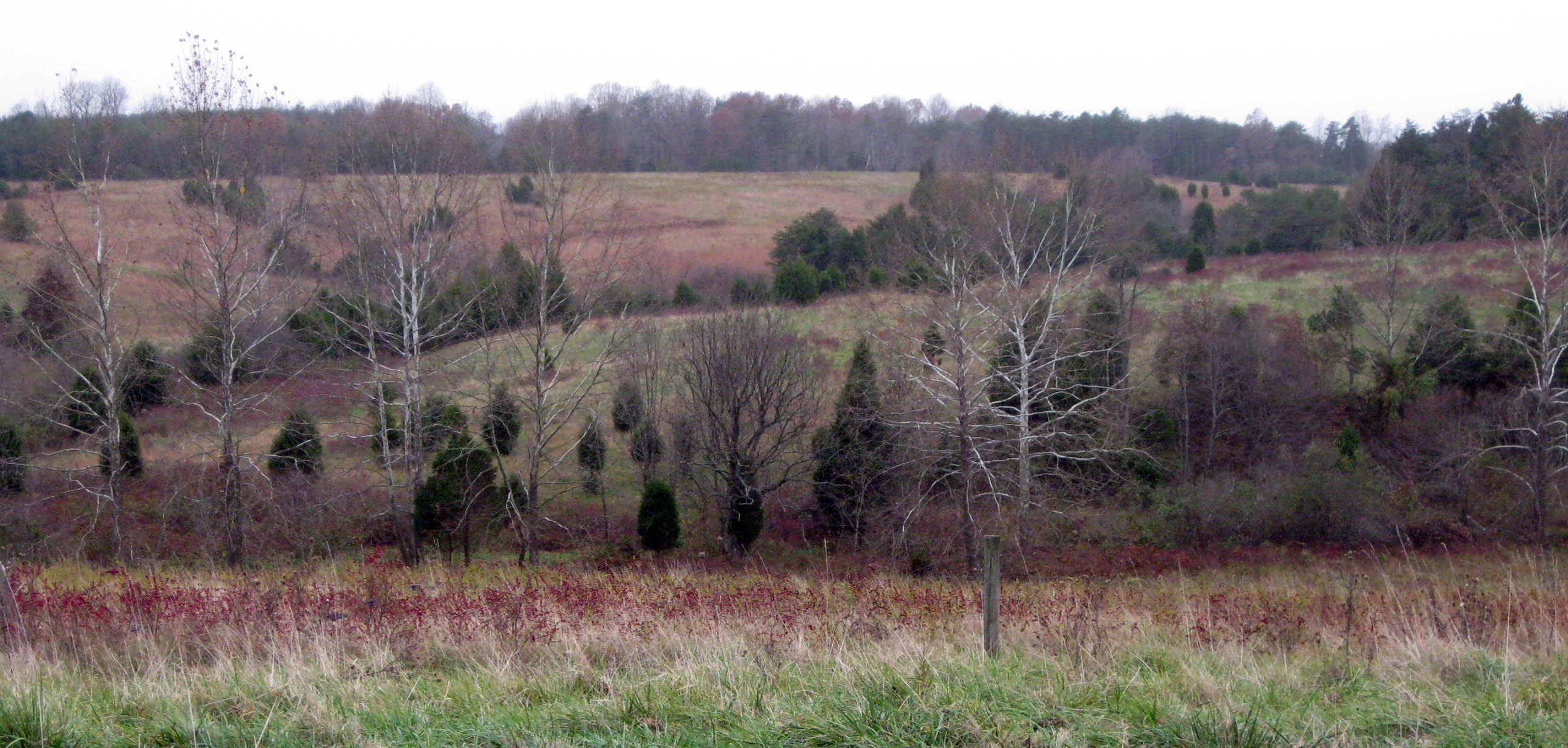
Marrs Creek Bottom Lands, Photo by Joanne Yeck
In 1840, George M. Payne advertised the upcoming sale of his property, Ridge Farm, in the Richmond Whig:
LAND FOR SALE.
I OFFER for sale Ridge Farm, on which I reside, in the county of Buckingham, three miles from James River, and about seven from Scottsville and Virginia Mills. This tract contains 781 acres, about 400 of which are open, and in a high state of improvement, yielding during the two years I have owned it in gross product, fully $6000 per annum. A good idea of the character of this land, is furnished to those acquainted with the Green Spring lands in Louisa, and the Big Level, near Buckingham Courthouse — it being the same range, and equal to the best portion of either. The improvements are comfortable, and the accommodation for a tobacco crop large. . . .
Terms will be accommodating, and a portion of the price will be received, if desired, in Mississippi or Arkansas Lands, and young Negroes. GEO. M. PAYNE
By 1845, the farm was owned by brothers John M. and James Harris. John M. Harris quickly advertised the opening of East Farm Female Seminary.
If you are in or near Buckingham County, be sure to pick up the new issue of the Buckingham Beacon and read about “At a Place Called Buckingham” – Volume Two. (Available 15 March 2015).
Also in the February issue of the Beacon, you’ll find my article, “The Village at Buckingham Court House: Captured by Frances Benjamin Johnston.” It’s the cover story!
You can download a PFD of this month’s Beacon at FLUVANNA REVIEW.
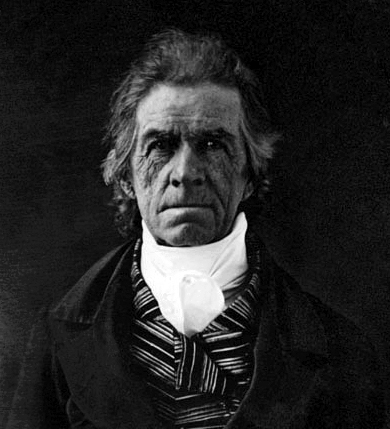
Gen. John Hartwell Cocke
In about 1845, John M. Harris and his brother and neighbor, James Harris, purchased 781 acres on Marrs Creek, adjacent their properties. Previously the residence of George M. Payne and family, John M. Harris proposed a new school which he advertised in the Richmond Whig:
EAST FARM FEMALE SEMINARY.
It is contemplated that this newly instituted Seminary, as a Boarding and Day School, under the government and instruction of Rev. G. C. Chesley of the Presbyterian Church, will go into operation on the 1st of February, and close the 1st of November. The buildings recently occupied by Morton Payne, Esq. and located in Buckingham county, 7 miles below Scottsville, will be fitted up for the accommodation of a number of young ladies. In regard to society, health, &c. of the neighbourhood there can be no objection. All branches usually embraced in the thorough English course will be taught here; also, Music and French, if required. The government and discipline entirely parental. Col. John M. Harris, the present owner of the buildings, residing a few hundred steps from the institution, will accommodate boarders. — Boarding may also be had with the Principal.
TERMS, per session of 10 months:
Board, including tuition in an English course, $100
Music and French — On reasonable terms.
References — Gen. John H. Cocke, Geo. P. Holeman (sic), M.D., Hon. Nath’l H. Claiborne, Rev. E.D. Sanders, &c. &c.
Gen. John Hartwell Cocke lived across the James River at Bremo in Fluvanna County. His wife, Louise, attended Trinity Presbyterian Church with the Harris family. Dr. George Payne Holman lived nearby on the old Jordan plantation and was an elder of Trinity Presbyterian Church.
Just two years later, in 1847, the Harris brothers announced the sale of these 781 acres. Did the Seminary close at the same time?
Coming next: Ridge Farm


 slate river ramblings . . . .