

On November 25, 1919, the Arvonia Inn was offered for sale at public auction by the Arvonia Improvement Co. Advertised in Richmond’s The Times-Dispatch, it was described as follows:
This hotel is an attractive substantial three-story building, containing 19 rooms, exclusive of the basement, which contains 3 rooms; water and gas in the house. Also one acre of land with a large livery stable and all necessary outbuildings.
According to Margaret A. Pennington and Lorna Scott in “The Courthouse Burned—“, Book II, Mr. and Mrs. William LeSueur purchased the Arvonia Inn from Arthur Pitts and made it their residence. Indeed, during the 1920s, the society pages of The Times-Dispatch continued to mention the Arvonia Inn, the LeSueurs, and their guests.
The authors go on to say that Mr. and Mrs. Owen Jeffrey were the next owners. Eventually, they moved to Richmond and, like so many other buildings in Buckingham County, the once grand hotel was lost to fire.
Special thanks to Diane Apperson and Ruby Loving for their help with the Arvonia Hotel posts.
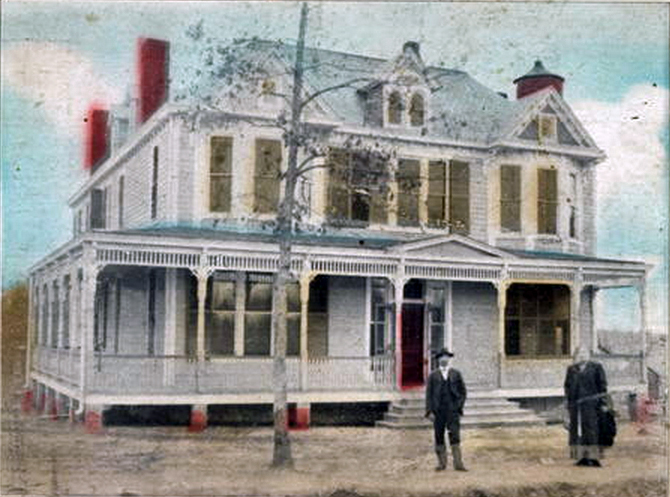
Arvonia Inn, Courtesy Card Cow
In the early 20th century the social comings and goings of Arvonia were frequently printed in the “Society Section” in the Sunday edition of the Richmond Times-Dispatch. The Arvonia Inn was mentioned often. The Bridge Club met there. Seasonal boarders enjoyed extended stays. Relatives came from neighboring counties for leisurely visits. Below are some enticing samples from the “Society Section” . . . .
In 1911:
Mr. and Mrs. F.P. Smith who, with their daughters, Misses Nellie and Annie, have been spending some time at the Arvonia Inn, have returned to their home in Norfolk.
Mrs. Lettie S. Morgan, with her two daughters, Lettie and Eleanor moved to the Arvonia Inn from their handsome home here.
In 1912:
R.C. Stearnes, secretary of the State Board of Education, paid a visit to Mr. and Mrs. Plummer F. Jones at the Arvonia Inn . . .
Mr. and Mrs. Ralph Chandler Root, of Penlan, will come to Arvonia late this month and spend the winter months at the Arvonia Inn. . . .
Miss Vera VerPlanck, of Brooklyn, N.Y. is expected to arrive here with her sister within the next few days and spend two months or more at the Arvonia Inn.
In 1913:
Mrs. Edwin E. Crooke, who has been spending some weeks in the Middle West, arrived here on Tuesday of this week, and will remain at the Arvonia Inn with her young daughter, Margaret, for some weeks. Albert J. Terrel, of “Bear Garden,” near New Canton, visited Rev Plummer F. Jones at the Arvonia Inn this week.
Click on here for more about the Welsh community at Arvonia and the lovely Lettie Morgan.
A high quality, digital scan of the above image of the Arvonia Inn is available online from Card Cow.
Slate River Ramblings began with no particular destination in mind.
Two years later, we’re a virtual community meandering through history.
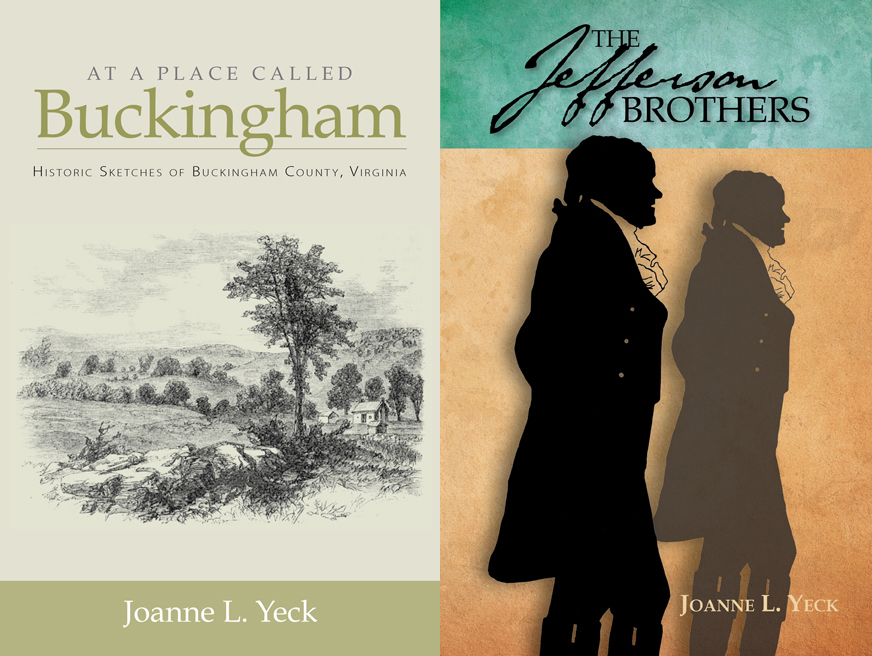
This seems like an ideal time to announce that “At a Place Called Buckingham” — Volume Two will soon go to press and will be available Spring 2015.
Watch for more announcements as we get closer to publication.
Thanks to all of you for rambling through Buckingham County’s history with me.
It’s been a great two years!
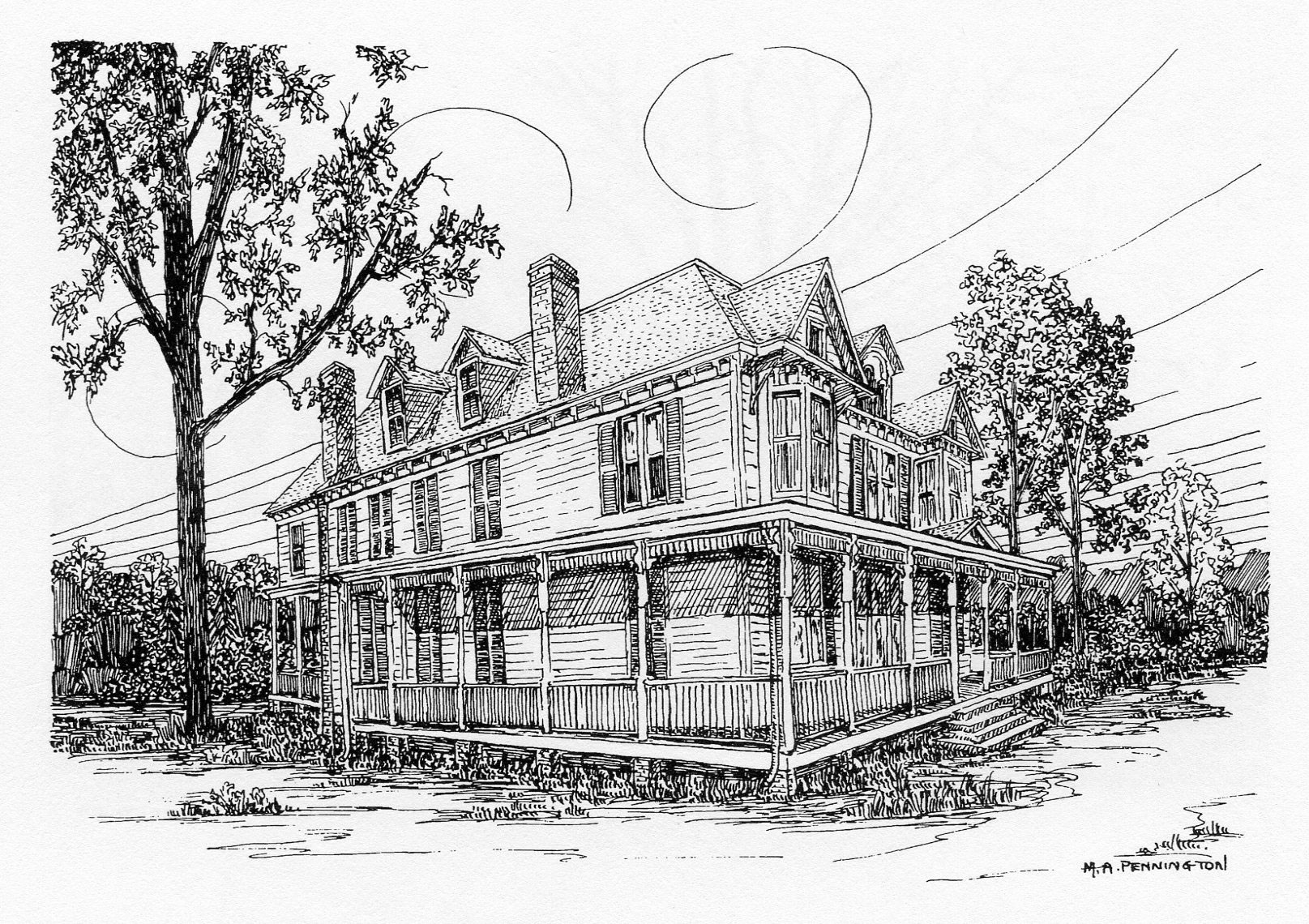
Arvonia Hotel, Courtesy Historic Buckingham
According to Margaret A. Pennington and Lorna Scott in “The Courthouse Burned—“, Book II, the “Arvonia Hotel” was built by Mr. Arthur Pitts c. 1895.
In 1906, however, A. L. Pitts of Arvonia advertised in Richmond’s The Times-Dispatch for bids to build a hotel at Arvonia. Was there more than one hotel built by Mr. Pitts?
The authors continue that the hotel was run first by a Mrs. Wella, followed by Mrs. Eula Fuqua, a music teacher in Arvonia. Residents included Dr. and Mrs. Perkins Glover and Mr. and Mrs. Plummer Jones while they waited for their homes to be built.
On the 1910 census, T.B. Weller, merchant, and his wife, Ida L. Weller are living near the hotel. Could she be the woman remember as Mrs. Wella? Plummer F. Jones, Presbyterian Clergyman, and Perkins Glover, Physician, are enumerated nearby as is Mary Cobbs, an African-American servant at the hotel.
On the 1920 census, Eula Fuqua is enumerated near Arthur L. Pitts. Norman Hughes, age 23, is enumerated as the hotel clerk.
To be continued . . .

Hardiman Hotel, Courtesy Historic Buckingham
In 1917, the Hotel Culbreth was just one of seven Buckingham County hotels listed in the Virginia Business Directory and Gazatteer. They were:
Arvonia Inn, Arvonia
Buckingham House, Buckingham – likely the “Buckingham Hotel,” a.k.a. “The Moseley House”
Hardiman Hotel, Dillwyn
Hotel Culbreth, Dillwyn
Hotel Dillwyn, Dillwyn
Ranson Hotel, Dillwyn
The majority of them left few traces in the local or Richmond newspapers. On October 16, 1908, however, The Farmville Herald noted that “Miss Susie Reynolds, the fair young daughter of Mr. Archer Reynolds of this place [Arcanum], was married at Hotel Dillwyn on Saturday last to Mr. James Marks, an industrious young farmer of Curdsville.”
Click here for more about Buckingham Hotel.
Coming next: Arvonia Inn
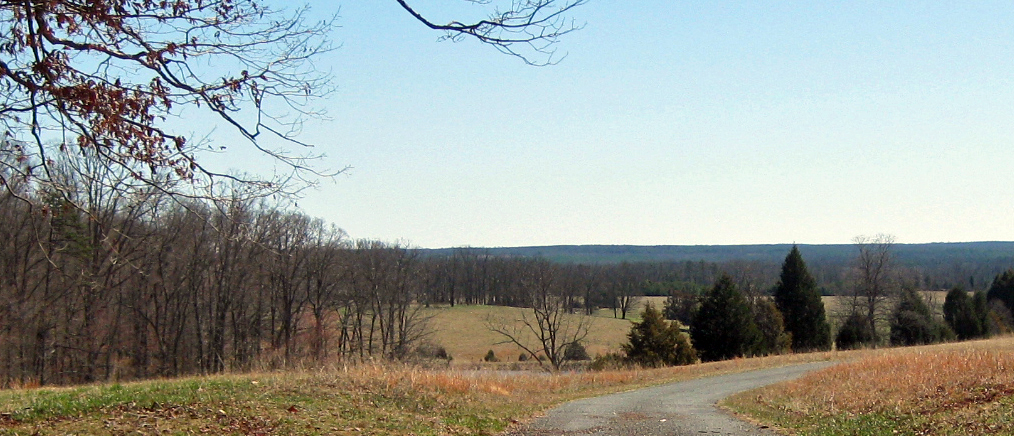
John M. Harris Farm (2011), Photo by Joanne Yeck
In 1856, something was stirring in Buckingham County.
A significant number of valuable Buckingham farms and other businesses were advertised for sale in the Richmond newspapers. Did sellers attempt to take advantage of a strong market? Did they anticipate a dip? Was the climate in Buckingham shifting towards increasing industry, making those properties more valuable? Did the political battles over the Kansas Territory concern Buckingham County slaveholders? Was it just coincidental?
This advertisement ran during September of 1856 in the Richmond Whig.
A VALUABLE FARM FOR SALE. – The subscriber offers for sale privately the place on which he resides, situated in Buckingham county, about two and a half miles from James River Canal, (At Bolling’s Landing,) and the same distance from Slate river navigation. The tract contains nine hundred acres, of which five hundred have been cleared by the subscriber, and cultivated in tobacco. The balance of the land, yet to clear, is equally as good, embracing some valuable pine timber, and large proportion of plant land. There are some thirty acres of branch and creek bottoms on the place. The high land lies so gently undulating that most of it can be ploughed both ways. The soil is similar to that of the Green Spring lands of Louisa, and those of the Hickory Level in this county. It is unexcelled for tobacco, and unequalled for wheat; also good for other grain crops, as well as grass. The improvements are sufficient for the comfortable use of a large family, and for the preservation of the crops. It lies in a good neighborhood, convenient to churches, mills and stores, &c., about twelve miles from the Courthouse.
Terms easy. The attention of purchasers respectfully invited. JOHN M. HARRIS
Within a couple of years, Harris sold most of the farm to his nephew, Henry St. George Harris, and removed to Appomattox County.
Harris’s reference to Hickory Level indicates it was well-known. About 750 acres of Hickory Level was owned by Col. Henry Gantt of Albemarle County. Later, this property was known as “Wells Farm.” Eventually, Col. Gantt’s widow, Pattie B. Gantt, sold it to the county and it served as Buckingham’s second Poorhouse. To learn more about the Poorhouses of Buckingham County, consult “Stewards of the Poor” in “At a Place Called Buckingham” ~ Volume Two.
Shopping for holiday gifts?
~
In Virginia
Buckingham: Housewright Museum (U.S. Route 60, in the village of Buckingham)
Buckingham: Nancy’s Gift Shop (U.S. Route 60, in the village of Buckingham)
Scottsville: Baine’s Books and Coffee (485 Valley Street)
Monticello: Monticello’s Gift Shop [The Jefferson Brothers]
Charlottesville: Albemarle Charlottesville Historical Society (200 Second Street, NE)
Appomattox: Baine’s Books and Coffee (205 Main Street)
Richmond: The Library of Virginia: The Virginia Shop (800 East Broad Street)
Not in Virginia? Shop online at:

Gilliamsville Post Office, Courtesy Jack Clayton and Linda Hope Doerger
According to the records of US Appointments of Postmasters, William J. C. Goode was Postmaster at Gilliamsville, Buckingham County from July 20, 1873 until that Post Office was discontinued on October 15, 1914 and its mail was delivered to New Canton.
Stores and Post Offices frequently went together in rural Virginia. W.J.C. Goode (born September 1847) was a merchant, carrying general merchandise in Gilliamsville, as well as postmaster.
His son, J. Gates Goode (born September 1876), became a physician.
Can a Slate River Ramblings reader positively identify anyone in the photo above?
Please comment.

Buckingham County Postal Map, 1896
During the 19th century, Post Offices (and often the stores or mills that housed them) came and went in Buckingham County. In 1880-1881, Chataigne’s Virginia Business Directory and Gazetteer listed the post offices below. The Postmasters and Postmistresses were collected from the records of US Appointments of Postmasters available at ancestry.com.
Beesville: Thomas H. Baber (1880)
Bolling’s Landing: Samuel L. Burks (1879) – To Payne’s P.O. (February 4, 1880)
Buckingham Court House: James H. Noble (1881)
Buckingham Mines: William Newton (1873), Discontinued July 5, 1881
Curdsville: Charles M. Garnett (1878)
Diana Mills: William Williams (1880)
Gary’s Store: Mary B. Anderson (1881)
Gilliamsville: William J. C. Goode (1875)
Glenmore: James B. Layne (1875)
Gold Hill: William C. Word (1881)
Gravel Hill: Mattie J. West (1875)
Mount Vinco: William O. Spencer (1874)
New Canton: John Davis (1876)
New Store: Louis D. Jones (1874)
Ore Bank: Littleberry B. Lesueur (1874)
Slate River Mills: Pattie W. Pryor (1881)
South Bangor: Edward R. Evans (1869), Discontinued as early as 1874 or as late as 1883.
Sycamore: Thomas W. Patteson (1876)
Thurston: Thomas G. Guthrie (1880)
Well Water: Alice Maxey (1876)
Compare this list to Buckingham Post Offices and Postmasters (1856) and the routes pictured above in 1896.

Haven’t read The Jefferson Brothers?
You can download a free PDF of Chapter One at Braughler Books.
Just click here: Braughler Books Store.
Once you are at the site . . . click on “Click Here for a Preview of The Jefferson Brothers”
Here’s a preview of the preview:
THE JEFFERSON BROTHERS
Peter and Jane (Randolph) Jefferson were married for seventeen years. Jane was frequently pregnant, delivering ten children into mid-18th century Colonial Virginia. Only two of their four sons survived to adulthood. The elder, Thomas, grew up to influence a generation and help shape a nation. The younger, Randolph, led a simple life as a planter on the banks of the James River. A great deal is known about Thomas, and his life’s work will continue to be the subject of discussion for decades to come. By contrast, very little is known about Randolph whose story sheds a much, much smaller light on his neighborhood in northern Buckingham County, Virginia.
In the summer of 1757, Peter Jefferson suddenly died. Tom, then fourteen years old, was nearly a man in 18th-century terms. Randolph, only two, was yet unformed and would grow up fatherless. Despite their extremely divergent paths in life, both of the Jefferson brothers would be significantly shaped by Peter’s bequest of two quite separate land holdings: the Rivanna lands and the Fluvanna lands of Albemarle County, Virginia.


 slate river ramblings . . . .