

Joan Crawford, Flapper
While Joan Crawford was not born in Buckingham County, she had significant Buckingham blood running through her veins. Born Lucille Fay LeSueur in Texas, she was the daughter of Thomas E. LeSueur (1868-1938), who descended from the LeSueur and Ayres families of Buckingham.
According to Coz. Harry Holman, Susan Hales (Ayres) LeSueur, the daughter of John Hales Ayres, was the matriarch of this line and was born in Buckingham County c. 1796. Sometime in the 19th century her large family settled in Nashville, Tennessee. In 1880, she can be found there, age 84, living with her son, Edwin LeSueur, age 63, and numerous grandchildren.
Susan’s grandson, James Howell LeSueur, was the father of Tom LeSueur, who in turn was the father of Lucille Fay LeSueur, who danced her way to Hollywood as Lucille LeSueur (also using the name Billie Cassin, her stepfather’s surname). She made several films as Lucille LeSueur. Then, when MGM decided the energetic flapper showed promise, maybe even star power, the studio held a contest for a new name. (LeSueur, the moguls thought, sounded too much like sewer.) The winning name was Joan Arden but, as it turned out, it was already the screen name of another actress. Thus, Lucille became Joan Crawford. The rest is one of the most complex stories in Hollywood history.
According to Crawford’s entry at IMDb, “Her popularity grew so quickly after her name was changed to Joan Crawford that two films in which she was still billed as Lucille LeSueur: Old Clothes (1925) and The Only Thing (1925) were recalled, and the billings were altered.”
The surname Lesueur/LeSueur is notoriously misspelled on census records. Can a Slate River Ramblings reader help connect Susan Hales (Ayres) LeSueur to James Howell LeSueur to Thomas E. LeSueur?
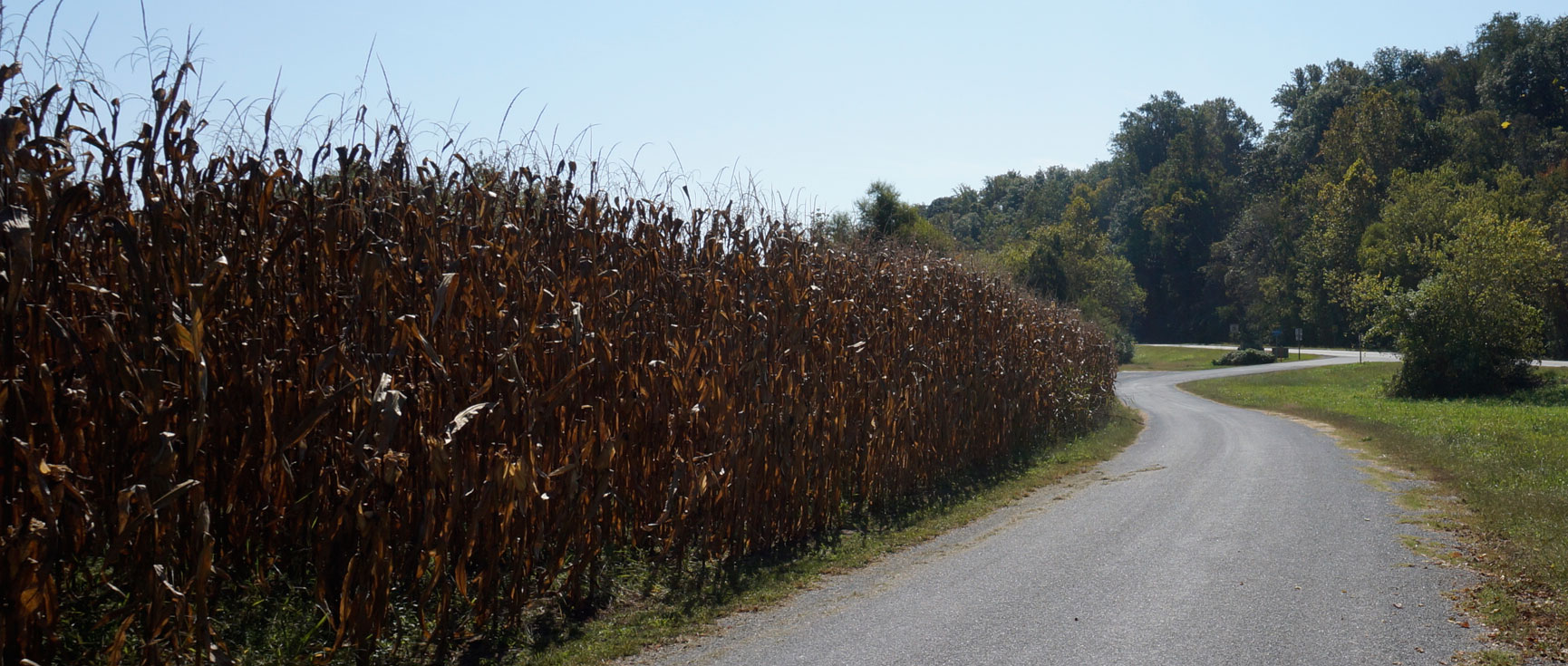
Corn Field at Snowden (2013), Photo by Joanne L. Yeck
On November 14, 1901, The Richmond Dispatch printed the following report of a near tragedy at Snowden in Buckingham County. Once the property of Randolph Jefferson, in 1901, Snowden was owned by the Moon family.
JOHN TINDALL SHOT
Yesterday afternoon Mr. James W. Heath, of Norwood, here on a visit to his father, while hunting birds in the cornfield on the Snowden farm in Buckingham, accidently shot Mr. John Tindall, who was in the corn near by. The shot entered his face and neck, making numerous ugly and painful wounds. Mr. Heath, who was terribly distressed at the accident, as soon as he could get Mr. Tindall to the house, ran over for a doctor. Dr. Hart gave him prompt medical attention, and to-day he is considerably better and out shucking corn.
What can I say? They grow ‘em tough in Buckingham County.

HAPPY FIRST BIRTHDAY SLATE RIVER RAMBLINGS!
Many thanks to all the Slate River Ramblings readers for participating in this increasingly lively conversation about Buckingham County history.
Please visit the blog and explore. You’ll find 220 posts full of interesting facts and lots of expansive comments from followers.
Search your favorite topics for a post you may have missed. You might find a cousin you didn’t know you had!
In the coming year, you can look forward to new topics and more about old favorites.
Coming up next: “Shooting at Snowden”

Thomas S. Bocock (1815-1891)
According to the Biographical Directory of the American Congress, 1774-1949, Thomas S. Bocock, was born on May 18, 1815 in the part of Buckingham County which now lies in Appomattox County.
In Virginia gentry style, he was first educated by private tutors, graduated from Hampden-Sidney College (1838), then studied law and was admitted to the bar (1840), practicing at Buckingham Court House. He entered politics as a Democrat and was elected a member of the Virginia House of Delegates (1842-1844). He served as prosecuting attorney of Appomattox County (1845-1846) and was elected to the U.S. House of Representatives, serving from March 4, 1847-March 3, 1861.
At the outbreak of the Civil War, he became a Representative to the Confederate Congress and was the Confederacy’s only Speaker of the House (1862-1865). Following the war, he served again in the Virginia House of Delegates off and on until 1878.
Bocock died in Appomattox County on August 5, 1891 and was buried the family cemetery, at his plantation, Wildway, located north of Appomattox Court House Is it true that Bocock named his plantation after his goatee?
Can a Slate River Ramblings reader confirm Thomas S. Bocock’s middle name? In various sources, the “S” in Thomas S. Bocock’s name is given as “Salem,” “Stanley,” and “Stanhope.”
Enthusiasm for the people, places, and events of Buckingham County just keeps expanding. Its history never grows old, always waiting patiently for a new generation to discover.
A few readers of Slate River Ramblings have already ordered multiple copies of “At a Place Called Buckingham” to give as gifts this holiday season. What a great idea! Thank you!
Here’s a brief summary of its contents:
“At a Place Called Buckingham” . . . Historic Sketches of Buckingham County, Virginia covers 250 years of history in central Virginia. In a dozen engaging essays, historian Joanne Yeck recounts important events in Buckingham County beginning with its formation, through the American Revolution and the Civil War, and beyond the Great Depression. Local heroes and heroines spring to life, revealing the tenacity, intelligence, and ingenuity of Buckingham’s people. New material gleaned from county records, 19th century newspapers, and numerous private collections offers a fresh look at Buckingham’s past. The result is a rich tapestry, which interweaves well-known figures and historical moments with little known tales of hard times and personal triumphs.
Click this link to order from Braughler Books: “At a Place Called Buckingham”
If you are in Buckingham County, copies are available at Historic Buckingham, signed by the author.
If you are in Albemarle County, copies are available at Albemarle Charlottesville Historical Society.

Axtell Academy, Courtesy Historic Buckingham
Thanks to the great-granddaughter and great nieces of Meta (Logan) Cabell, the mystery of the origins of Mrs. Cabell’s Library is solved.
The collection of over 3,000 books, donated to the Buckingham County Library c. 1898, came from Axtell Academy, established by Meta’s father, General T.M. Logan, who likely provided the books for the school library.
According to The Courthouse Burned (Book II), by Margaret A. Pennington and Lorna S. Scott, Axtell Academy was located at the Logan farm, Algoma, near Howardsville. The Academy building was completed in 1892. Professor Irving Sale, a graduate of the University of Virginia, taught the basics, as well as Latin and French. His wife taught music, drama, and some of the elementary subjects. The first commencement was held on June 3, 1893.
An article in Charlottesville’s The Daily Progress (September 1, 1960) proclaimed: “Axtell Academy once showplace of early education in Buckingham.” The Academy’s glory was, however, apparently fairly short-lived and Meta (Logan) Cabell donated its library to Buckingham County c. 1898.
Still to be solved: When Polk Miller gave his benefit concert (November 12, 1901) for the Buckingham County Library, where was the library housing Mrs. Cabell’s gift?
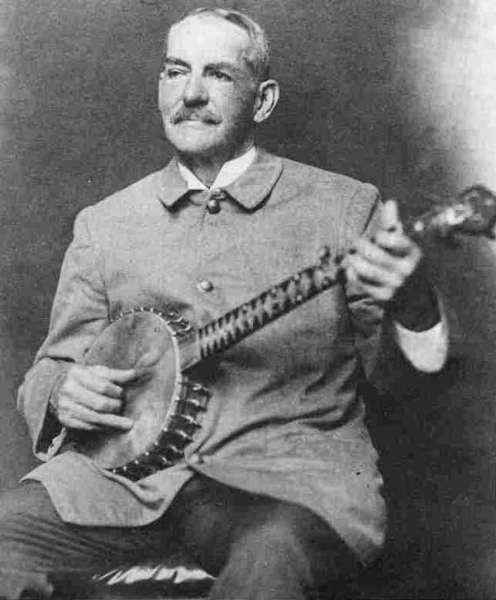
Polk Miller (1844-1913)
Mark Twain was quoted as saying, “I think that Polk Miller, and his wonderful four, is about the only thing this country can furnish that is originally and utterly American.”
Polk Miller was born James A. Miller (1844-1913) at Green Lawn, the Miller plantation near Burkeville, is just across the Nottoway County line in Prince Edward County. In the early 20th century, he toured both North and South with what was called “An evening of story and song on Old Time Down South.” Accompanied by a dignified quartet of African American men, Miller’s one-man show included stories, sketches, and songs.

Polk Miller’s Old South Quartet
Publicity claimed that his act was “Absolutely Unique. The Only Entertainment Of Its Kind Before The Public.” Wherever he went, Polk Miller drew a large crowd. Undoubtedly his benefit performance for the Buckingham County Library on Friday, May 3, 1901 was no exception.
I have yet to find a notice of his appearance in Buckingham County; however, there is evidence that Miller raised funds for other libraries, including Richmond’s Library Fund Broad Street Methodist Episcopal Church. On November 12, 1901, he performed at the YMCA Hall raising money for the Richmond library. General admission was $.25. Reserved seats cost $.50.
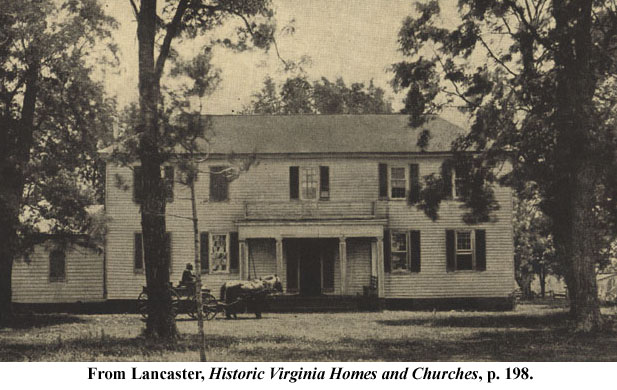
Liberty Hall, Nelson County, Courtesy Small Special Collections, University of Virginia
Recently, a cousin sent an intriguing fragment of Buckingham County history, a brief mention in the Appomattox and Buckingham Times, printed on May 1, 1901. It said simply this:
About three years ago Mrs. Hartley Cabell (nee Logan) presented the village of Buckingham with a magnificent library of several thousand volumes – and the Library Association continues to add new books from time to time. Next Friday Night Polk Miller will give an entertainment in the Courthouse for the benefit of this library.
A little research and help from Coz. Harry Holman revealed that the generous donor was probably Mrs. Joseph Hartwell Cabell, nee Margaret “Meta” Polk Logan. In 1900, the couple lived in Cincinnati, Ohio where Mr. Cabell worked as an attorney.
Many questions raised by this notice are yet to be answered.
Which Cabell family had amassed this impressive collection?
Did the volumes come from Joseph Hartwell Cabell’s homeplace in Nelson County, Liberty Hall?
Why were the books given away c. 1898?
Where was this magnificent library to be housed in the village of Buckingham?
Can any Slate River Ramblings reader offer more clues?
Many thanks to Coz. Mary Eleanor for sending the clipping from the Appomattox and Buckingham Times.
Coming next: Polk Miller and His Negro Quartette

Shaft mining in central Virginia, c. 1865 (Harper’s New Monthly Magazine)
On July 14, 1838, a letter to the Editor ran in the Washington D.C. newspaper, Madisonian, for the Country. It was in response to “extracts from the New York Gazette, on the subject of Gold Mines in Virginia.” The letter discusses several Buckingham County gold mines which were active in 1838 and was signed, simply, BUCKINGHAM.
The Booker mine went into the hands of a company in the fall of 1836, and some thirty or forty thousand dollars were expended in preparation of machinery upon a very large scale, (to be propelled by two steam engines,) and in sinking a shaft, which was unfortunately located and failed. But this plan was changed last fall – a cheaper one adopted – and machinery, propelled by one of the Engineers, has been recently put to work. The vein has been opened some fifty feet deep, and their prospects appear very flattering. The vein is large and the ore productive. The machinery consists of stamps and washers, which the superintendent is increasing in number, with full confidence, it is said, of producing an abundance of good ore, and making the establishment very profitable. There is little doubt that the Company will realize a handsome profit, with proper management, notwithstanding the expenses incurred, delay, &c.

Enon Baptist Church, Courtesy Historic Buckingham
For fifty-six years William Emmett McCraw (1846-1920) was a deeply involved member of Enon Baptist Church, long-time superintendent of the Sunday School, and for forty years Clerk of the church. He died on May 23, 1920.
On May 29th, the Richmond Times-Dispatch ran a lengthy obituary for Emmett McCraw of Buckingham County, a rare tribute to a man from a rural county. It read, in part:
William Emmett McCraw, the youngest son of Cary Harrison McCraw and Mary Gilliam, was born at “Elysian Grove,” in Buckingham County, on April 20, 1846. At the age of 16 he became a volunteer in the Confederate army, serving with Company K, Fourth Virginia Calvary, and although a mere boy, he was known among his comrades as one of the bravest and most daring of Stuart’s men. He was twice wounded, but as soon as he could lay aside his crutches he set out to fill again his place in the ranks, only to be turned back by the news of Lee’s surrender. During the dark days of Reconstruction he met his difficulties like the soldier that he was and began to build a bright future on the saddened past.
In his early twenties he was married to his boyhood sweetheart, Miss Bettie Gilliam, of Buckingham also, and through the years of the their long and happy life the love which began in school days seemed only to grow and ripen as they fought the battle of life together. Before the end came this mutual affection had approximated perfection as nearly as is possible for a human emotion. Upon his children he lavished the love and devotion of which only a self-sacrificing nature, such as his, is capable. To the guest in his home he displayed always the hospitality of an old Virginia gentleman. Besides his widow he is survived by five children, Richard Miller McCraw, Edward Cary McCraw, Mrs. N. W. Kuykendall and Misses Bessie Edmonia and Louise Harrison McCraw. . . .
But it was in his church associations that he was able to render his most definite service to the God to whom he had consecrated his life. For fifty-six years he was a member of Enon Baptist Church, for a long period superintendent of the Sunday school, and for forty years clerk of the church. Always willing to bear more than his share of the burdens, and in every other way living the faith which he professed he set an example for his associates of Christian purity and fidelity. It was not strange that as he was nearing the end he should have had no fear of death. . . .


 slate river ramblings . . . .