
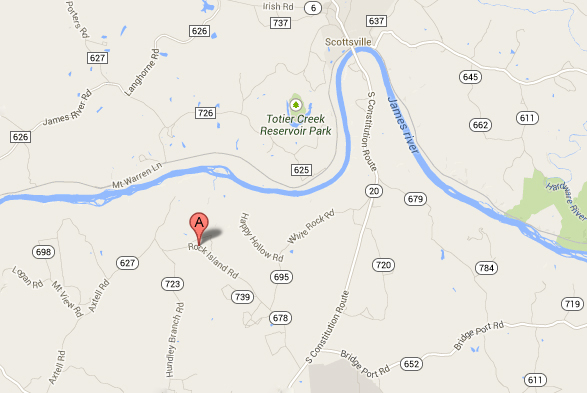
“A” Marks the Mill Pond on Rock Island Road
The 1863 map of Buckingham identifies Baber’s Mill, located on present day Rock Island Rd., sitting at the bend by Hundley’s Branch Rd., not far from Warren Ferry.
A surviving mill pond, at 37.743376,-78.547252, lines up perfectly with the mill site on the 1863 map. Was this the mill run by Robert Lindsay Baber, who lived on Rock Island Creek, and is mentioned in the Buckingham County land tax records? In 1863, Robert was in his mid-thirties, married to Elizabeth Jones, and supporting nine children. Not surprisingly, a Jones farm is identified on the 1863 map, just to the west of Baber’s Mill.
In 1880, Elizabeth M. Baber was the postmistress at Rock Island. In 1905, the mail for that area was transferred to Warren.
Can a Slate River Ramblings reader provide more information about Baber’s Mill and/or the Rock Island post office? If so, please comment.

GOLD! GOLD! GOLD! GOLD!
————————
An Act of the Virginia General Assembly passed on January 13, 1837 to incorporate the Alcinda Gold Mining Company. According to the Act, Charles S. Morgan purchased the entire interests of Thomas Eldridge, George W. Eldridge, Christopher Ford and others, in about six hundred and twenty acres of land.
Jan Kennedy, Slate River Ramblings reader, whose family now owns the land were the Alcinda Mine once operated, commented:
Our mine had a large, shallow depth pond or lake upstream of the sleuce or canal. The sleuce was about 10 feet wide and 6 feet deep. The partial dam and sleuce still exist. The sleuce is about 100 feet long with several cutouts which probably had adjustable wooden openings to vary the water to the undershot or over shot water wheels used to crush the rock from the mines shafts.
On the hill side above the sleuce, there are 3-4 mine shafts partially filled. About 35 years ago, there were large, left over rock piles, 15 feet high. They have been eroded or spread out due to amateur gold seekers.

Happy 200th Post Slate River Ramblings!
The archive at Slate River Ramblings is bursting with interesting Buckingham County history, personalities, and tidbits about central Virginia.
Searching can be fun! You can explore Slate River Ramblings past posts by keyword or by category. Just enter a word in the box in the panel on the right-hand side.
Try “maps” or “schools” or a surname that interests you. You’ll get a page of search results like this sample for churches:
Search Results for ‘Churches’
- 010.15.13Buckingham Churches: Dating Trinity Methodist Episcopal Church
- 010.13.13Buckingham Churches: Trinity Methodist Episcopal Church
- 07.30.13Buckingham Churches: Arvon Presbyterian
- 06.30.13Buckingham Churches: Rocky Mount Church
- 44.14.13Buckingham Churches: Bethel Methodist Church
- 43.17.13Buckingham Churches: New Store Presbyterian
- 02.26.13Buckingham Churches: Centenary Methodist
- 62.16.13Buckingham Churches: St. Peter’s Episcopal Church
- 12.4.13Buckingham Churches: Buckingham Baptist
- 22.3.13Colonial Buckingham: Four Anglican Churches

Shaft mining in central Virginia, c. 1865 (Harper’s New Monthly Magazine)
On July 14, 1838, a letter to the Editor ran in the Washington D.C. newspaper, Madisonian, for the Country. It was in response to “extracts from the New York Gazette, on the subject of Gold Mines in Virginia.” The letter discusses several Buckingham County gold mines which were active in 1838 and was signed, simply, BUCKINGHAM.
I trust, sir, that it was not your intention to turn this subject to political account. Sure, I am, you could have had no such purpose in mentioning the employment of foreign capital in our mines…. Of the balance of the gold region I shall not speak, nor of any mines which I have not visited, except that from the information of others, I may safely remark, that if Buckingham does not contain the very best mines in this country, they are certainly not inferior to any.
The following mines I have seen . . . The Morton; the Booker; the Alcinda, or Eldridge; the Ford and Nicholas, and the Ayres….
The Alcinda mine has been opened by the sinking of two shafts, probably fifty feet deep. The vein is the largest I have seen, and is said to be the largest known in this county. The ores yield well, though not so much, perhaps, to the given quality, as those of the Booker. They are easy of access and may be raised in any quantity required, at a smaller expense than is common in small veins. . . Like that of Morton’s, a small creek affords the only motive power applied in crushing the ores.
To be continued….
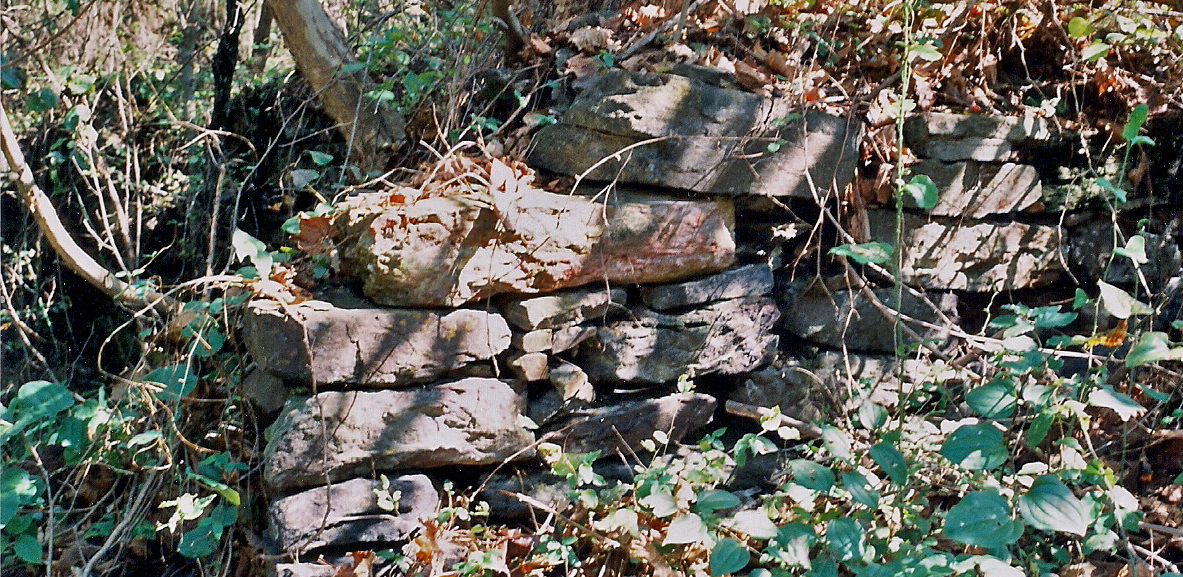
Rock Mill Today, Courtesy Norman Eby
A decree handed down during the May 1871 term of the Buckingham County Circuit Court, the case of Bondurant’s Executors vs. Wright resulted in a public auction of Rock Mills. The sale was to take place on Tuesday, September 26th, if the weather was fair. If not, it would be held the next fair day. N.F. Bocock, Special Commissioner, ran the following notice:
The sale will be made on a credit of one, two, three, and four equal annual installments of the purchase money, except for so much as shall be needed to pay expenses of sale and costs of suit, which will be required in cash, the purchaser to give bonds and good personal security and the title to be retained as a further security.
These Mills, which consist of excellent flouring, grist and saw mills, are regarded as exceedingly valuable property. Of established reputation, in a fertile section of the country, and with a large custom, they are worth the attention of those who wish to own such property.
N.F. Bocock, Special Commissioner
The photo above shows a portion of the mill foundation and a view from the far side of the bridge toward the mill.
According to Rock Mill’s present owner, Norman Eby, “There are no buildings on the property, only an extensive rock foundation laid without mortar. The foundation was disturbed somewhat by the State when they replaced the old bridge which was wiped out by hurricane Camille, August 19-20, 1969. There was apparently a dam of some sort across the river at the mill site which was removed by the state. One can find drill holes in the rock where the dam was.”

“Little Angels” (1890) by Edith Penman.
The April 16, 1841 issue of the Richmond Whig ran this moving and detailed obituary for Nathaniel Lancaster, squire of Rock Mills, a Buckingham County plantation on the Willis River, not far from Arcanum.
At the Rock Mills, his residence, in the county of Buckingham, on the 19th of March 1841, Nathaniel Lancaster, in the 51st year of his age. Mr. Lancaster was attacked about the first of February with a rheumatic fever, which for some time did not appear to be of a threatening character – but by the 20th of that month, the disease had gradually and insidiously advanced – inflammation having located on the lungs and spine, producing their characteristic symptoms of harassing cough and train of most painful neuralgic sufferings. From that period, every effort that could be made for his relief was put into practice – and if the unceasing attention and nursing of a devoted wife and son and daughter, and kind neighbors, could have availed, he had not died. If the unremitting and vigilant efforts of his physicians by day and by night, could have arrested the hand of death, he would have lived – if the prayers of pious friends, and the wishes of all who knew him, could have been granted, he had still been among us to relieve the widow and the orphan – to instruct by his example and life, and to comfort a bereaved family. But an all-wise Providence has seen fit to direct otherwise, and it is our duty to submit, and prepare to follow him.
To locate Arcanum, see: Detail Map: Sheppards, Curdsville, and New Store

Rosa Kathryn Claiborne and Mary Elva Claiborne, Courtesy Ed Ayres
Traditionally, weddings are welcome copy for local papers. On May 2, 1898, The Farmville Herald ran this charming story, first printed by the Appomattox and Buckingham Times, covering the marriage of Elva Claiborne and Thomas A. Braughan.
“While Spanish and American ships are firing on big guns abroad, cupid with his tiny darts is making havoc with hearts at home. The scene at White Hall today (April 28th), was one of the happiest ever witnessed in Buckingham.” There were three marriages [in] one day. Mr. Thomas A. Braughan, of Sheppards, and Miss Elva Claiborne, of Gravel Hill, were united by Rev. W.E. Grant, at the home of the bride, at two o’clock, PM. After the marriage ceremony, an elaborate dinner was served to the bridal party and in the afternoon Mr. Braughan and his bride, accompanied by several friends, drove to the residence of Mrs. Braughan, the mother of the groom, where an informal reception was held. Mr. Braughan is a well-known citizen of our county and we congratulate him for having won for his bride one of the most attractive and charming young ladies of her community. We wish much happiness for them.
Nearly two years later, on April 13, 1900, The Times (Richmond, Virginia) printed this announcement for sister Rosa Kate’s wedding:
WEDDING AT WHITE HALL,
Miss Claiborne the Bride of Mr. C.H. Agee.
WHITE HALL, VA, April 12 – Special
Quite a pretty wedding was solemnized at the Methodist Episcopal Church here yesterday, the contracting parties being Miss Rosa Kate Claiborne, the daughter of Mr. T.S. Claiborne, and Mr. C.H. Agee, a prosperous farmer of Gravel Hill. The bride was attired in a gray traveling dress while the groom wore the conventional black.
To the strains of Mendelssohn’s Wedding March, rendered by Mr. W. A. Moss, the bride, accompanied by her sister, Miss Garnett Claiborne, bridesmaid, and the groom by Mr. Henry Nuckols, best man, came down the aisles of the church and met under an arch of evergreen. The Rev. W.E. Grant performed the wedding ceremony.
Immediately after the marriage, the bridal party drove to the home of the groom, where they were entertained.
Recently, Rosa’s great-nephew recalled: “I’m not sure how old I was when Aunt Rosa died, but I do remember her wringing a chicken’s head off to prepare for dinner one time when we were visiting! She was quite elegant and lovely – good bones!”
One of the Agees’ daughters was Rosa Garnett, who took after the lovely Claiborne women and became a fieldworker for the Virginia Historical Inventory. See Rosa Garnett (Agee) Williams.
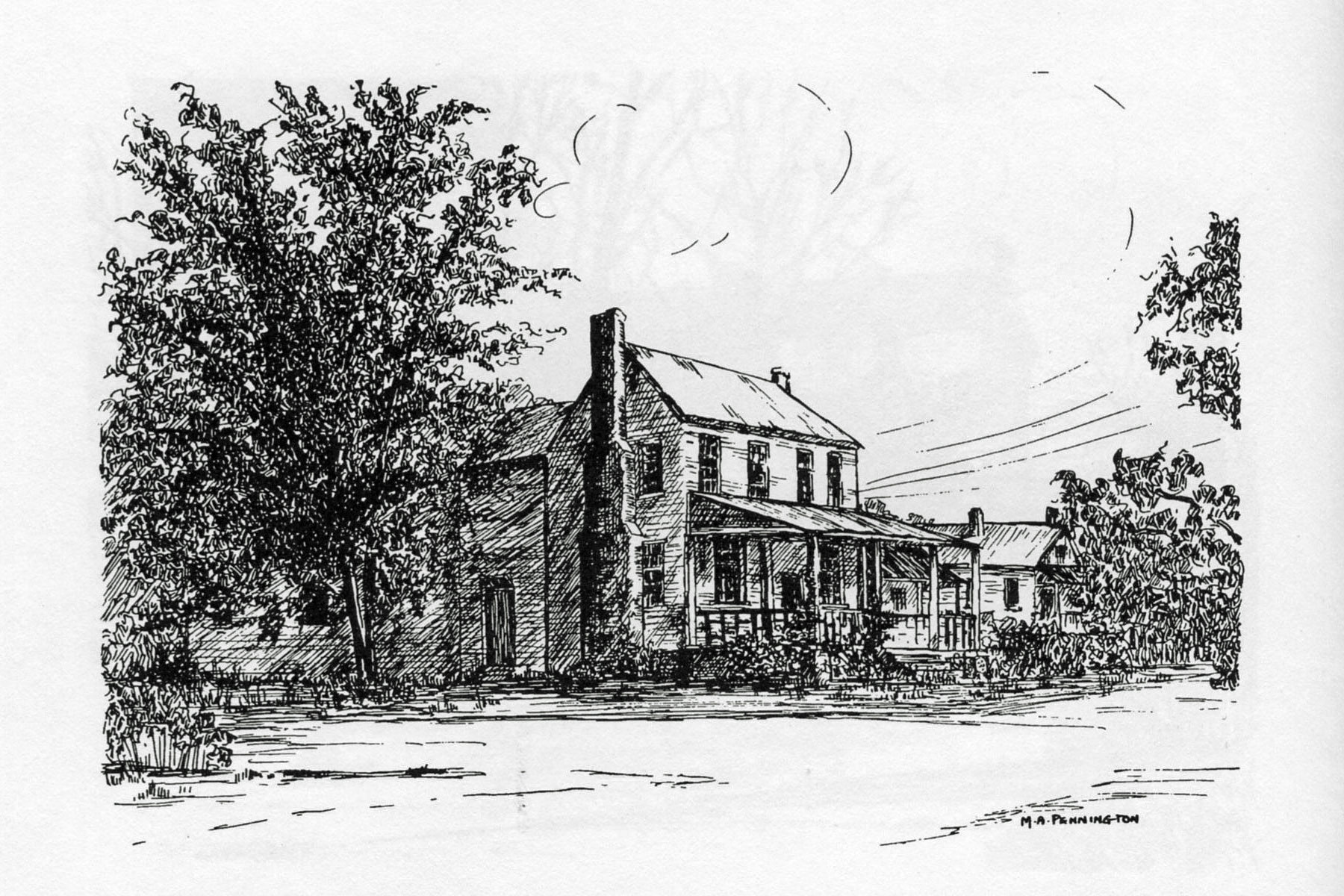
Courtesy Historic Buckingham
In 1969, the “Buckingham Court House Preservation Zone” was added to the National Register of Historic Places. It encompassed much of what was once called Maysville. Structures listed as part of the historic zone included: the Confederate monument, the former Buckingham Tavern, the former Buckingham Inn, the Leitch House, the Presbyterian manse, the Masonic Hall, Rose Terrace, and [Maysville] Presbyterian Church.
A significant structure goes unnamed. Razed not long before, in about 1960, the Buckingham Hotel (a.k.a. The Moseley House) served the courthouse neighborhood for many years. Built c. 1800, the hotel sat diagonally across Route 60 from the courthouse. In the early 20th century, it was believed to be the oldest house in the village.
For the rest of the story, please see this month’s Buckingham Beacon which includes my article, “The Buckingham Hotel: A Long and Varied Story.”
For those of you living outside of Buckingham County, a PDF of each month’s paper is always available at Fluvanna Review.
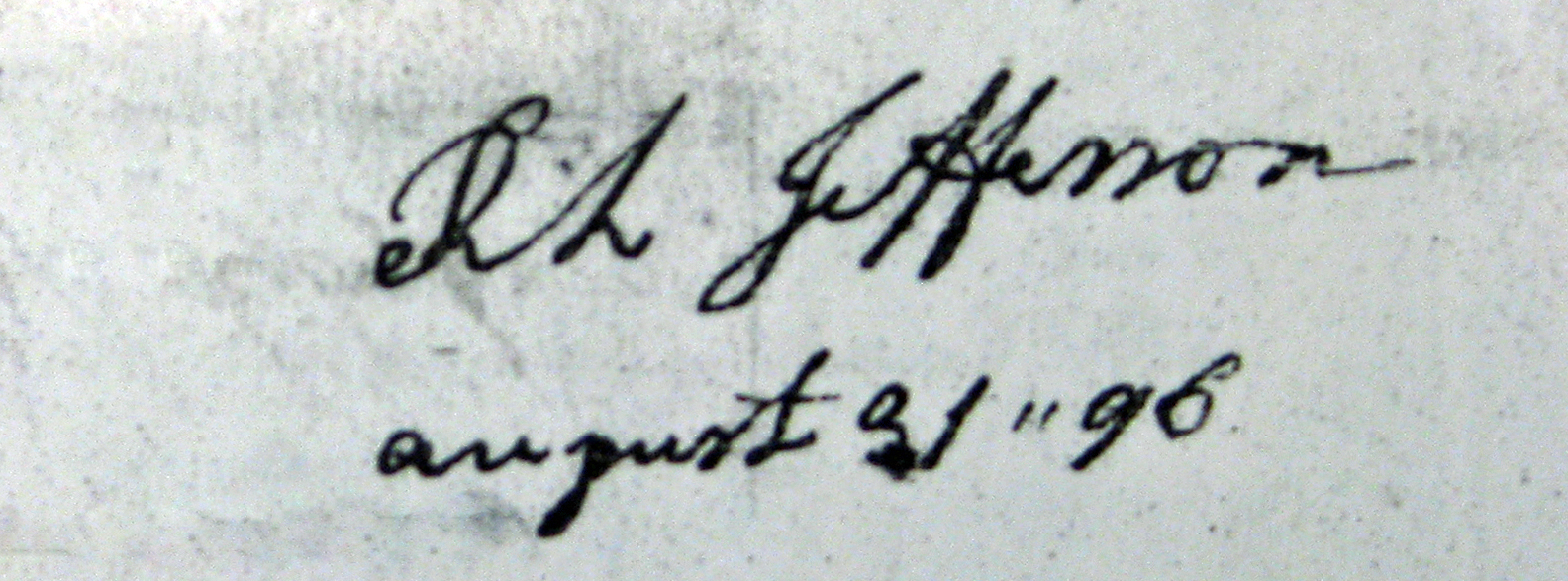
For those of you have been curious…
Last month, at the Library of Virginia, I unearthed a 16th letter written by Randolph Jefferson. To date, all known letters written by Randolph are addressed to his better-known brother, Thomas. Significantly, this letter was not and survived in the papers of John Bernard, once High Sheriff of Buckingham County.
Without giving too much away, the letter reveals a competent and confident Randolph Jefferson, defending his very valuable plantation, Snowden. The letter is a new clue behind the need for a grant, issued in 1800 and signed by Governor James Monroe, defining 1,327 acres of Jefferson’s 2,000 acre farm.
It was my ever-expanding research for Slate River Ramblings (and an apparently insatiable appetite for all things Buckingham) which led to this discovery in the Bernard Family Papers.
Many thanks go to the Library of Virginia for preserving this valuable Jefferson nugget.
This mystery of the 1800 grant was introduced in Chapter Eight of The Jefferson Brothers, “Snowden: A Plantation in Buckingham County.”
Give me two or three years and I expect to have an expanded story of greed and intrigue at Buckingham’s Horseshoe Bend.
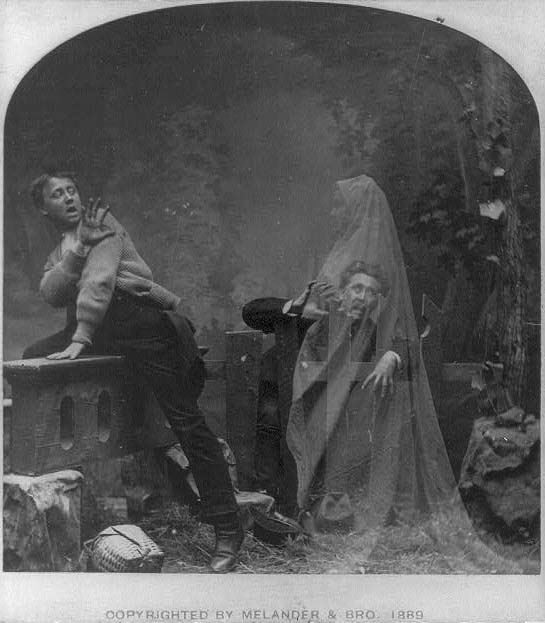
On January 19, 1902, the Richmond Dispatch reported ghostly goings-on in Buckingham County. The embedded racism and silliness in the report is also of historical interest. The contributor is unnamed.
AN AVARICIOUS “SPOOK”
A Ghost in Buckingham County Looking for Money.
GRAVEL HILL, VA. January 18. – (Special.) The people around Buckingham Baptist Church, near Gold Hill, are very stirred up over a ghost that has been seen at and near the church.
Mr. Thomas A Whitlow and Mr. Zank Sandridge, two reliable white men, and several colored men and boys, have seen the spook, but could not make out what it was.
Mr. Whitelow (sic) and Mr. Sandridge tried a few nights since, when the ghost was last seen, to approach it, but were unable to do so.
Mrs. Sallie Williams lived near the church, about 100 years. She has been dead several years. Some time ago her house was burned down. She claimed to have lost some money at the time. It is thought this may be her spirit looking for the money, if there could be such a thing.


 slate river ramblings . . . .