
 James Nathan Ayres (1849-1906), Photo by Joanne Yeck
Today, the house at what was once Edge Hill, located on Buckingham’s Slate River, is gone; yet, each spring, the Ayres cemetery blooms, profuse with periwinkle.
Once the home of Rev. John Ayres, eventually, Edge Hill was occupied by his son, Matthias Leake Ayers (1813–1853), and his wife, Martha Rebecca Hanes (1825–1855), of Humanity Hall, which lays adjacent Edge Hill, just across the river. There, in 1848, Elijah Hanes established Humanity Hall Academy.
Two of Matthias and Martha Ayres’ sons, both educators, were buried at Edge Hill.
Prior to 1890, James Nathan Ayres (1849-1906), whose grave is pictured above, was employed teaching school in Buckingham County. According to Harry S. Holman, “Cousin Jimmy taught Latin.” In 1893, he was the principal teacher at Well Water School; Miss Hannah Winfrey was the assistant teacher.
Jimmy’s older brother, Thomas Eldridge Ayres (1847–1874), was educated at the University of Virginia (1868-1870) and married Olivia Winfield Blackwell (born c. 1847). Olivia was the daughter of Rev. John Blackwell, President of Buckingham Female Collegiate Institute. Later, Thomas taught mathematics in Baltimore, Maryland.
There is no question that this extended Ayres-Hanes-Blackwell family of educators, living on Slate River, positively influenced generations in Buckingham County and beyond.
For more about Thomas Eldridge Ayres and other 19th century University of Virginia graduates, please visit Jean Cooper’s blog: Students of the University of Virginia, 1825-1874
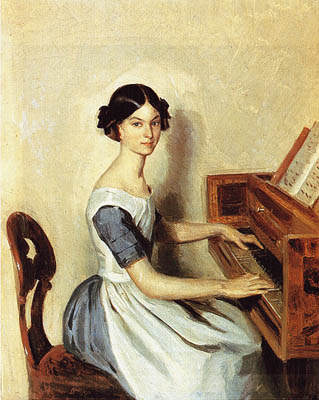
The Buckingham County Female Collegiate Institute was magnificent in its day; however, spending at The Institute – as with many 19th century planters – was often impractical and extravagant. An excellent example involves the music master and the piano forte. Samuel Shepard told the story:
Some year or so ago, Mr. Arnaud Préot suggested that, as one of the piano fortes obtained from Rosenkranz had a mechanical imperfection difficult to remedy, that they buy in its place a new one manufactured in Farmville by Mr. George P. Knauff. Mr Knauff sensibly offered to repair the old one at his factory, but they must have a new one. The old instrument is in the attic, and Mr. Knauff has so far received the sum of $15.00 on the purchase price of that of his own make. This is a small but common instance of the execution of the business of the Institute.
For more about The Institute, consult “At a Place Called Buckingham.”
George P. Knauff was also a popular composer of the day. His tunes included “Wait for the Wagon.”

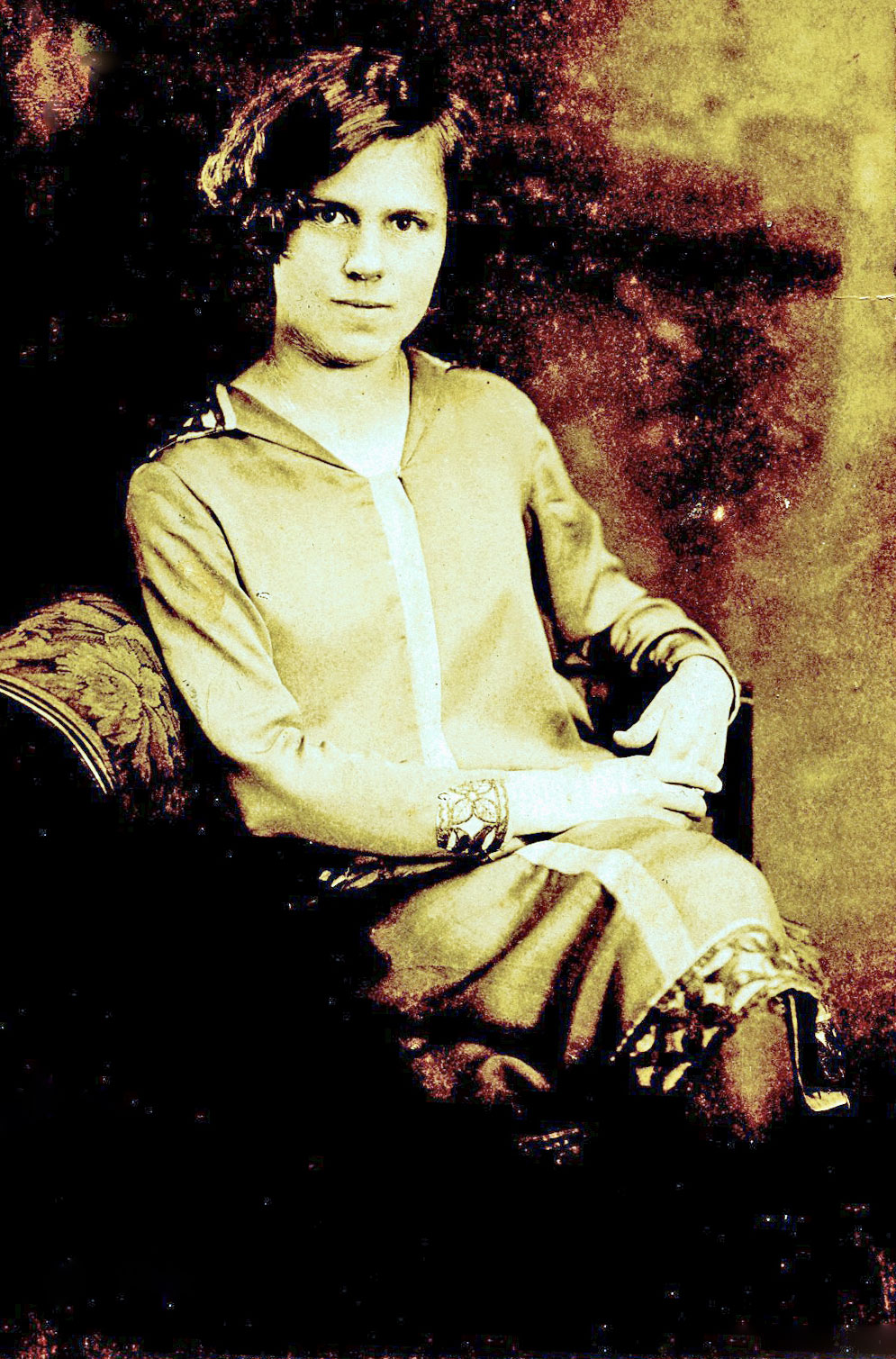
Rosa Garnett (Agee) Williams, Photo Courtesy Ed Ayres
Rosa Garnett (Agee) Williams, who wrote many of the Buckingham County entries for the WPA’s Virginia Historical Survey, was the daughter of Cornelius “Hamilton” Agee and Rosa Kate Claiborne. The Hamilton Agee family lived at Gravel Hill, near Buckingham Collegiate Female Institute.
Garnett married Fred Williams, the son of Samuel and Callie (Duncan) Williams. Garnett and Fred had one son and two grandchildren. The family lived above their store in Dillwyn. According to “A Pictorial History of the Town of Dillwyn, Virginia,” it was dubbed Agee and Williams Store and was operated by Fred Williams and his brother-in-law, Hamilton “Hambone” Agee. Later in life, Garnett resided in an apartment at Sprouses Corner.
Slate River Ramblings reader, Kathy Bailey Clark, Garnett’s great niece, recalls:
I used to visit them with my grandfather, Frank Agee. When Hwy 15 expanded, they sold the store and moved in to take care of her father, C. Hamilton Agee, and cousin Meg. Garnett was in her nineties when she died in a nursing home in Farmville where her sister, Mary (Agee) Stone, also resided.
One of Garnett Williams’ younger cousins remembers that she attended the Methodist woman’s college at Blackstone, Virginia.
Can a Slate River Ramblings reader confirm this?
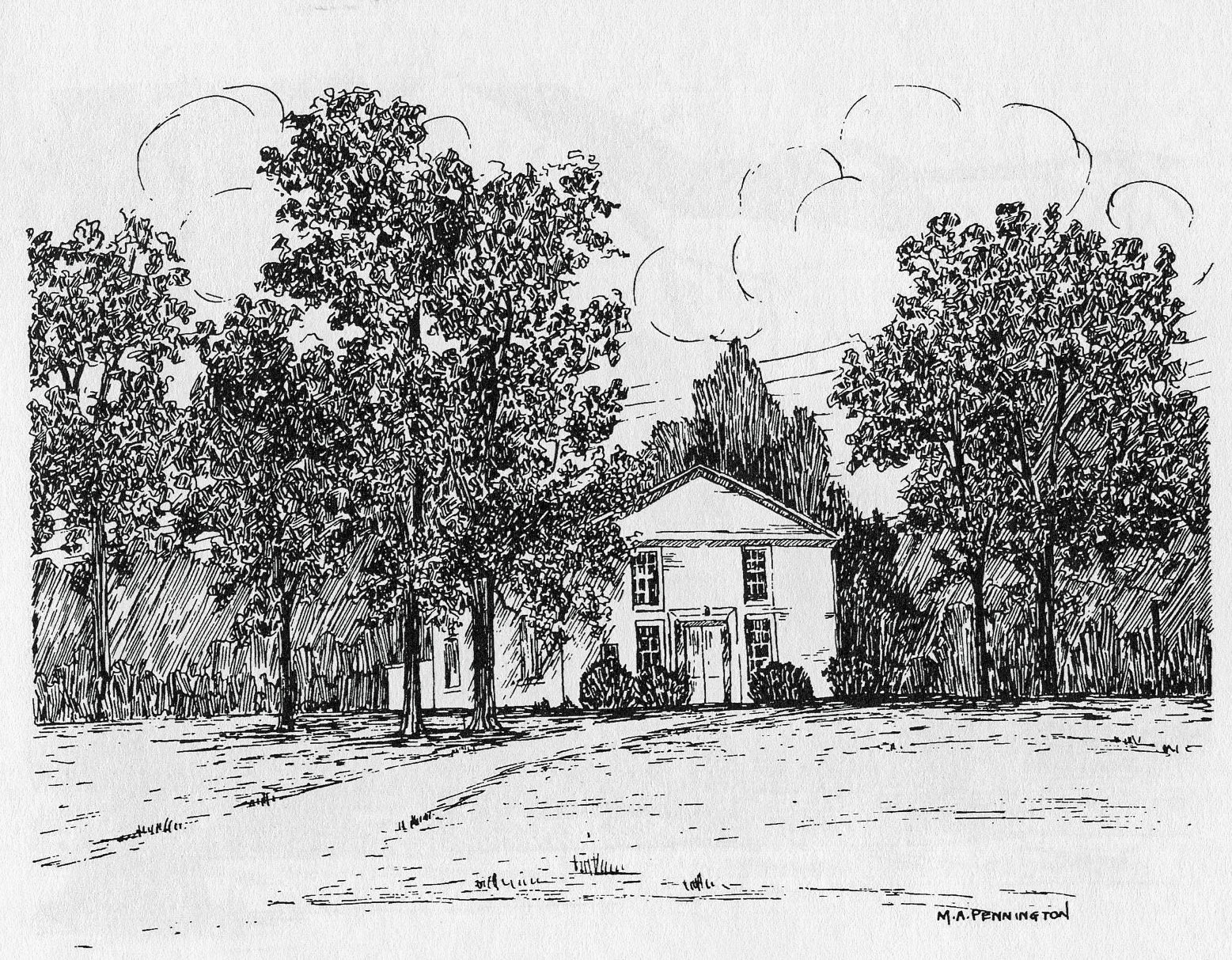
Courtesy Historic Buckingham
In 1942, Mrs. W.E. Pratt wrote a history of Trinity Methodist Episcopal Church, in which she stated:
This church building was started sometime during the War Between the States and finished after the end of the war. The reason for thinking this is that Mr. Charles Christian, a large land and slave holder, said he would be a liberal contributor if they (the Methodists) would have the church built with a gallery, so his slaves could worship in it. It has always been a disputed point in recent years whether Mr. Christian or Mr. Johner Word gave the land for the church to be built on. I know the church was not finished until after the end of the war. My two brothers and I would walk up to the Methodist church to see the carpenters at work.
Another, undated history compiled by church member Louise Morriss Swartz offers: “One source says Trinity was built in 1858 by James Isbell, land given by Charles Christian. Mrs. Sue Spencer gave the church land for the cemetery.”
Interestingly, Housewright House, the museum maintained by Historic Buckingham, has an original Buckingham Circuit, Virginia Conference, Methodist Episcopal Church South Record Book which lists churches, members, baptisms and classes in the Buckingham Circuit for 1852–1879. Its first listing for Trinity is a Sunday school class roll dated 1864.
Once again, Buckingham County history proves a mosaic of apparently contradictory facts.
Can a Slate River Ramblings reader offer more about Trinity Methodist Episcopal Church?
Special thanks to Margaret Thomas for this additional information.
Trinity Methodist Episcopal Church, Courtesy Historic Buckingham
One of the nineteen churches included in Thomas Baldwin’s Gazetteer of the United States (1854) may be Trinity Methodist Episcopal Church (South).
Elizabeth McCraw, in her 1937 survey for the Virginia Historical Inventory, stated that the original building, erected by Charles L. Christian and donated to the Methodist Conference, was built c. 1850. She describes a one-room building, with vestibule. The roof was covered in Buckingham slate and a cemetery was established nearby. George Walton designed and built the church. A side door opened into a closed stairway and led to the gallery which ran “along each side and across the end opposite the pulpit.” Mrs. McCraw envisioned the slaves of Charles L. Christian and others sitting in the gallery.
In 1937, the church remained segregated, though African Americans were welcome at services. “The entrance has never been changed,” Mrs. McCraw explained, “and interested colored people are allowed to attend services at Trinity now and sit in the gallery, which they often do, especially during revival services.”
Located at 13463 W. James Anderson Hwy., today an expanded version of Charles L. Christian’s building is known as Trinity United Methodist Church and is part of the Farmville District.
Coming next: Dating Trinity Methodist Episcopal Church
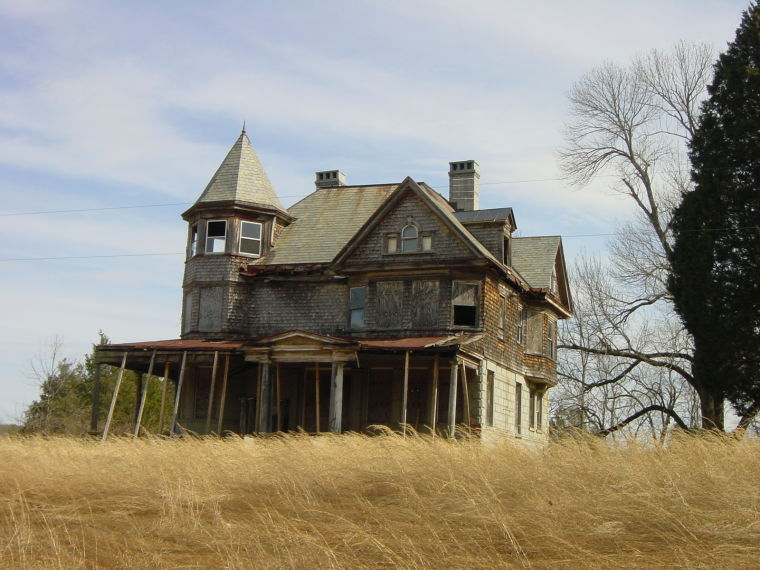
Alberene House, photo by Heather Harris
Old houses are favorite posts with Slate River Ramblings readers. This one is just outside Buckingham, in Albemarle County, near Schulyer (Nelson County). Heather Harris explains in her article for the Rural Virginian:
The history of the Alberene House, also known as the Company House, dates back to 1883 when New York businessmen James H. Serene and Daniel Carroll, along with John Porter, purchased a 1,955 acre tract of land on Route 719 beside Beaver Dam Creek. A deed dated Jan. 31, 1883, states that the property was purchased by the trio for a sum of $30,000.
That same year, the men founded the Albemarle Soapstone Company and, after several legal battles, were able to begin quarrying their recently-purchased property, making use of the massive soapstone beds found on the eastern side of the Blue Ridge Mountains.
For the rest of the story, visit “The History of a Hauntingly Beautiful House.”
And, don’t miss these great close-up images, taken by photographer Terry Beigie and posted at her blog: Terry Beigie Photography.

Charlie Chaplin’s Immortal Tramp
While Buckingham County is and has been a peaceful place to live, occasionally, there is mischief and wrong doing. This incident was reported in the Richmond Dispatch, October 12, 1902.
Caught a Thief: Then Gave Him Cakes
Mr. R. M. Booth, manager for the Gold Hill Trading Company, at Gold Hill, captured a thief in his store a few evenings since. Mr. Booth stepped out of the store for a few moments, locking the front doors and leaving the back door next to the dwelling house open. When he returned a tramp was in the store and within a few feet from the cash drawer. Mr. Booth was unarmed, but had the presence of mind to throw his hand to his pistol or hip pocket and order the man to throw up his hands, which he did. After the tramp had been searched and nothing belonging to the store found on his person, he was given some cakes and ordered to move on, which, he did at once.
lt is supposed the man was a “hangeron” of the circus that exhibited at White Hall and New Canton.

Dr. Tucker House (ca. 1820), Courtesy Preservation Virginia.
12978 W. James Anderson Highway, Buckingham County
Viewing historic houses in Buckingham County is a favorite pastime of many readers of Slate River Ramblings.
The Dr. Tucker House has a slate roof, of course.
According to Preservation Virginia the house dates from the 1820s:
It is situated on over 2 acres in the historic village of Buckingham Courthouse in Buckingham County. The house is located catty-cornered from the old courthouse. The original courthouse designed by Thomas Jefferson burned in 1869. The existing courthouse was built in 1873.
It is thought that the Dr. Tucker House served various purposes in the past, including the housing of a tobacco warehouse in the basement for a time. The house was also used by the Treasurer’s Office, possibly by the Masons for a lodge and may have served as a bank. Four doctors have past connections with the house: Dr. Whitcomb Pratt, Dr. Perkins Glover, Dr. G.L. Morris, and Dr. P.E. Tucker, all who practiced medicine on the premises.
The Dr. Tucker House still possesses a rare, Jeffersonian accordion or peak and valley roof on the west wing, probably the only surviving example known. The brickwork under the front porch still retains it original penciling on the mortar joints from the Federal period.
The Dr. Tucker House is a contributing structure in the Buckingham Court House District which is listed on the Virginia Landmarks Register and the National Register of Historic Places.
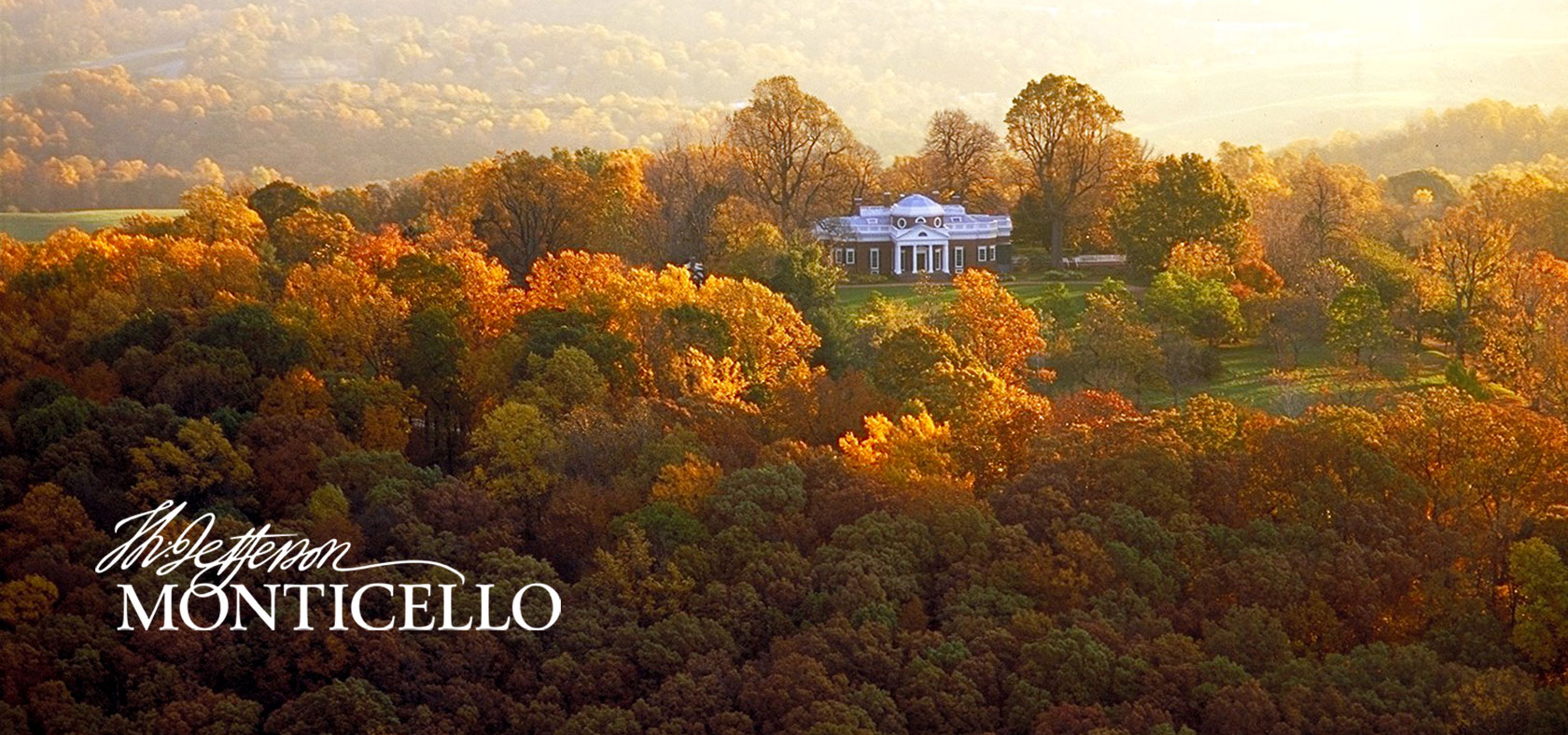
Courtesy Thomas Jefferson Foundation
Nothing beats than an autumnal visit to Monticello. Cooler days are coming in which to enjoy Thomas Jefferson’s little mountain….
On October 8th, from 1:00 – 3:00 p.m., I’ll be signing books and discussing Randolph Jefferson and his better-known brother at the Monticello Museum Shop.
Please drop in. You could even do a little early Christmas shopping . . . . Monticello Museum Shop

Courtesy Baine’s Scottsville
Please join me on Saturday, October 5th, at Baine’s Scottsville. The wonderful smell of coffee will lure you in and the stimulating conversation will induce you to stay!
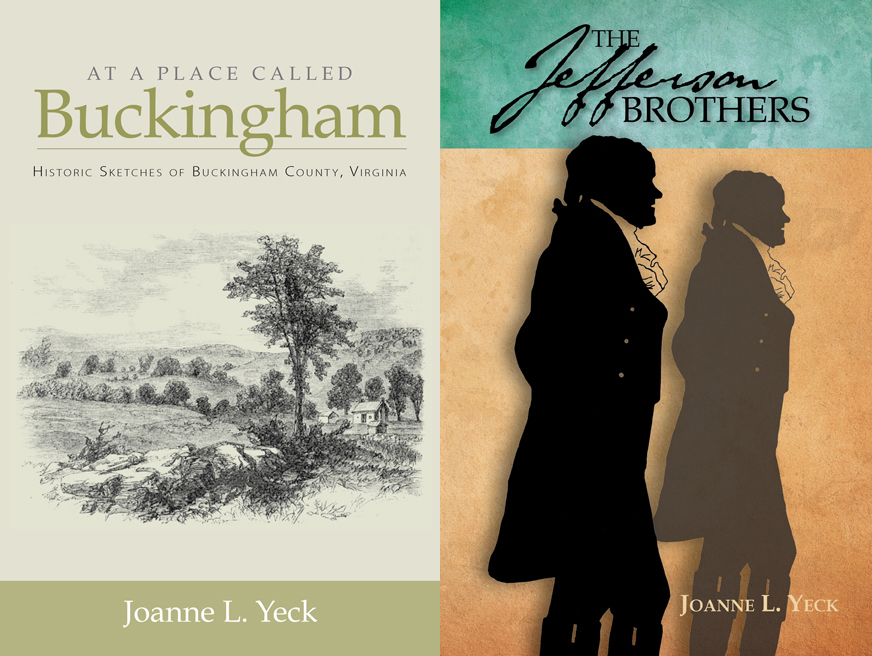
I will be there, from 1:00 – 3:00 p.m. discussing anything and everything related to Buckingham County’s rich and wonderful history. I’ll also be signing copies of The Jefferson Brothers and “At a Place Called Buckingham.”


 slate river ramblings . . . .