

Sketch by Margaret Allen Pennington
Salem United Methodist Church, Courtesy Historic Buckingham
In 2013, I set out to discover the nineteen Buckingham County churches referred to in Thomas Baldwin’s Gazetteer of the United States (1854). Thus far, thirteen likely candidates have been identified. Salem Church appears to be a good possibility for number fourteen.
In 1839, Samuel Shepard of Merry Oaks plantation wrote a letter to “Brother” Spencer in which he discussed his slave, Tom. Shepard began:
At the request of my man Tom, who desires to become a member of your church at Salem, I write to give you some information as to his character that you may know whether you should admit him as a christian.
Shepard went on to describe his old servant, Tom, as a complete rascal, adding:
“. . . if you think membership in your church would chasten the spirit of Tom, I beg you to admit him, on probation. I shall do my best to mend his behavior here at Merry Oaks. . . .
On a Civil War-era map of Buckingham County, Salem Church is located not far from the Cumberland County line. In 1924, a new building was erected at this old site at 2160 Ca Ira Road and still serves today as Salem United Methodist Church. Among the burials in the church cemetery are members of some of Buckingham’s best-known families including: Gannaway, Shepard, Guthrie, Spencer, Davis, Huddleston, and Richardson.
To catch up on previous posts featuring Buckingham’s mid-19th century churches, just type Thomas Baldwin in the search box. Enjoy the results!
For more of Samuel Shepard’s letter, consult “The Ladies of the WPA,” in “At a Place Called Buckingham”
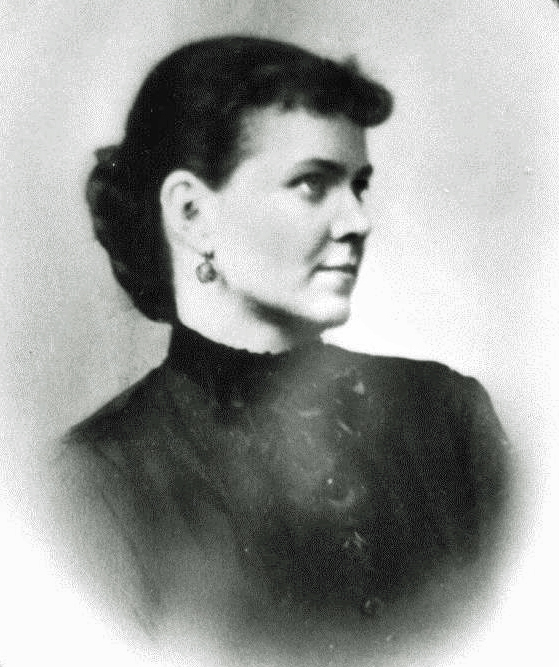
Florence LaSalle (Moseley) Pratt, Courtesy Mary Carolyn Mitton
The Slate River Rambling post, Dating Trinity Methodist Episcopal Church, evoked this memory for reader Mary Carolyn Mitton:
Florence LaSalle (Moseley) Pratt (1855-1951) was my great-grandmother. The brothers she mentioned on the walk to Trinity Methodist-Episcopal Church were Nicholas Bocock Moseley (1853-1902), named for the attorney, Nicholas Bocock, who practiced in the village of Maysville, and Perkins Moseley (1855-1907). Their parents were Alexander Trent Moseley (1831-1891) and his wife, Maria Louise Housewright (1832-1908). The family lived in the village at Rose Terrace (earlier known as Rose Cottage), located on the south side of Highway 60 across from Maysville Presbyterian Church, and in the house that is currently the Maysville Manor Bed & Breakfast, located immediately west of Buckingham County Courthouse.
When Robert E. Lee and retinue passed through Buckingham County on their way eastward, Great-grandma Pratt asked permission from her parents to walk to the edge of the roadway to watch General Lee and soldiers go by. Grandma told me how ragged and poor the soldiers looked, dirty, bloody, and dejected, with many of them crying. She told me this when I was about eight years old, and that image has remained as clear in my mind now as it was in her mind then. It had never occurred to my young mind that soldiers would ever weep.
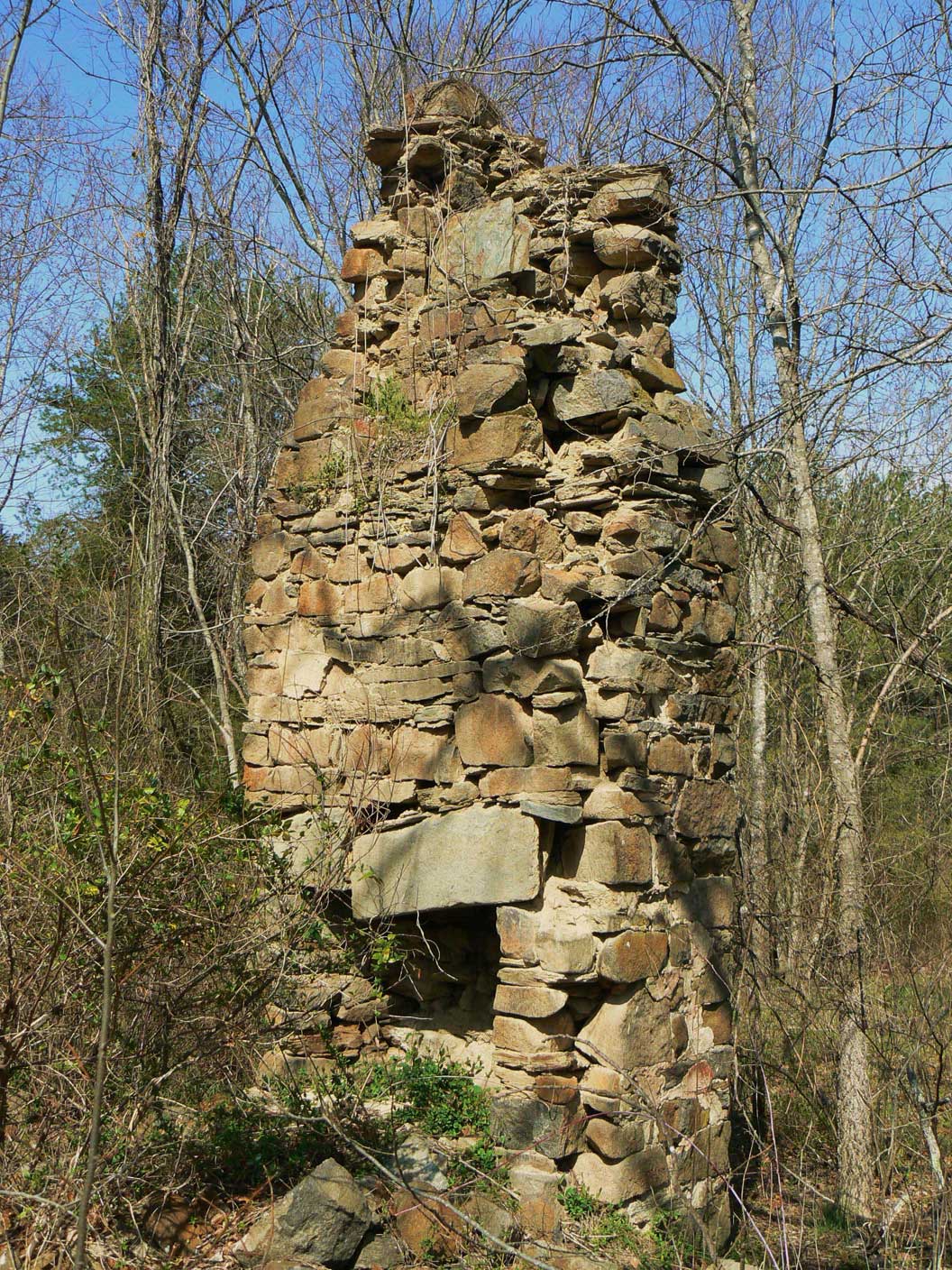
Ruins of Chambers’ Mills (2011), Photo by Jeremy Winfrey
In 1856, something was stirring in Buckingham County.
A significant number of valuable Buckingham farms and other businesses were advertised for sale in the Richmond newspapers. Did sellers attempt to take advantage of a strong market? Did they anticipate a dip? Was the climate in Buckingham shifting towards increasing industry, making those properties more valuable? Did the political battles over the Kansas Territory concern Buckingham County slaveholders? Was it just coincidental?
One hopeful seller, George Chambers (1826-1882), had inherited the property from his father, George Chambers (1783-1846). George, Jr. had recently married his cousin, Sallie Chambers, on December 4, 1855. Perhaps, his reasons for selling were personal. In years to come, he served the county as Deputy Sheriff. Here is his advertisement as it ran, in the summer of 1856, in the Richmond Whig.
Note: The property and the Post Office were written as “Chamber’s Mills.”
VALUABLE FARM AND MILLING PROPERTY FOR SALE
I will sell privately my Farm (known as Chamber’s Mills,) containing 600 acres of land, with a good Dwelling and Store House, and all necessary outhouses, a large Manufacturing Mills and Saw Mill, situated in the county of Buckingham, on Slate River, (a navigable stream) 8 miles east of the C.H., and 12 miles from James River – 350 acres are cleared and the balance in woodland, well timbered.
It is a fine stand for Merchandizing, and the Mills, with the Store and Dwelling, can be sold separately from the farm, if purchasers desire it.
Terms accommodating. Address the subscriber at “Chamber’s Mills” P.O., Buckingham Co., Va.
GEORGE CHAMBERS
Interestingly, the property did not sell immediately. In 1860, George Chambers still owned the mills and reported his profits on the Buckingham County Industrial Census.

Shaft mining in central Virginia, c. 1865 (Harper’s New Monthly Magazine)
On July 14, 1838, a letter to the Editor ran in the Washington D.C. newspaper, Madisonian, for the Country. It was in response to “extracts from the New York Gazette, on the subject of Gold Mines in Virginia.” The letter discusses several Buckingham County gold mines which were active in 1838 and was signed, simply, BUCKINGHAM.
Here’s what the correspondent had to say about the “Ford and Nicholas” mine:
The Ford and Nicholas mine has been opened by a shaft to the depth of seventy or eighty feet. The ore is believed to be good; but has not, as yet, been put to the test of machinery. The proprietors are raising ore, and putting up machinery, to be propelled by steam; which it is expected will be ready for operation in a few weeks. The vein may be said to be a large one, the ores tolerably easy of access; and may be had in sufficient quantity to do a profitable business upon a good capital. A proper investment in this mine could hardly fail to be a good one, and might turn out to be very profitable.
Slate River Ramblings is launching a new category, Buckingham Nuggets.
Almost weekly, while looking for something else, I bump into a piece of information that adds to a previous post (or two) and deepens our understanding of Buckingham County history.
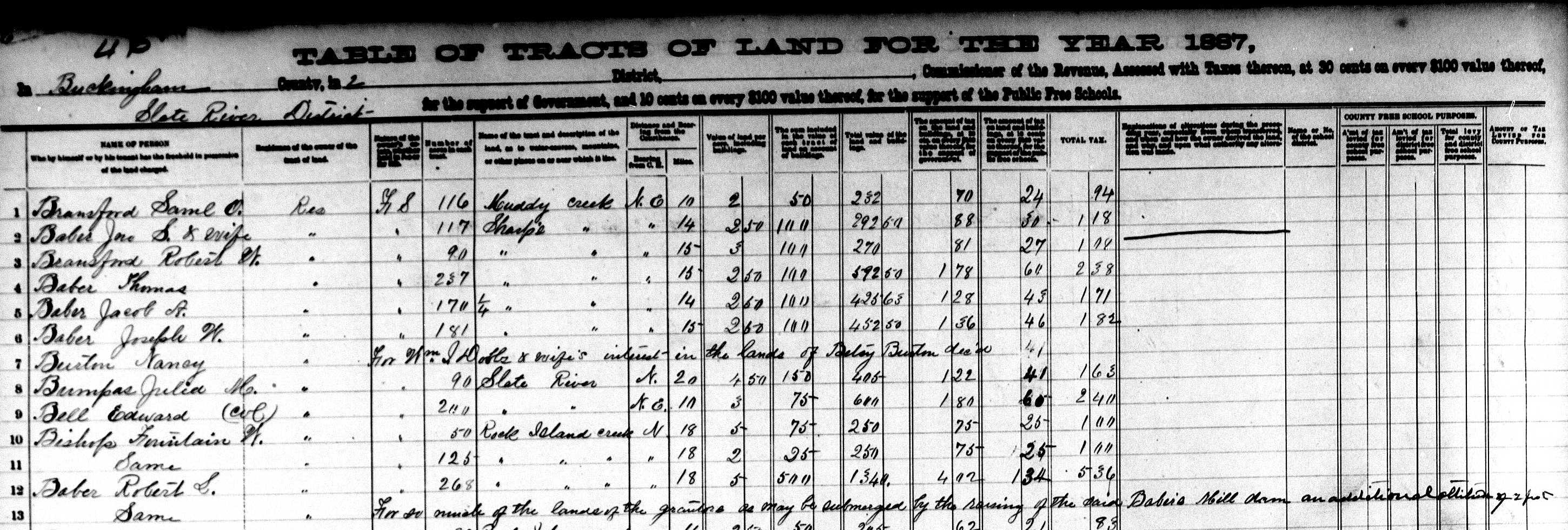
This week, while studying the 1887 Land Tax Record for Buckingham County, a line stood out:
Robert L. Baber, 268 acres, Rock Island Creek
“For so much of the lands of the grantors as may be submerged by the raising of the said Baber’s Mill dam an additional allotment [?] of two feet.”
Other evidence indicates that Baber’s Mill (both saw mill and grist mill) was in place and serving the neighborhood before 1860. Did the dam wash out and a new one was constructed c. 1887?
Baber’s structures, valued at $1,340, indicate a substantial building.
For a larger view of the tax record, click on the image.
For more about Robert L. Baber and his mill: Baber’s Mill
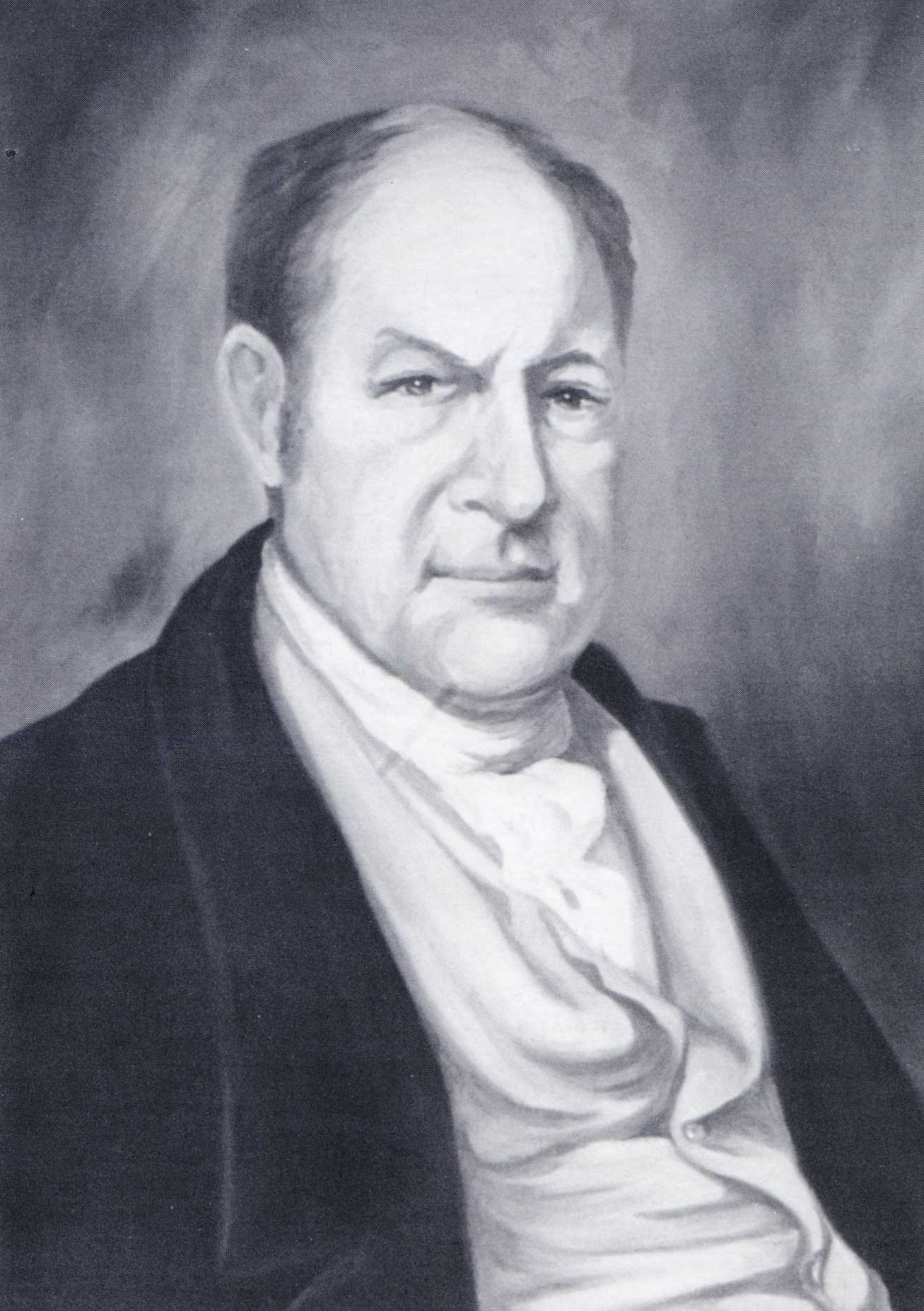
Charles Yancey
In 1927, William Shepard, who contributed several articles about Buckingham County history to William and Mary Quarterly, preserved and published an amusing and informative letter written by Samuel Shepard III to his brother, Robert, on December 10, 1805. It read in part:
Since I last wrote you my wife has been very sick at the home of her cousin, Charles Yancey . . . she was delivered of a fine boy before my coming. The boy even now resembles that old Welsh stock. Charles Yancey says he must play astrologer and prepare the horoscope of the lad, and that from the way he drinks whatever is given him believes he was born under the sign of Bacchus.
While visiting Yancey . . . we discussed Welsh stocks. He tells me Mr. William Evans, of Cumberland county, says he is Welsh and descended from some outlandish prince of that country. Mr. Evans . . . says he does not believe the Yancey name is the proper one, that it was Nanney . . . Charles Yancey has heard something of the kind from his folk, and my wife has an old arms of the family that Mr. Evans says he thinks belongs to some Nanney family.
For more about the Yancey family visit Yancey Family Genealogy.
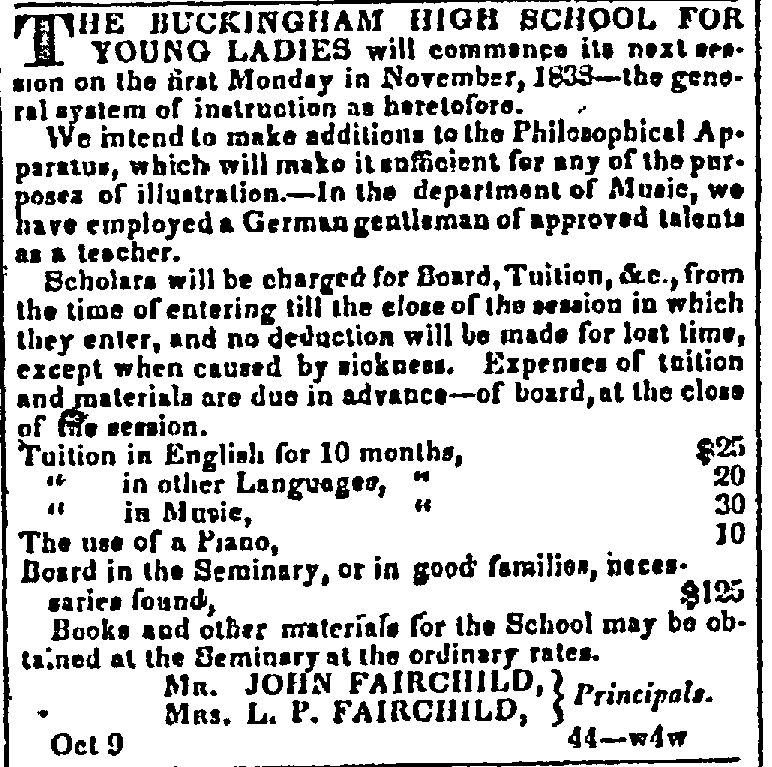
It’s believed that the Buckingham High School for Young Ladies operated in Maysville for at least a decade. From 1836 through 1840, Principles John and Laura P. Fairchild ran advertisements for the High School in the Richmond newspapers. Tradition says that the Fairchilds came to Buckingham County from New England and established the High School in 1826. Buckingham-born historian William Shepard observed, “Perhaps the larger number of these schools employed teachers from the North since, at that time, the profession of a pedagogue was not thought of as an especially ‘high calling’ in the South.”
Buckingham planters, including the Moseley and Bondurant families, sent their daughters to the school to acquire the basics, languages, and refinements such as piano and painting. Others may have come from outside the county, responding to advertisements in The Enquirer or The Whig.
In addition to the regular school term, the Fairchilds offered summer sessions as indicated by this advertisement from May of 1840:
The BUCKINGHAM HIGH SCHOOL FOR YOUNG LADIES will commence its summer session on the first of May next, and continue it 5 months.
Tuition for 10 months in English, $25; other languages 20; Music, (instrumental) 30; the use of a Piano 10; Board in Institution $100. Board and tuition will in all cases be considered one-half due in advance, or at the commencement of each session. No deduction will be made for occasional absences, except when caused by sickness; and no student will be charged with less than one session.
According to Today and Yesterday in the Heart of Virginia, the school closed when the academic building was destroyed by fire in 1846.
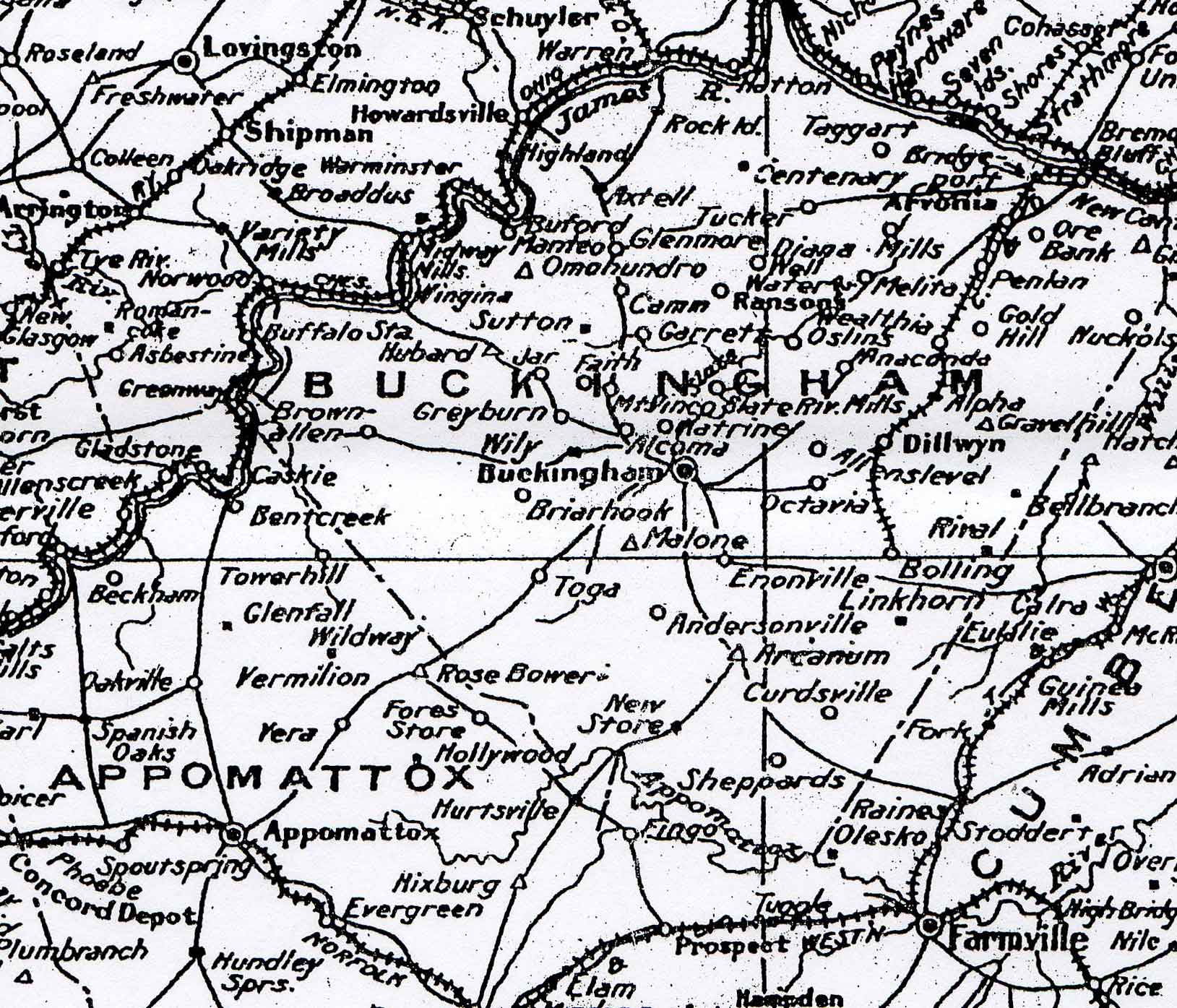
Buckingham County, Virginia (1916)
Octavia (location of one of Buckingham Counties first Poor Farms)
Ransons (Buckingham County’s last Poor Farm)
A list of Buckingham’s Overseers of the Poor, dating from 1816, discloses a group of gentlemen responsible for the care of the county’s needy. That year, Col. Robert Moseley served as President, joined by John Flood, William Bigley, Thomas Garnett, Stephen Chastain, Joseph L. Dillard, William Jones, John Johns, Jesse Holman, Robert Anderson, James Tapscott, and Miles Gipson, Jr. Their accounts indicate that the poor were still under the care of individuals rather than living collectively at a Poor Farm.
Stephen Chastain, for example, provided for seven women, the children of three families, and a lone man. Robert Moseley and the others all submitted similar lists, enumerating their expenses to be reimbursed by the county treasury.
In 1820, my ancestor, George Chambers, a thirty-six-year-old planter living on Slate River, was reimbursed by the county for over $1,100 for his work supervising the building of Buckingham’s first houses for the poor. This was a sizable public investment at a time when many families in Buckingham lived in structures valued under $500.
It was the beginning of the county’s long commitment to the maintenance of at least two Poor Farms.
For more about the Buckingham County Poorhouses and Rev. John Spencer’s long service as Superintendent of the Poor: “Stewards of the Poor” (Buckingham Beacon, August 2012)
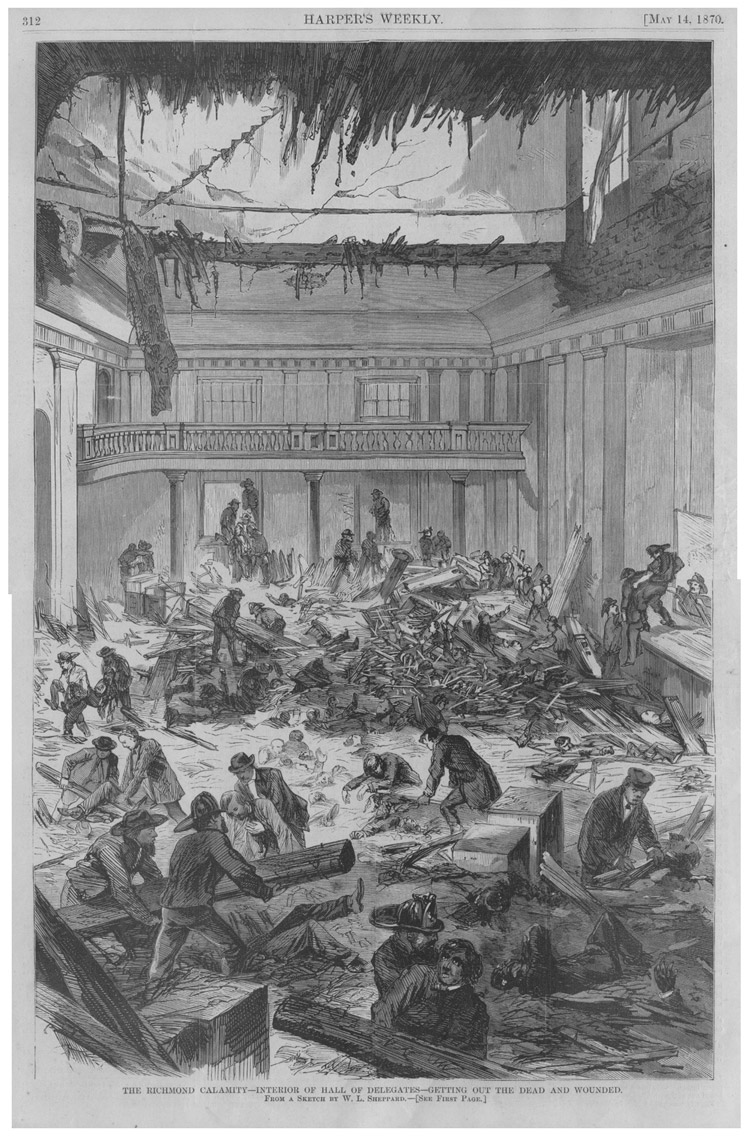
In late April of 1870, newspapers across Virginia announced the collapse of the second floor of the Virginia State Capitol building. In The Native Virginian (Gordonsville, VA), on April 29th, the headline read:
TERRIBLE CALAMITY IN RICHMOND!
__
Floor of the Court Room of the Supreme Court Gives Away!
__
A LARGE NUMBER KILLED AND WOUNDED.
A frightful calamity happened in the Capitol this morning. It is the most shocking and appalling one in all its features that has occurred in the present generation. This 27th day of April will long be remembered in Richmond as a day of horror and death.
Long before the hour of opening of the session of the Court of Appeals this morning, in the court-room in the upper story of the Capitol, over the eastern hall of the Hall of the House of Delegates, a large crowd of people had assembled, expecting the decision of the judges in the Chahoon and Ellyson case. Every one seemed to be in good humor, and there were no evidences of excited feeling.
The gallery of the court-room was densely packed. So was the clerk’s room under it, and the space in the court-room in front of the bench and bar, was filled with an expectant crowd waiting for the decision. The number present is variously estimated to have been from three to five hundred.

Thomas S. Bocock
There were indeed many dead, including several policemen, attorneys, a reporter from the Enquirer, many politicians, and two men identified as “old citizens.” Among the wounded were Governor Henry Horatio Wells, his breast bone broken, and Thomas S. Bocock, ex-Speaker of the House of Representatives. According to The Native Virginian, Bocock’s foot was “mashed.” It was later amputated, leaving him permanently crippled.
For more about George Chahoon: “George Chahoon: Reconstruction Era ‘Carpetbagger’”
Special thanks to Coz. Mary Carolyn Mitton and to the Library of Virginia’s database: Virginia Chronicle.

Dixie, Courtesy Historic Buckingham
Rev. John Spencer (1808-1889) was a Baptist minister, living, working, and preaching in Buckingham County. It has been said that he performed more marriages in the county than any other pastor.
According to Virginia Baptist Ministers by George Braxton Taylor:
At the age of twenty-one Mr. Spencer was converted and joined the Baptist Church near him. The very next year he began to preach, and his active labors in the ministry continued for half a century. While he never had the advantages of a college training he was a most original preacher. Upon one occasion, when the James River Association met at Enon Church, the brother appointed to preach the introductory sermon was not present. Several ministers, who were college graduates, when called on to preach the sermon refused, saying they had had no time for preparation. When Mr. Spencer was asked he consented on certain conditions. A text was to set down upon a slip of paper, which he was not to see until he was ready to begin to preach. This was done and when his sermon was finished the other preachers present agreed that the way in which he knew the Bible was wonderful, and that he preached it.
For the most part, Mr. Spencer preached to weak, struggling churches. In the course of his ministry he was pastor of the Wilderness, Union and Cedar churches, in the James River Association, and before his career as a preacher was ended his son had succeeded him as pastor of at least one of these places. He did not attend the general meetings of the denomination, and was little known among his brethren of the ministry. He was instrumental in leading some 3,000 persons to Christ and he baptized nearly as many. He was married three times and was survived by his widow and six children.
Rev. John Spencer lived to a ripe old age, dying at his Buckingham County home, Dixie, on November 1, 1889, aged 81 years, 5 months, 13 days. He is buried in an unmarked grave, in the family cemetery.
For more about the marriages Rev. Spencer performed, see Lost Marriages of Buckingham County, Virginia by James Randolph Kidd.


 slate river ramblings . . . .